

July 09, 2017
Prison of Dusk (3)
The cruelties of the legal system in the Kingdom of Hou are documented in A Thousand Leagues of Wind. The Imperial Hou was eventually toppled in a coup.
The growing problems with imperial governance in Ryuu are also discussed in "Kizan." Traveling undercover on a fact-finding mission, Shouryuu meets up with Rikou of Sou, who's there for the same reason.
The growing problems with imperial governance in Ryuu are also discussed in "Kizan." Traveling undercover on a fact-finding mission, Shouryuu meets up with Rikou of Sou, who's there for the same reason.
By now, the Kingdom of Ryuu was renown as a kingdom of law and order. And yet it was hitting the skids. To Rikou, this was an entirely unexpected turn of events.
When he said as much, Fuukan [Shouryuu] tilted his head doubtfully. "Unlike you, I'm surprised the dynasty lasted this long. When Rohou acceded to the throne, he didn't strike anybody as regal material. He'd been a county supervisor and then a governor in the provinces. The locals thought well of him, but not so much that word of his accomplishments ever made it to the capital. Nothing much to set him apart from the next guy."
Fuukan knew Rohou's given name as well, evidence that he moved in the same circles as Rikou.
"Well, you'd expect a man from En to know about such things. You're next door neighbors, after all?"
"I guess so. I swung by shortly after the coronation. A middling choice, was my impression. Like a ship that looked nice sailing out of port but would sink during the first real gale."
Labels: 12 kingdoms, hisho, kasho, law, translations, wind


June 10, 2009
Dreaming of Paradise

June 09, 2009
Dreaming of Paradise (covers)
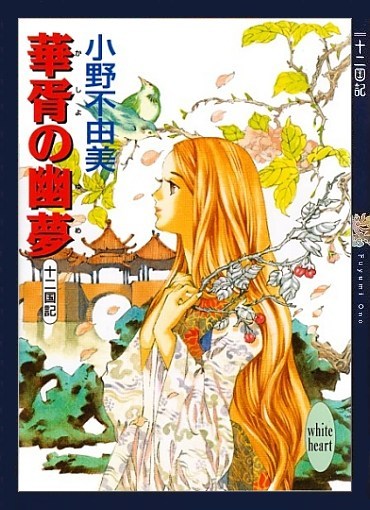
2013 edition

Maps
Notes
Covers
Glossary
Downloads
Labels: 12 kingdoms, fantasy, japanese, kasho, translations
June 08, 2009
Dreaming of Paradise (notes)
| Winter Splendor | Jougetsu |
|---|---|
|
Chapter 01 Chapter 02 • Chapter 03 Chapter 04 Chapter 05 Chapter 06 Chapter 07 Chapter 08 Chapter 09 Chapter 10 Chapter 11 Chapter 12 • Chapter 13 Chapter 14 |
Chapter 01 Chapter 02 Chapter 03 Chapter 04 Chapter 05 • Chapter 06 Chapter 07 Chapter 08 Chapter 09 |
| Pen-pals | Kizan |
|
Chapter 01 Chapter 02 • Chapter 03 Chapter 04 Chapter 05 |
Chapter 01 • Chapter 02 |
| Dreaming of Paradise | |
|
Chapter 01 Chapter 02 Chapter 03 Chapter 04 • Chapter 05 Chapter 06 Chapter 07 Chapter 08 Chapter 09 Chapter 10 Chapter 11 Chapter 12 |
Chapter 13 • Chapter 14 Chapter 15 Chapter 16 Chapter 17 Chapter 18 Chapter 19 Chapter 20 Chapter 21 Chapter 22 Chapter 23 Chapter 24 |
Maps
Notes
Covers
Glossary
Downloads
Labels: 12 kingdoms, fantasy, japanese, kasho, translations
May 30, 2009
Chapter 2 (Kizan)
隆洽 [りゅうこう] Ryuukou ("wide prosperity"), capital of Sou
清漢宮 [せいかんきゅう] Seikan Palace (pure China)
典章 [てんしょう] Tenshou Manor ("temple of the law")
正殿 [せいでん] Seiden ("true building"); the main building of the palace
保翠院 [ほすいいん] Hosui haven (protect jade)
大翠 [たいすい] Taisui (big jade), exective director of the Hosui Havens
高岫山 [こっきょうざん] The Koushuu Mountains that divide two adjacent kingdoms
巽海門 [そんかいもん] Sonkai Gate, lit. "southeast sea gate," the narrow straits between Kou and the Yellow Sea (not an actual lock or gate)
恭国 [きょうこく] Kingdom of Kyou (reverent)
供王 [きょうおう] Royal Kyou (accompany)
巧国 [こうこく] Kingdom of Kou (adroit)
塙王 [こうおう] The Royal Kou (promontory)
塙麟 [こうりん] Kourin (the kirin of Kou)
奏国 [きょうこく] Kingdom of Sou (musical performance)
宗王先新 [そうこくそうおうせんしん] The Royal Sou Senshin (future new)
宗麟昭彰 [そうりんしょうしょう] Sourin Shoushou (shining clear)
宗后妃明嬉 [そうこうひめいき] Queen Meiki (bright joy) of Sou
英清君利達 [えいせいくんりたつ] Prince Eisei (excellent purity) Ritatsu (profitable accomplishment)
文姫文公主 [ぶんきぶんこうしゅ] Princess Bun ["Bunki"] (literature) Bun Koushu (literature official chief)
Chinese surnames only have one character, but that doesn't apply to azana. In Chinese, Princess Mononoke uses koushu (公主) in the title, so I concluded that "Bun Koushu" means "Princess Bun." I'm also treating kouhi (后妃), kun (君), and ki (姫) as titles. In Japanese and Chinese the characters all run together without any convenient spaces.
For example, in Scrapped Princess, Pacifica refers to her older step-siblings as "Shannon-nii" and "Raquel-nee." These suffixes are short for nii-san (兄さん) and nee-san (姉さん), meaning "older brother" and "older sister," but she makes them part of their names.
"Everybody just bows standing up? Like the kirin?" The kirin only kneels before the king, and no one else. Youko outlaws kowtowing in chapter 81 of A Thousand Leagues of Wind.
A tasuki is a sash or cord used to tie up the sleeves of a kimono or yukata, when cooking or doing housework or farming. They are still used today.
This is the last chapter in the book.
清漢宮 [せいかんきゅう] Seikan Palace (pure China)
典章 [てんしょう] Tenshou Manor ("temple of the law")
正殿 [せいでん] Seiden ("true building"); the main building of the palace
保翠院 [ほすいいん] Hosui haven (protect jade)
大翠 [たいすい] Taisui (big jade), exective director of the Hosui Havens
高岫山 [こっきょうざん] The Koushuu Mountains that divide two adjacent kingdoms
巽海門 [そんかいもん] Sonkai Gate, lit. "southeast sea gate," the narrow straits between Kou and the Yellow Sea (not an actual lock or gate)
恭国 [きょうこく] Kingdom of Kyou (reverent)
供王 [きょうおう] Royal Kyou (accompany)
巧国 [こうこく] Kingdom of Kou (adroit)
塙王 [こうおう] The Royal Kou (promontory)
塙麟 [こうりん] Kourin (the kirin of Kou)
奏国 [きょうこく] Kingdom of Sou (musical performance)
宗王先新 [そうこくそうおうせんしん] The Royal Sou Senshin (future new)
宗麟昭彰 [そうりんしょうしょう] Sourin Shoushou (shining clear)
宗后妃明嬉 [そうこうひめいき] Queen Meiki (bright joy) of Sou
英清君利達 [えいせいくんりたつ] Prince Eisei (excellent purity) Ritatsu (profitable accomplishment)
文姫文公主 [ぶんきぶんこうしゅ] Princess Bun ["Bunki"] (literature) Bun Koushu (literature official chief)
Chinese surnames only have one character, but that doesn't apply to azana. In Chinese, Princess Mononoke uses koushu (公主) in the title, so I concluded that "Bun Koushu" means "Princess Bun." I'm also treating kouhi (后妃), kun (君), and ki (姫) as titles. In Japanese and Chinese the characters all run together without any convenient spaces.
For example, in Scrapped Princess, Pacifica refers to her older step-siblings as "Shannon-nii" and "Raquel-nee." These suffixes are short for nii-san (兄さん) and nee-san (姉さん), meaning "older brother" and "older sister," but she makes them part of their names.
"Everybody just bows standing up? Like the kirin?" The kirin only kneels before the king, and no one else. Youko outlaws kowtowing in chapter 81 of A Thousand Leagues of Wind.
A tasuki is a sash or cord used to tie up the sleeves of a kimono or yukata, when cooking or doing housework or farming. They are still used today.
Labels: 12 kingdoms, kasho
May 23, 2009
Chapter 1 (Kizan)
The title "Kizan" (帰山) literally means "homecoming mountain." Pronounced kisan, the same characters refer to a monk returning to his temple after a pilgrimage. This meaning will become apparent in the next chapter.
芝草 [しそう] Shisou (lawn grass)
芬華 [ふんか] Funka Palace ("perfumed splendor")
柳国 [りゅうこく] Kingdom of Ryuu (willow)
劉王 [りゅうおう] Royal Ryuu (axe)
利広 [りこう] Rikou ("wide advantage")
助露峰 [じょろほう] Jo Rohou (rescue dew summit)
宗王 [そうおう] Royal Sou (essence)
延王 [えんおう] Royal En (prolong)
In chapter 24 of A Thousand Leagues of Wind, Enki recruits Rakushun to travel to Ryuu to collect information on the state of affairs there.
The names of the city gates are explained here.
Labels: 12 kingdoms, kasho
May 16, 2009
Chapter 24 (Dreaming of Paradise)
天帝 [てんてい] "Tentei," the Lord God Creator
宗王 [そうおう] Royal Sou (essence)
黄姑 [こうこ] Kouko (golden mother-in-law); Shinshi's azana or nickname
In the Twelve Kingdoms, a monarch can't simply abdicate and retire. As the Royal En tells Youko in chapter 59 of Shadow of the Moon,
Otherwise, as in the case of the Royal Kou, once struck down by the shitsudou, the Taiho would die first, and after the kirin died the king would inevitably succumb.
宗王 [そうおう] Royal Sou (essence)
黄姑 [こうこ] Kouko (golden mother-in-law); Shinshi's azana or nickname
In the Twelve Kingdoms, a monarch can't simply abdicate and retire. As the Royal En tells Youko in chapter 59 of Shadow of the Moon,
Becoming a king or empress means dying as a human and being reborn as a god. When you are no longer a monarch, you cannot continue to live. So the Late Empress Yo climbed Mount Hou and there renounced the throne. Heaven accepted her abdication and Keiki was emancipated.
Otherwise, as in the case of the Royal Kou, once struck down by the shitsudou, the Taiho would die first, and after the kirin died the king would inevitably succumb.
Labels: 12 kingdoms, kasho
May 09, 2009
Chapter 23 (Dreaming of Paradise)
Carrying over from chapter 22, chapter 23 begins with a flashback between Shinshi (Eishuku's mother and Seiki's foster mother and Shishou's aunt) and Seiki. So the king referred to is King Fu.
昇山 [しょうざん] Shouzan (ascend + mountain); when a dynasty end, the prospective candidates make an arduous journey to Mt. Hou, where they are chosen by the kirin.
昇山 [しょうざん] Shouzan (ascend + mountain); when a dynasty end, the prospective candidates make an arduous journey to Mt. Hou, where they are chosen by the kirin.
Labels: 12 kingdoms, kasho
May 02, 2009
Chapter 22 (Dreaming of Paradise)
慎思 [しんし] Shinshi (humble thoughts); Eishuku's mother, Seiki's foster mother, Shishou's aunt.
Labels: 12 kingdoms, kasho
April 25, 2009
Chapter 21 (Dreaming of Paradise)
大宗伯 [だいそうはく] Daisouhaku, head of the Ministry of Spring
The Hakuchi (白雉), or "White Pheasant," resides in Godou Palace (梧桐宮) and announces the beginning and ending of a dynastic reign.
The process of abdication (without the kirin dying first) is explained in chapter 59 of Shadow of the Moon.
The Hakuchi (白雉), or "White Pheasant," resides in Godou Palace (梧桐宮) and announces the beginning and ending of a dynastic reign.
The process of abdication (without the kirin dying first) is explained in chapter 59 of Shadow of the Moon.
Labels: 12 kingdoms, kasho
March 28, 2009
Chapter 17 (Dreaming of Paradise)
水陽殿 [すいようでん] Suiyou Manor
路寝 [ろしん] Roshin (path + sleep); see chapter 2 of The Shore in Twilight.
路寝 [ろしん] Roshin (path + sleep); see chapter 2 of The Shore in Twilight.
Labels: 12 kingdoms, kasho
March 07, 2009
Chapter 14 (Dreaming of Paradise)
文姫 [ぶんき] Princess Bun ("Bunki")
沙明山 [さめいざん] Samei Mountain (sand light)
正殿 [せいでん] Seiden ("true building"); the main building of the palace
沙明山 [さめいざん] Samei Mountain (sand light)
正殿 [せいでん] Seiden ("true building"); the main building of the palace
Labels: 12 kingdoms, kasho
February 28, 2009
Chapter 13 (Dreaming of Paradise)
Kirin are vegans. Exposure to blood—even their own—makes them ill. Prolonged exposure, such as that suffered by Taiki in The Shore in Twilight, can bring them close to death.
This chapter contains more brilliant insights into the perils of political idealism.
This chapter contains more brilliant insights into the perils of political idealism.
Labels: 12 kingdoms, kasho
February 21, 2009
Chapter 12 (Dreaming of Paradise)
高岫 [こっきょう] Kokkyou (high promontory), here referring to the Koushuu Mountains (same kanji) mark the borderline between two kingdoms
奉賀 [ほうが] Houga (dedicated joy); the border city between Sai and Sou
奉賀 [ほうが] Houga (dedicated joy); the border city between Sai and Sou
Labels: 12 kingdoms, kasho
February 07, 2009
Chapter 10 (Dreaming of Paradise)
大司寇 [だいしこう] Daishikou; head of the Ministry of Fall
小司寇 [しょうしこう] Shoshikou; vice-minister of the Ministry of Fall
小司寇 [しょうしこう] Shoshikou; vice-minister of the Ministry of Fall
Labels: 12 kingdoms, kasho
January 31, 2009
Chapter 9 (Dreaming of Paradise)
The Imperial Army consists of six divisions: three (right, left, center) belonging to the Palace Guard, and three (right, left, center) belonging to the Provincial Guard of the capital province under the command of the Taiho.
Labels: 12 kingdoms, kasho
January 24, 2009
Chapter 8 (Dreaming of Paradise)
This chapter casts a keen eye on the problem of political idealism, particularly when Junkou observes:
"East Palace" (東宮) is a literal translation. The word also means "Crown Prince" or "Palace of the Crown Prince." However, as explained in chapter 44 of A Thousand Leagues of Wind, in the Twelve Kingdoms, a person with the same surname as the prior king or empress cannot succeed to the throne. So in any case, this would be a purely ceremonial position.
The picture of the perfect kingdom my brother [the king] paints is a place where the common man--the ordinary fool--couldn't live. All the ministers will know right from wrong, will keep their passions in check, and work for the good of all mankind. The people will all obey the law, virtuously and humbly, and work diligently from sunup to sundown. Those who do not are not part of the equation. Where will they go? Exile them? Execute them? In order to keep wickedness and sloth at bay will they be watched and disciplined every minute of the day? At times like this, I can't help thinking that my idea of a utopia would be one that could tolerate no small amount of laziness and conniving and stupidity and inefficiency.
"East Palace" (東宮) is a literal translation. The word also means "Crown Prince" or "Palace of the Crown Prince." However, as explained in chapter 44 of A Thousand Leagues of Wind, in the Twelve Kingdoms, a person with the same surname as the prior king or empress cannot succeed to the throne. So in any case, this would be a purely ceremonial position.
Labels: 12 kingdoms, kasho, politics
January 17, 2009
Chapter 7 (Dreaming of Paradise)
節州 [せっしゅう] Sesshuu; capital province of Sai.
松下園 [しょうかえん] Shouka Park ("beneath the pines")
As Taifu, Shinshi is Minister of the Left, so the "Naiden Office of the Left" would probably be hers.
松下園 [しょうかえん] Shouka Park ("beneath the pines")
As Taifu, Shinshi is Minister of the Left, so the "Naiden Office of the Left" would probably be hers.
Labels: 12 kingdoms, kasho
January 10, 2009
Chapter 6 (Dreaming of Paradise)
小宰 [しょうさい] Shousai; the vice-minister of the Ministry of Heaven.
大昌 [だいしょう] Daishou (big prosperity)
長明宮 [ちょうめいきゅう] Choumei Palace (long light)
嘉永宮 [かえいきゅう] Kaei Palace (auspicious eternity)
後宮 [こうきゅう] Koukyuu ("the palace at the back")
The Ministry of Summer (夏官) in in charge of defense. The Taisai (太宰) runs the Ministry of Heaven, which is responsible for the operation of the Imperial Palace.
The Sankou (三公)
The Sankou shows up in Heian Era anime series such as Otogi Zoshi and movies like Onmyoji, usually pulling the strings behind the throne.
大昌 [だいしょう] Daishou (big prosperity)
長明宮 [ちょうめいきゅう] Choumei Palace (long light)
嘉永宮 [かえいきゅう] Kaei Palace (auspicious eternity)
後宮 [こうきゅう] Koukyuu ("the palace at the back")
The Ministry of Summer (夏官) in in charge of defense. The Taisai (太宰) runs the Ministry of Heaven, which is responsible for the operation of the Imperial Palace.
太師 [たいし] Taishi, lit. "big teacher" (Lord Privy Seal); in medieval China, the Taishi was also responsible for the education of the prince royal.
太傅 [たいふ] Taifu, lit. "big tutor" (Minister of the Left)
太保 [たいほ] Taiho, lit. "big protector" (Minister of the Right); not to be confused with the Taiho (台補), referring to the kirin.
The Sankou shows up in Heian Era anime series such as Otogi Zoshi and movies like Onmyoji, usually pulling the strings behind the throne.
Labels: 12 kingdoms, kasho
January 03, 2009
Chapter 5 (Dreaming of Paradise)
青喜 [せいき] Seiki (blue joy)
慎思 [しんし] Shinshi (prudent thoughts)
太傅 [たいふ] Taifu, lit. "big tutor"; Minister of the Left in the Sankou (三公)
A Hyoufuu (飄風) or "Whirlwind King" is one chosen from the first group of pilgrims traveling on the Shouzan. The author derives the word from a saying attributed to Lao Tzu: 「飄風は朝を終えず驟雨は日を終えず」"A squall doesn't last the morning, a sudden shower doesn't last the day," meaning that quick solutions don't last long.
Labels: 12 kingdoms, kasho