

December 11, 2024
The happens to be rule

In my review of Spy x Family, I argue that in the universe of secret superheroes, the controlling half of the dual personality—Clark Kent or Superman, Bruce Wayne or Batman—ultimately determines the direction of the narrative.
As Kate points out, Lloyd and Yor in Spy x Family are "decent, family people who just happen to be a spy and assassin rather than a spy and assassin pretending to be decent people."
Spy x Family puts Yor in the same moral position as Arnold Schwarzenegger's Harry Tasker in True Lies, "Yeah, but they were all bad." The Yor-centered stories make clear that her targets are, by and large, reprehensible human beings.
Lloyd is more conflicted than Yor, but he is not an enemy of Ostania. He often ends up working tangentially toward the same goals as Yor and her brother, and does his level best to inflict as little collateral damage as possible.
The climactic ending of Code White being a case in point. Lloyd, Yor, and Anya end up saving the day for Ostania.
After all, his overall mission is to establish a diplomatic backchannel with Donovan Desmond. Killing him, he admits, would be easy, but would also not be in any of their interests (and certainly not Desmond's).
If the intelligence services in Westalis suspect that the Berlint Wall is about to collapse, then it would be in the self-interests of both sides for a moderate government to survive and steer the ship of state between the political extremes.
This is a far more politically and intellectually challenging task than saving the world on a weekly basis. Lloyd and Yor spend much of their undercover time picking off extremists on both sides.

When your job is preventing a world apocalypse on a regular basis, those kinds of qualms are bound to fall by the wayside. To start with, you're not going to have the time.
Lloyd's more real-world missions require that he keep his honne and tatemae in close alignment, even though they may seem as far apart as night and day. His ultimate struggle is to accept that he is a family man at heart.
Since the start of the series, his success as a spy and his success as a father have become inextricably intertwined.
The Forgers are a pair of eccentric but otherwise ordinary suburban parents (like Rob and Laura Petrie from The Dick Van Dyke Show or Mike and Vanessa Baxter from Last Man Standing) who happen to be a spy and an assassin.
The order matters. If you get the happens to be rule wrong, you may end up with the wrong audience tuning in. Nothing will doom a series faster than the feeling a bait and switch is going on.
The premise of Moonlight is right up my alley. But halfway through the first season, it turned into a melodrama about a vampire who happened to be a private detective rather than a police procedural about a private detective who happened to be a vampire.

Not that there's anything wrong with that. But in a ratings-based world, the core values of the viewers (as expressed by tuning in to watch) must largely overlap with the values of the characters (as expressed by the writer and director).
The same things goes for message-based entertainment. If a show runner wants to preach a message, it had better be one the audience wants to hear or at least is able to ignore because everything else about the show is so good.
One of the great advantages of anime and especially manga is that quantity has a quality all of its own. You are all the more likely to find titles that match up the honne and tatemae of the characters in an order that matters to you.
Labels: anime, criticism, japanese, language, movies, thinking about writing


July 31, 2024
Classical poetry in anime

Tanka are also featured in the Utakai Hajime ("First poetry recital") held annually at the Imperial Palace on New Year's Day. Tanka are distinguishable by a 5-7-5-7-7 syllable pattern while haiku follow the more familiar 5-7-5 format.
Haiku are built upon a poetic framework that goes far deeper than just the syllable count. A well-formed haiku should demonstrate the appropriate use of kireji, words comparable to sounded-out punctuation marks that shape the pacing and prosody of the poem. And kigo, words that refer metaphorically to the specific season of the year.

What people outside Japan generally think of as haiku are often senryuu. The prosody of senryuu is the same as haiku but the use of kireji and kigo are not required. Moreover, senryuu takes human nature as its primary subject matter, with an emphasis on clever juxtapositions and comical turns of phrase that can resemble puns or aphorisms.
That makes senryuu popular in improvisational comedy shows like the long-running Shouten.

There Nanako meets classmate Eiji, a punk who got tired of being a punk and is reforming himself (another popular trope). He developed a love of senryuu along the way and hasn't shed his habit of reciting poems like a punk cruising for a bruising.
The Heike Story is a recent adaptation of the classic Heike Monogatari, about the decline and fall of the Taira clan. It is a historical drama and not about poetry per se. But the story is told from the perspective of Biwa. Traveling bards like Biwa are believed to have preserved the story until it was put down on paper.

Related anime
Chihayafuru
Komi Can't Communicate
Senryu Girl
The Heike Story
Words Bubble Up Like Soda Pop
Labels: anime, anime reviews, japan, japanese, japanese culture, literature, thinking about writing
May 15, 2024
Tubi in Japanese (1)

Even there, the Tubi search engine is fuzzy, so the hits will be all over the map and may have nothing to do with Japan. And because Tubi licenses just about anything as long as it's cheap and available, everything from art house to grindhouse to documentaries and travelogues will show up in the results.
I've curated a list of Japanese language titles on Tubi I thought were worth a second glance. I will update this list on a semi-regular basis.
- Blue Thermal (2022) follows Tamaki Tsuru as she learns to fly gliders in the college soaring club. The movie makes the common mistake of cramming in too many plot points from the manga, and relies on angst as an excuse for doing really dumb stuff, but the unique subject matter kept me interested.
- Cats of Japan (2020) is a cute travel documentary about cats lounging around and being cool. The kind of show to watch when you just want to kick back and relax.
- Detective Dobu (1991) is an Edo period Columbo, whose slovenly and bumbling ways disguise his keen mind and relentless drive to catch the criminal (although Columbo never drank as much as Dobu does, if at all). The series covers the same material as the earlier made-for-television movies, also on Tubi.
- Crisis: Special Security Squad (2017) Shun Oguri heads a secret team of specialists tackling threats the regular cops can't handle. In both good and bad ways, it's pretty much by-the-numbers for the genre.
- The Great War of Archimedes (2019) The first six minutes documents the sinking of the battleship Yamato. The rest of the movie is a political drama (that feels like a stage play) about how Admiral Yamamoto tried to scuttle the project in favor of building more carriers. Also see my longer review.
- Kamen Rider Zero-One (2020) This comedy action series in the long-running Kamen Rider franchise could be a Terminator prequel. Enjoyable in small doses as practically every episode is the same and not all that different. It gets old fast if you don't pace yourself.
- The Life of Bangaku (2002) is an Edo period action comedy starring acclaimed actor Koji Yakusho as an expert swordsman who is simply too honest and principled for his own good. Directed by Kon Ichikawa.
- Shogun's Samurai (1978) was broadcast in Japan as The Yagyuu Conspiracy. Sonny Chiba stars as the historical figure Yagyuu Jubei. Together with his brother and father, Yagyuu carries out a palace coup in order to install Iemitsu as the third Tokugawa shogun, and then has to deal with the violent blowback.
- Zankuro (2001) Ken Watanabe is a retainer of the shogun during the Edo period. Despite his position in the low aristocracy, his bad habits and his mother's spendthrift ways constantly outstrip his stipend, leaving him to moonlight as a bodyguard or executioner or detective, whatever it takes to make ends meet.
Related posts
Tubi in Japanese (1)
Tubi in Japanese (2)
Tubi in Japanese (3)
Samurai vs Ninja
Japanese language links
Labels: anime, anime lists, anime reviews, japanese, japanese tv, jdrama, streaming, technology, television reviews, tubi
May 11, 2024
Japanese language links

My main online dictionary is Weblio. I also reference Eijirou and Word Bank.

NHK World Japan is NHK's English language service. The live feed can be viewed online, along with an extensive VOD library and OTA in some areas (9.4 in Northern Utah). There are apps for most streaming platforms.

The previous 24 hours of NHK Radio newscasts can be streamed online.

For now, my primary sources for anime and Jdrama are Crunchyroll, Netflix, and Tubi. Many of the Japanese historical dramas on Tubi are distributed by Samurai vs Ninja. I purchase emanga at BookWalker.
A Japanese tutoring YouTube channel I watch on a regular basis is Kaname Naito.
Related links
Weblio
Eijirou
Word Bank
Word Hippo
NHK World (Japanese)
NHK World (English)
News from Japan
NHK Radio News
Crunchyroll
Tubi
Netflix
Samurai vs Ninja
BookWalker (Japanese)
BookWalker (English)
Kindle Store
Yes Asia
Labels: anime, bookwalker, crunchyroll, ebooks, hidive, japanese, japanese tv, jdrama, jme, kindle, language, netflix, nhk, nhk world, samurai vs ninja
March 23, 2024
Jme TV (NHK World Premium)

The big new feature is the addition of NHK World Premium as a replacement for TV Japan.
The rollout actually began on March 19. March 20 was the official start date for transitioning legacy TV Japan customers to the new service, with a 30-day free trial period tossed in for current Jme TV and TV Japan subscribers. So I'll stick around for at least another month.
The only noticeable change to Jme is the addition of the three (grossly oversized) buttons pictured above.
Jme Select
NHK World Premium
NHK World Japan
Jme Select uses the same format as NHK World Japan (a six-hour block repeated four times a day) but with content based on the domestic NHK feed. The NHK World Japan button simply mirrors the live stream that is also available at the NHK World Japan website (for free).
The NHK World Premium content is the live stream used in Europe since NHK shut down its European satellite service (JSTV) at the end of October 2023.
A Schedule link has been added to the Jme website and app, though the program guides at the NHK World Japan and NHK World Premium websites are easier to follow. For the latter, plug in your time zone at the top and you're good to go.
I am baffled why NHK Cosmomedia didn't repurpose the NHK World Premium website since the programming is the same. The NHK World Japan and NHK World Premium sites are better designed and far more functional. The Jme website and app have the same lousy user interface.
I have to hope that once everything is up and running, NHK Cosmomedia will rebuild the TV Japan website as the new home page. Though at the current prices, I won't be sticking around to use it in any case.
NHK Cosmomedia grandfathered in a two-tiered subscription plan for dLibrary Japan subscribers, with the VOD tier at $15/month. I might have been tempted at the original $9.99/month rate. That temptation evaporates at $15/month. At $25/month, I don't have to give it a second thought.
So I'm gone after the trial period ends. But I'll still give it a month and a half to see how the whole thing works. The video quality so far is certainly satisfactory.
Related posts
Jme TV
NHK World Japan program schedule
NHK World Premium program schedule
Whither TV Japan
The end of TV Japan
Jme TV (grumpy old man edition)
Labels: business, dlibjapan, japanese, japanese culture, japanese tv, jme, streaming, technology, television, tv japan
February 03, 2024
The za
With the exception of stopped consonants and the /n/ phoneme, Japanese phonology expects every consonant to be followed by a vowel. For example, the /ts/ consonant cluster is common but is always followed by /u/. Since "fruit" is pronounced /furuutsu/ in Japanese, we get the cute transliterated English title of Fruits Basket.
The /th/ phonemes /ð/ and /θ/ don't exist, so a word like "the" is pronounced /za/ (and sometimes /ji/). As such, /za/ has come to occupy its own weird sociolinguistic dimension as a repurposed cognate.
Peter Backhaus digs into the unique ways Japanese have come to use /za/ (ザ) in The Japan Times.
One of its chief functions is to spotlight some sort of prototypicality in the word it is paired up with.
Take the phrase ザ・月曜日 (za getsuyōbi, "the" Monday). When someone says this to you, they do not simply want to inform you about the day of the week. What this means is it's one of those miserable, most Monday-like Monday mornings that really have it in for you. Think sick kids, torrential rainfalls, train delays, etc.
Another example from my own collection of ザ cases: A Japanese friend who had just changed jobs complained to me that the new work environment was really ザ・会社 (za kaisha, "the" company). Which was to say it was full of red tape, opaque procedures, cemented hierarchies and everything else one commonly associates with the unpleasant aspects of corporate life.
The stereotyping capacities of ザ also come to the fore when pigeonholing people. ザ・お嬢様 (za o-jōsama, "The" Miss Princess), for instance, can be used to characterize someone who's perceived as excessively posh, and ザ・サラリーマン (za sararīman, "the" salaryman) is for people who are, well, extraordinarily ordinarily salaryman-like.
But ザ also does a great job in extracting positive stereotypes.
Two examples from [linguist Ayako] Kajiwara's data are ザ・トマト (za tomato, "the" tomato) and ザ・和食 (za washoku, "the" Japanese cuisine). The first one designates a particularly "tomatoic" specimen of the fruit, in terms of color, taste, juiciness, what have you, while the second evokes a textbook example of a classic Japanese meal. The washoku that out-washokus all others.
As Backhaus concludes, "there is nothing the Japanese language can't swallow when eating its way through the English language."
Labels: japanese, japanese culture, language
November 25, 2023
Three to watch on Viki

Even if you're not interested in the rest of the Viki catalog, I recommend subscribing for a month (or two) to watch Isekai Izakaya Nobu, Sleeper Hit, and 99.9 Criminal Lawyer.
The first is a cute live-action drama that is better than the anime (and I usually steer clear of isekai).
What makes the isekai part of Isekai Izakaya Nobu work is that it ultimately doesn't matter that much. The show posits that the back door of the restaurant exits onto an alleyway in Kyoto. The front door opens onto a sort of alternate universe Geneva during the Habsburg Dynasty.
Nobody wastes much effort asking why (or wonders how the electric lights work) and nobody really needs to.
This is ultimately a food-focused show and the setting is an excuse to introduce Japanese cuisine to people who have never heard of it before. There are melodramatic arcs that tie the episodes together but they never overwhelm the rest of the story. The meals are ultimately the main characters.
Viki has two seasons of the live action series. Crunchyroll has one season of the anime.
Sleeper Hit follows the triumphs and travails of the editorial staff at a second tier manga imprint. They are one small division in a big publishing house with healthy enough sales to keep it alive but not in the same stratosphere as Young Jump (and thus have to worry about their best talent getting poached).

The show starts out like a sitcom but soon turns into a serious drama about commerce and creativity. The story arcs make no bones about the punishing deadlines, the inextricable link between business and art, and the primacy of story, with the fickle reader exercising the final vote on success or failure.
We are taken through the life and death of a manga, from acquisition to serialization to cancelation, including a poignant scene in which the company president takes two of the new hires on a pilgrimage to the warehouse where the returns (all of the unsold books and magazines) are getting shredded.
The outstanding cast includes Yutaka Matsushige (Solitary Gourmet) as the managing editor, Joe Odagiri (Midnight Diner) as a senior editor given to bouts of philosophizing, and stars Haru Kuroki as an energetic newbie hired right out of college after the CEO challenges her to a wrestling match.
That last sentence will make more sense once you watch the first episode.
Sleeper Hit should be watched along with Bakuman. The anime covers the manga industry from the perspective of a pair of budding mangaka working hard to create a break-out hit.

Ittoku Kishibe (best known as the Machiavellian government minister on Aibou) plays the managing partner at a big law firm. He recruits the eccentric Hiroto Miyama (Jun Matsumoto of the boy band Arashi) for a newly formed criminal defense division.
Character actor and Kabuki veteran Teruyuki Kagawa is Miyama's ornery boss. The "99.9" refers to the conviction rate in Japan's criminal courts, so his skepticism is understandable. Even in modern Japan, the accused is pretty much presumed guilty until proven innocent.
Related links
Isekai Izakaya Nobu (Viki)
Isekai Izakaya Nobu (Crunchyroll)
99.9 Criminal Lawyer
Sleeper Hit!
Labels: anime, anime reviews, business, crunchyroll, fantasy, japanese, japanese tv, manga, publishing, streaming, tubi, viki
November 11, 2023
Good Morning Japan

That is no longer the case. You can watch Good Morning Japan, News at Noon, and News 7 on the NHK World Premium website. Also available are Today's Close-Up and A Small Journey.
dLibrary Japan has announced plans to include NHK news when it relaunches its subscription streaming service. Removing the geo-blocking may be a first step to including these programs in the new lineup.
Along with the commercial news network feeds on YouTube, you can listen to NHK Radio News online.
Related links
NHK World (Japanese)
NHK World (English)
News from Japan
Weather News
Labels: dlibjapan, good morning japan, japanese, japanese tv, nhk, nhk world, streaming, tv japan
September 16, 2023
Classic Toei samurai shows
Ken Matsudaira played Tokugawa Yoshimune for the entire series while five actors took on the lead role as Tokugawa Mitsukuni on Mito Komon.
As governor of Mito, the maverick Mitsukuni laid the groundwork that eventually led to the domain playing a key role in the Meiji Restoration a hundred and fifty years later. The equally impressive Yoshimune is ranked among the best of the Tokugawa shoguns.

The series has Yoshimune using the residence of an old firefighter friend as his base of operations. It's a perfect setup for an action-oriented police procedural. With decent scripts, acting, and directing, it's easy to see why it lasted so long.
The Toei Jidaigeki channel has the first two subtitled episodes of Abarenbo Shogun. The channel includes sample shows from other classic samurai series, including Sonny Chiba's Yagyu Abaretabi and Shadow Warriors.
In Shadow Warriors, Chiba is the laid-back owner of a bathhouse in Edo. But that's a cover for his real job as a secret agent for the shogunate. In each of the five seasons, he returns as a different descendent of the Iga ninja Hattori Hanzo, a role he reprised for Kill Bill.
Yagyu Abaretabi, by contrast, is a road movie. Chiba again plays a historical figure, Yagyu Jubei. His brother is an inspector on the famed Tokai Highway. Chiba and his band of ninjas tag along as his bodyguards. It's another great premise for an ongoing series.
The Toei Jidaigeki channel includes the 1972 remake of the acclaimed Kutsukake Tokijiro, an Edo period yakuza redemption drama. But also in the mix are several martial arts and tokusatsu series that put the low in low budget. Production quality is all over the place.
The first season of Shadow Warriors is on Tubi. The movie Uzumasa Limelight looks at the genre from the perspective of a sword stuntman who has difficulty finding work after spending his entire career on a period drama like Mito Komon.
Samurai dramas were once as dominate on Japanese television as Westerns were on American television. Incidentally, Rawhide (1959–1965), the series that made Clint Eastwood a star, was a big hit in Japan at the time.
Especially with Shadow Warriors, be forewarned that broadcast standards during the 1970s and 1980s in Japan were not as stringent as those in North America. On the other hand, "golden time" shows like Abarenbo Shogun and Mito Komon remained more family friendly.
Related links
Toei Jidaigeki channel
Uzumasa Limelight
Shadow Warriors
Labels: history, japanese, japanese culture, japanese tv, samurai vs ninja, streaming
July 08, 2023
dLibrary Japan (update)
 So I resubscribed to dLibrary Japan. dLibrary Japan primarily targets Japanese speakers (and learners) with something-for-everybody prime-time material.
dLibrary Japan is owned and operated by NHK Cosmomedia, which also runs NHK World (available OTA and streaming) and TV Japan (cable and DirecTV).
Because NHK Cosmomedia doesn't want dLibrary Japan competing directly with the pricier TV Japan, its premium Japanese-language cable channel, dLibrary Japan doesn't maintain a permanent backlist or carry live programming.
As a result, the catalog is a mile wide and an inch deep, with licensing periods limited to one year on average (longer for a few extended series). This no doubt saves a lot of money, but it also means you have to watch it or lose it.
On the plus side, dLibrary Japan rotates new content through the service at a brisk clip, so it's not hard to find something good on. You really have to pay attention to the "Coming Soon" category! One benefit of the low demand for live-action J-drama in North America is that dLibrary Japan's only (legal) competition is TV Japan (itself) and Viki.
Not all of the content on dLibrary Japan is exclusive to the site, such as Don't Call it Mystery also on Viki, MIU404 also on Netflix, and Summer Days with Coo also on Tubi. Just most of it.

I'd like to see dLibrary Japan become the VOD service for TV Japan. But as mentioned above, what with all the cable cutting going on, NHK Cosmomedia has to worry about cannibalizing its TV Japan subscriber base. Despite its lock on the overseas hospitality industry, subscriber numbers have got to be hurting.
Right now, only Partners (season 21), Crime Scene Talks (season 7), and episodes from the business and economics interview series Ryu's Talking Live and Dawn of GAIA are on both (after the initial run on TV Japan).
The latest Taiga drama is Ryomaden from 2010. There are no Asadora in the catalog. Again, internal competition from TV Japan and NHK World are likely the deciding factors.
On the other hand, dLibrary Japan is streaming a growing number of shows like Logically Impossible in close to real time. Perhaps the service will ultimately end up with all the programming that isn't licensed to TV Japan. That'd work for me!
Right now, live domestic news programs (such as Good Morning Japan) and NHK's flagship Taiga and Asadora dramas are the only bottom-line advantages that TV Japan provides.
Already, several of NHK's travel and infotainment shows run for free on NHK World (often dubbed). dLibrary Japan simply links directly to NHK World. I can imagine all three getting fused into a tiered streaming service in the near future.
Unlike NHK World, which perhaps tries too hard to make its content as accessible as possible. Accessibility sounds like a good thing, but at some point, all of this smoothing out starts to erase what makes a product of Japanese culture uniquely Japanese. Right now, perhaps the anime streaming services do the best job splitting the difference.
You should still subscribe to dLibrary Japan for a month (or two or three) to watch the subtitled Ryomaden, NHK's year-long (48 episodes) biopic about Ryoma Sakamoto, one of the Founding Fathers of modern Japan.
The other draws for me this time around are the latest seasons of Solitary Gourmet and Partners and an eclectic collection of police procedurals (a genre that Japanese scripted dramas excel at), including a return to crime fighting in Kyoto in CSI: Crime Scene Talks.
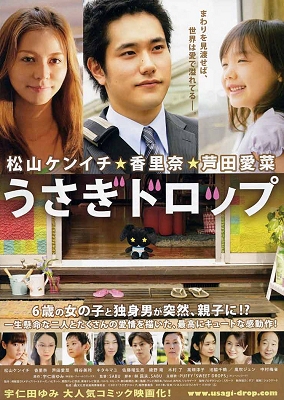
The 2011 live-action Bunny Drop movie does a good job adapting the first half of the anime and leaves things at that (alas, this movie is not subtitled).
The Roku app is functional. The video plays when you hit play. Otherwise, it's like a half-broken VCR, where the buttons don't reliably do what they're supposed to. Closed captions don't work. They do in the browser app, which doesn't appear to suffer from these issues.
Labels: dlibjapan, good morning japan, japanese, japanese tv, nhk cosmomedia, nhk world, streaming, television, tv japan
June 24, 2023
Hills of Silver Ruins (downloads)
Labels: 12 kingdoms, black moon, ebooks, fantasy, japanese, translations
June 10, 2023
Hills of Silver Ruins (downloads)
Labels: 12 kingdoms, black moon, ebooks, fantasy, japanese, translations
June 07, 2023
This page intentionally left blank
In publishing terms, recto is the front of a leaf (or page) and verso is the back. By tradition, page 1 starts on the recto, the right-hand page in left-to-right languages (such as English). Recto and verso are reversed in right-to-left (vertically typeset) Japanese books, so odd-numbered pages are on the left.
Because the typesetter started each section in Hills of Silver Ruins on the recto, these numbering gaps are scattered throughout the books. Here is the spread for part 20. As you can see, the recto is on the left. The page on the right (the verso of page 59) is blank (click image to magnify).

Typical print book layout also begins front and end material on the recto. But not necessarily chapter headings. A chapter usually gets a new page that is either the next page (recto or verso) or always recto (if saving paper isn't an issue).
In Hills of Silver Ruins, though, chapter headings do not get a new page, only white space. Another clever design decision was to use kanji numbers for the section headings but not the chapter headings. Japanese typography offers these options to book designers and greatly simplifies several other variables.
Characters in a given font and size occupy a box the same width and height, including punctuation. There is no spacing between characters (except in children's books). Imagine typing in a non-proportional font and having the line wrap at the right-hand margin regardless of where the cursor is in a word.
As a result, Japanese typesetters don't have to worry about justification, hyphenation, or widows and orphans (unless the result is quite ungainly, such as a single character on an otherwise blank page).
The one exception is punctuation. An end punctuation mark should not be separated from the preceeding text if it falls at the beginning of a line or the top of a column of text. To prevent this from happening, it is acceptable to kern a punctuation mark or push it into space reserved for the bottom or right margin.
In the example below, you can see the chapter number demarcated only with white space, and a comma and period pushed into the bottom margin. Even rudimentary Japanese word processing software has this capability (click image to magnify).

In vertical text, the comma, period, and close quotation mark (、。」) are located at the top (or left) of the aforementioned box while an open quotation mark (「) is at the bottom (or right). Thus the trailing space is built into the punctuation. Quotation marks rotate 90 degrees when printed vertically.
A paragraph indent is one box wide, the same width (or height) as hitting the spacebar once.
Labels: 12 kingdoms, black moon, japanese, publishing, translations
June 03, 2023
Twelve Kingdoms (downloads)
When downloading a file, Google Drive will default to preview mode. To skip this step, click the download icon at the top right on the Google Drive page.
| Poseidon of the East | index epub mobi doc 10/23 | |
| The Wings of Dreams | index epub mobi doc | |
| Shadow of the Moon | index epub mobi doc 04/23 | |
| A Thousand Leagues of Wind | index epub mobi doc | |
| The Shore in Twilight | index epub mobi doc | |
| Hills of Silver Ruins | I–IV | index epub mobi doc 06/23 |
| I | index epub mobi doc 05/23 | |
| II | index epub mobi doc 06/23 | |
| III | index epub mobi doc 06/23 | |
| IV | index epub mobi doc 06/23 | |
| Dreaming of Paradise | index epub mobi doc 07/23 | |
| Hisho's Birds | index epub mobi doc 07/23 |
Chapters are numbered sequentially for file management purposes. The [part + chapter] style used in the books is displayed at the beginning of each chapter.
Translations of Masho no Ko ("The Demon Child") and Kaze no Umi, Meikyu no Kishi ("A Sea of Wind, Shores of the Labyrinth") are available at the Worlds in Translation website.
Labels: 12 kingdoms, ebooks, fantasy, japanese, translations
May 29, 2023
Hills of Silver Ruins IV
Maps
Notes
Glossary
Downloads
More about the title
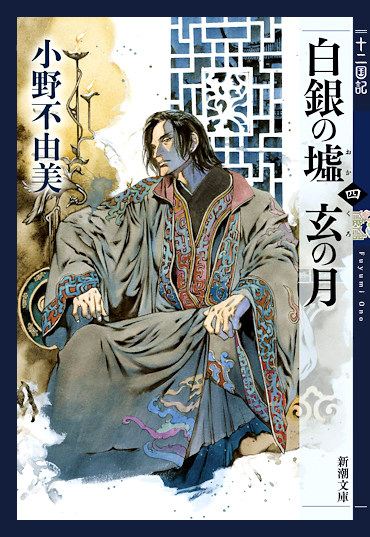
More about the covers
Labels: 12 kingdoms, black moon, ebooks, fantasy, japanese, translations
May 28, 2023
Hills of Silver Ruins IV (notes)
|
Chapter 01 Chapter 02 Chapter 03 • Chapter 04 Chapter 05 Chapter 06 Chapter 07 Chapter 08 Chapter 09 Chapter 10 Chapter 11 Chapter 12 Chapter 13 Chapter 14 • Chapter 15 Chapter 16 Chapter 17 Chapter 18 Chapter 19 Chapter 20 • |
Chapter 21 Chapter 22 Chapter 23 Chapter 24 Chapter 25 Chapter 26 Chapter 27 Chapter 28 Chapter 29 Chapter 30 Chapter 31 Chapter 32 Chapter 33 Chapter 34 • Chapter 35 Chapter 36 Chapter 37 Chapter 38 Chapter 39 Chapter 40 Chapter 41 • |
Maps
Notes
Glossary
Downloads
More about the title
More about the covers
Labels: 12 kingdoms, black moon, ebooks, fantasy, japanese, translations
May 27, 2023
Hills of Silver Ruins (4/41)
Until the adoption of Meiji as the name for Mutsuhito's entire reign, the nengou was traditionally changed several times during the reign of a single emperor—at two fixed points in the cycle of sixty years, or when a series of natural disasters were attributed to an inauspicious nengou, or when some prodigy of nature required recognition in the calendar.
The kanji for the era name of Gyousou's new and improved dynasty are bright (明) and banner (幟).
Labels: 12 kingdoms, black moon, fantasy, japanese, translations
May 20, 2023
Hills of Silver Ruins (4/40)
You'll remember me when the west wind moves
Upon the fields of barley
You'll forget the sun in his jealous sky
As we walk in fields of gold
So she took her love
For to gaze a while
Upon the fields of barley
In his arms she fell as her hair came down
Among the fields of gold
Will you stay with me?
Will you be my love?
Upon the fields of barley
We'll forget the sun in his jealous sky
As we lie in fields of gold
See the west wind move like a lover so
Upon the fields of barley
Feel her body rise when you kiss her mouth
Among the fields of gold
I never made promises lightly
And there have been some that I've broken
But I swear in the days still left
We'll walk in fields of gold
We'll walk in fields of gold
Many years have passed since those summer days
Among the fields of barley
See the children run as the sun goes down
Among the fields of gold
You'll remember me when the west wind moves
Upon the fields of barley
You can tell the sun in his jealous sky
When we walked in fields of gold
When we walked in fields of gold
When we walked in fields of gold
Labels: 12 kingdoms, black moon, fantasy, japanese, translations
May 13, 2023
Hills of Silver Ruins (4/39)
Labels: 12 kingdoms, black moon, fantasy, japanese, translations
May 06, 2023
Hills of Silver Ruins (4/38)
Kaei was the last person to see Risai before she departed for Kei in chapter 6 of The Shore in Twilight.
Labels: 12 kingdoms, black moon, fantasy, japanese, translations