

January 20, 2025
Peaks Island Press and Other Works
With Eugene's passing, Peaks Island Press is no longer in operation. Books within the catalog will be republished in 2026.
His 12 Kingdoms translations, of which he was quite proud and dearly loved, will remain available. At some point, the books may be transferred to another link/URL. If so, that link will be posted here.
See the post below about remembrances. In keeping with Eugene's private personality as well as his eclectic interests, which included technology, a tribute to Eugene will likely take the form of memorial posts on this blog.
Labels: 12 kingdoms, memories, peaks island press


October 05, 2024
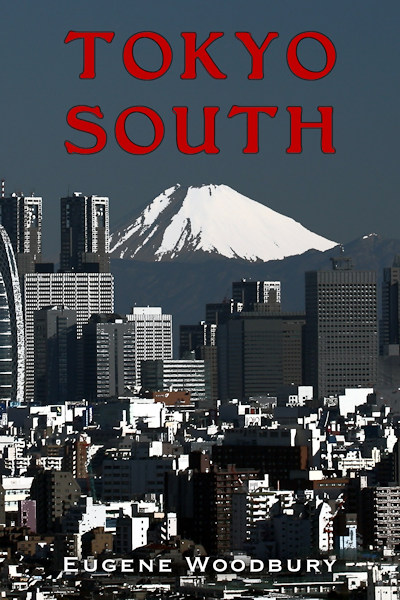
Tokyo South
The first chapter of Tokyo South, "Lost in the Works," was the innagural story of my writing career. I'd signed up for a computer programming class at BYU and discovered that I liked using the Pascal editor as a crude word processor (this was back during the Apple II era) more than programming.
Then "Number Games" won second place in the 1984 Vera Hinckley Mayhew Awards, my first solid bit of external validation. (I doubt the story would be so well received today; I like to call the first half of the 1980s at Brigham Young University under President Jeffrey Holland its glasnost era.)
Over the last two decades, a series of reorganizations and consolidations and force reductions finally resulted in the the Tokyo North and South missions being reunited in 2007. This Ted Lyon interview makes it clear that the shenanigans I describe in Tokyo South were by no means unique to Japan.
If anything, time and nostalgia and the detached sense of sang-froid that comes with age and experience led me to pull my punches a bit.
Tokyo South will be made available at a later date.
Related posts
The evolution
Tokyo South is alive
Tokyo South is dead
The weirdest two years
The problem with projections
Labels: books, BYU, ebooks, japan, japanese culture, kindle, peaks island press, publishing, religion, tokyo south
July 27, 2017
The bosozoku squat
Courtesy of Dan Szpara, here's a veteran bosozoku (暴走族) biker dude showing how it's done.

As Szpara points out, the bosozoku have become a cliché, so in many cases the "acting out" just turns into "acting." Still, a few have kept the faith. Kyra Sacdalan describes the true believers as
a gang, now a lifestyle, still notorious amongst police enforcement. So much so that certain colors and stylings of their flamboyant West Side Story meets Lost Boys uniform are illegal in Japan.
As with the yakuza, the police in Japan have carte blanche to crack down as hard as necessary to maintain (the appearance of) public order. So these "wild ones" have to be careful about where and how they rebel.
But Harley-Davidson riders? "They appear to have an attitude which is carefree, cordial, and genuinely passionate."
Labels: books, ebooks, fox and wolf, japanese culture, peaks island press, yakuza
April 13, 2017
The evolution of the missionary program
Stage I. Mine was one of last cohorts of the legacy system. This was the "Every Young Man Should Serve a Mission" era. (As for the young women, well, if you still hadn't gotten hitched by twenty-one, then sure. But why haven't you gotten hitched?)
In the late 1970s, the church's PR efforts hit Madison Avenue and sociologists started paying serious attention to the church's growth numbers. These studies famously culminated in Rodney Stark's 1984 calculation of a 64 million to 267 million growth in membership over the next century.
Ah, here was "independent" confirmation of the inevitable Mormon hegemony, cementing Mormonism's "fastest growing religion" status (an error that continues to this day). Buoyed by these dubious statistical projections, church leaders convinced themselves they were going to convert the world.
Except the numbers Stark and others were using in their models came from the church itself. The public membership numbers the church publishes each year don't count butts in pews. They're derived from open-ended accounting methods based the accumulation of unexpired membership records.
 |
| The truth is way out there. |
In fact, the church does count how many butts are in the pews every Sunday. Otherwise it'd end up building chapels that sat empty and unused. But like Fox Mulder, they want to believe. And like the Cigarette Smoking Man, they keep the numbers that matter close to the vest.
In any case, wishful thinking eventually ran into the brick wall of reality. To start with, consider the workforce. The more they stressed the hard sell, the more missionaries figured out how to game the system.
Stage II. As these get-big-quick schemes began imploding in missions like Tokyo South, the church decided that not enough young men were serving missions. And it cost too much. The answer was to match mission lengths for men and women at eighteen months.
Mission financing was taken over by the church and quasi-socialized (and then tweaked to preserve the tax incentives) so everybody faced the same up-front costs.
Sounds good in theory. Except a whole lot of twenty-year-olds were more than happy to take a six-month discount on "the two best years." The church was suddenly faced with the challenge of keeping the spiritual sales force intact during its most productive period (the last six months).
That idea was deep-sixed. The cost-sharing measures were preserved.
Stage III. Instead of greasing the skids, maybe it was time to borrow from those Marines Corps ads: "The few, the proud." Raise standards. Toughen the requirements. Emphasize quality over quantity. Missionaries were an elite group, not the hoi polloi.
But once again, too many kids decided that this was good excuse to give the whole ordeal a pass. Especially when dealing with theological cannon fodder, there's strength in numbers. Quantity matters more than quality (because you're never going to have that much quality).
Stage IV. In the meantime, the cruel world was intruding all over the place. Years of cultural diplomacy with China never paid off, delivering a blow to the multi-level marketing strategy I was taught in the MTC. (Seriously, with a few script changes, it could have been turned into any sales pitch.)
The convert-the-world true believers no longer believed quite so much, accepting the stark reality that, in real terms, church membership growth tracks closely to the natural rate. By "natural" I mean the birds and the bees. Mormon boy meets Mormon girl and a bunch of Mormon kids result.
Behind the scenes, the number crunchers at church headquarters were doing (more accurate) butts-in-pews analyses that pointed to a strong correlation between "served a mission" and "shows up to church on Sunday."
That meant maximizing the number of Mormon kids going on missions, which had the best odds of turning them into Mormon adults. It didn't matter if they converted anybody on their mission as long as they converted themselves. Think of it as an institutionalized sunk cost fallacy in action.
It was time to grease the skids again, but with a different set of variables. Knock one year off the start date for men, two years for women. Guys wouldn't have to red-shirt their freshman year and women wouldn't be taking themselves out of the college (BYU) dating market.
Plus, an eighteen-year-old is that much more susceptible to peer group pressure. What are you gonna do straight out of high school? Answer: go on a mission. What joining the military used to be.
This time it looks like they got it right. So far, the new program has been hugely successful. Pay no attention to the slumping conversion rates. Missionaries now spend less time proselytizing and more time trying to be useful. It's turned into the Mormon Peace Corps.
Frankly, that's what the missionary program should have been all along.
Related posts
How it began
The truth is worse
Tokyo South is alive
The weirdest two years
The problem with projections
Labels: books, ebooks, lds, peaks island press, publishing, religion, tokyo south
July 25, 2009
Tokyo South (excerpt)

Introduction
If there is a genre of literature unique to Mormon letters in terms of the church’s social culture (as opposed to being unique, say, in terms of its theology), it is the missionary memoir—the autobiographical account of the two years a young Mormon man (and the occasional woman) spends spreading the message of the church in distant lands.
For a kid from Provo, Utah, that “distant land” may well turn out to be Los Angeles. For a kid from upstate New York, it was Tokyo, Japan. This is certainly not to say that the narratives penned by ministers of other faiths possess less literary merit or a less interesting perspective. The Mormon missionary memoir measures itself only against its own historical standard: always the same, only different.
The typical missionary hails from North America and the suburban middle class, begins his service at the age of nineteen, and sallies forth with a thin comprehension of his religion (but making up for it with zeal to spare). In the end, he’s been there and done that with the rest of his peer group, been subject to the same institutional regimes and regimens, has dealt with the same heroes and jerks.
And yet the inescapable mystery remains—that these identical pressures and deformations, punishments and rewards, produce such wildly different products at the end of the spiritual assembly line.
The majority, to be sure, are spared any true physical hardships or trials of the soul. They carry purse and scrip and wear shoes made for walking. They are weekend warriors in a lay army. The work is the kind that prepares a young mind for the challenges of the post-industrial world: long, dull hours of often purposely pointless effort interrupted by occasional moments of inexplicable wonder and discovery.
These moments can propel them into the shocking embrace of a world completely different from everything they thought they knew. It can shake the complacency out of them, and a good complacency-shaking is what the average teenager needs.
This is not, of course, the stated purpose of the program—the stated purpose being Preaching the Gospel and Saving Souls. Alas, as a purely evangelical enterprise, the missionary program hardly constitutes the most efficient use of the church’s resources. The number of graduates from the Missionary Training Center has more than tripled since I spent my two months there—evidence of enormous success, one would think—except that baptisms per missionary have dropped by half over the same time period (and continue to fall).
And, as I illustrate in the largely autobiographical account that follows, those baptisms have only an abstract statistical relationship to the official membership numbers the church publishes.
Hence the admonition that “every young man” should serve a mission was, for a time, qualified to mean not every young man (and you slackers know who you are).
Similar and understandable objections are raised by professional soldiers when presented with proposals to reintroduce the draft—not to better fight wars, but in the pursuit of high-minded goals of social engineering.
But when it turned out that the slackers knew exactly who they were, and there were a lot of them, the church reversed course once again and declared that the admonition henceforth applied to every young man and woman. And shaved a year or two off the minimum qualifying age to encourage their parents to kick them out of the house and into the arms of their ecclesiastical leaders.
The mission was thus rechristened the church’s retention tool of choice. And why not? We are an imperfect species, and the modern church remains in short supply of what universal conscription supplies a nation in times of crisis (an organized religion, by definition, being constantly in a time of crisis): a common cause and a shared experience that bridges the social fault lines.
All politics is local, Tip O’Neil observed, and that is especially true of religious politics. A geographically concentrated church can only achieve “worldwide” status by uprooting its youth and sending them abroad—as metaphysical pirates, scavengers, and ambassadors of good (and bad) will—so that they will bring home with them a more expansive sense of the world “out there.”
Self-funded and run and staffed by rank amateurs, the missionary program is not sustainable as a proselytizing organization. But compromises must be made, and without the draw of a universal, shared (and occasionally exotic) experience, there soon wouldn’t be anybody left to spend two years even pretending to proselytize.
It is especially important for young men, who are provided by modern society with little in the way of canonized “coming of age” ceremonies. (Which is why I find it difficult to disparage missionary farewells and homecomings, their silly and self-aggrandizing tendencies notwithstanding.)
The exponential expansion of the number of missionaries means there is a lot more pretending going on these days (about what all these missionaries are actually going to accomplish). And, by force of circumstance, also a lot less lying about what teenagers are actually capable of when it comes to recruiting converts.
The rise and fall of the Tokyo South Mission (itself a Buddhist metaphor for the fleeting nature of things) set in motion a reactionary but rational response that, decades after the fact, still outlaws anything resembling “catch sales” street proselyting techniques.
At some point in the final decades of the twentieth century, the church was finally forced to abandon (without ever admitting it) the long-held triumphalist fantasy of becoming something other than an oddball fringe offshoot of Christianity.
This was the dazed and confused end of an era, when a naive teenager from upstate New York could mingle with the saints and sinners (meaning the saints and sinners found among his fellow missionaries) without anybody asking what in the world he was doing there or what he hoped to accomplish.
So I remain grateful for those two years when The Powers That Be shrugged at my real reasons—because I was supposed to, because it was what all my friends at church were doing, because I’d never honestly considered the alternatives, or, for that matter, deeply questioned any aspect of my religious life—and said, “Fine, if that’s what you want to do. Maybe it’ll do you some good.”
Well, it did. But not in the way I expected or the way they intended.
First District: Senzoku
Chapter 1. Lost in the Works
Elder Thomas Thackeray pressed the glowing button. Nothing happened. He stared at the strange Japanese writing and wondered what to do next. He was supposed to buy a 270 yen ticket. But the machine had all his change and he still didn’t have a ticket. So he hit it. Hard.
There he was, an American in an off-the-rack, three-piece suit, beating up on a ticket machine in Shinjuku station. But the people standing in the line behind him seemed to approve.
He was winding up for another try when the machine surrendered with a metallic thunk. The copper and silver coins jangled down into the smooth metal tray.
Thackeray scooped up the coins and shoved them into the adjacent machine, glancing over his shoulder in time to see Elder Patrick shepherding the rest of the missionaries down the staircase to the subway platform.
“Wait!” he shouted. He punched the button. The ticket spit out into his hand. He sprinted to the turnstiles and stumbled down the steps to the platform.
Subway cars waited on each side of the platform, pneumatic doors gaping wide open. Thackeray froze. WHICH ONE?
He ran down the platform, searching frantically for the navy-blue suits and pale Caucasian faces. A bell clanged loudly above his head. The conductors blew their whistles. Red running lights flickered to green. The doors hissed shut.
“WAIT!” He held out his arms as if he could bring the trains to a halt through shear force of will. The couplers pulled tight with a dull thud. The cars rolled away from the platform.
“Wait—” he said again, his voice fading to a taut whisper.
Thackeray paced the platform in a daze. For an hour he watched the subways come and go. But after each arrival and departure, after the crowds dispersed, he was still alone.
Finally he walked back up the stairway to the concourse. “I should have gone with Elder Carpenter,” he muttered to himself. Carpenter had carted the luggage back to the mission home in the mission van. Two new missionaries went with him.
He looked up and stopped. A policeman was standing in his path. “Excuse me,” he said, backing up a step. The policeman frowned and said something. Thackeray shook his head and the policeman repeated himself.
Thackeray concluded he was asking for his passport. He produced it from his suit coat pocket. The policeman snapped open the booklet, peered at Thackeray, then at the photograph in the passport.
“Nyu Yoku desu ne!” The policeman raised an eyebrow and said something Thackeray took as a reference to New York City. He wasn’t from New York City but figured the best tactic was to agree with whatever the cop said.
“Can I help?” said a voice in heavily-accented English.
“I think I’m lost.” Thackeray didn’t know who had spoken to him, but the English was gracious music to his ears. A college student walked up and introduced himself. He and the policeman exchanged a few words.
“Where you going?” the student asked.
“I’m not sure. I think—I think maybe I have something—” He reached into his pocket and pulled out the envelope Elder Patrick had given him at the airport. “Will this do?”
The two Japanese men examined the return address on the envelope. The policeman’s eyes lit up. “Ah! Hiro desu.”
He knows the address,” the student explained. “It’s not far from here.”
The policeman sketched a map on the back of the envelope. He traced over the coarsely drawn lines with his pen as he spoke.
“Go through the turnstiles over there,” translated the student, pointing. “And take the right subway. Hiro is the seventh stop. Go up the stairs and left. About a hundred meters down the street.”
Thackeray didn’t stop to think why the subway to Hiro was in a completely different direction than where he’d last seen Elder Patrick. All he knew was that he could get from here to there. The icy desperation in his gut began to melt.
“The policeman will change the ticket,” said the student.
Thackeray turned to thank him but he was already gone, lost in the crowds.
“Come, come,” said the policeman, assuming an impatient, official tone. He approached the ticket taker sitting in the booth between the entry and exit turnstiles and spoke briefly. He turned and snapped his fingers. Thackeray held out the ticket. The ticket taker marked it with a transfer stamp and handed it back.
“Uh, domo arigato.” Thackeray stuck out his hand, then corrected himself and bowed. The officer grinned and nodded in return.
Thackeray pushed through the turnstiles and walked down the stairs to the subway platform.
Hiro was the seventh stop, just as the student had promised. The station name was written in bold romaji letters on backlit signs along the station wall.
Up on the street, the city was dark and quiet. It was past ten at night. Thackeray vaguely remembered eating breakfast in the Missionary Training Center in Provo twenty hours before. But he wasn’t tired. He set off down the sidewalk.
The mission home was an office building, five stories of gray metal and tinted glass that glistened in the rain-streaked darkness like black, polished granite. “The Church of Jesus Christ of Latter-day Saints,” Thackeray read aloud. The lettering was etched into the glass above the entranceway. He walked up the short flight of steps to the landing and pulled on the door handle.
It didn’t budge. The door was locked. He pushed. Definitely locked. Had they forgotten about him altogether?
“Hey! Anybody home?”
Thackeray paced back and forth on the narrow landing. He felt stupid, the same way he’d felt his first month in the MTC. Boy, was he glad that was over. Eight weeks memorizing discussions and cramming vocabulary lists. By the halfway point, four groups of Japan-bound missionaries had come in behind him. At least they knew less than he did. By the time he left he was an old sage. Knew everything about the MTC, everything about Japan. Or so he thought.
Now he didn’t know a thing. He was losing IQ points by the minute. He stepped down to the sidewalk and stared up at the obsidian-like glass.
A man strode down the sidewalk. He was wearing a bowler hat and a charcoal gray overcoat. Even more unusual, he was a good two or three inches taller than the missionary. He touched the rim of his hat as he passed.
“Good evening,” he said in a clipped British accent.
“Good ev— Hey, wait!” Thackeray ran down the sidewalk after him.
“What is it?”
“I—I think I’m lost.”
“So where do you want to be?”
“The Tokyo South Mission?” It was as much a plea as a statement.
“South?” The man chuckled. “You definitely are lost. You found the right place on the wrong side of town. These are the offices of the Tokyo North Mission.”
“Tokyo North—”
“Yes. President Atkinson’s children attend my school.” The man asked, slightly puzzled, “How did you get here in the first place?”
Thackeray handed him the envelope.
“Ah, yes. That’s the address. Do you have anything else?”
“I don’t know.”
“Well, there might be something in this envelope.”
“I guess,” said Thackeray. He’d only looked inside the envelope to get traveling money. Dumb and dumber.
The man sorted through the contents: a letter of greeting from the mission president, a handful of proselyting leaflets, and several thousand-yen notes. The man pulled out one of the leaflets and turned it so the light from the street lamp fell on the paper.
“There you go.” He pointed at two telephone numbers and a small map printed on the back of one of the leaflets. “Those are probably the phones at your office. Give them a ring. They should be able to help.” He handed the envelope and leaflet back to the missionary. “Good luck, eh?” he said, waving off. “If you get lost again, find a koban—a police box—and give that slip of paper to an officer.”
“Where’s a phone?”
“There’s a cafe up the street.”
“Thank you!” said Thackeray. The Englishman waved back without turning around.
The cafe was closed. A single bulb burned in an overhead fixture. An old woman, wearing a pleated white smock over a faded kimono, was meticulously sweeping the floor in the warm, yellow light. She looked up with squinted eyes when Thackeray rapped on the colored panes.
She opened the door a crack and peered out.
“Denwa?” said Thackeray. At least he remember the word for telephone.
The cleaning woman slowly opened the door and stepped back into the middle of the room, giving him a wide berth. She pointed at a pay phone in a small nook behind the cash register. There was a single slot on the top of the phone, a large “10” stamped into the chrome. Thackeray dug into his pockets and pulled out several coins, but he had none in a 10 yen denomination.
“Uh, sumimasen? Excuse me?” He held up one of the silver coins and pointed at the phone. The woman took the coin and walked over to the cash register and scooped out ten copper coins. Thackeray nodded and returned to the phone.
The phone at the other end of the line rang once.
“Hello?”
“Hello? Who is this? Thackeray—is that you!? Where are you!?”
“A cafe about a block from the North Mission in Hiro.”
“WHAT!”
“Uh, that was the address on the envelope I got at the airport.”
“THAT’S OLD STATIONERY!” wailed Elder Patrick.
“Oh.”
“You found our address, didn’t you?”
“Well, there was this leaflet in the envelope and—”
The phone clicked and went dead. The dial tone hummed.
“Hello?”
Thackeray pushed another coin into the slot. He dialed the mission home number. Busy. He looked at the leaflet and dialed the second number. The phone rang several times.
“Hello!” wheezed Patrick, having sprinted from the clerk’s office back to the secretary’s office. “Listen, Thackeray Choro, how many ju-en do you have? That’s those ten yen coins.”
“Ju-ens? Oh, eight.”
“Put them all in.”
Thackeray slipped the coins into the slot. The receiver clicked as each coin rattled down through the mechanism.
“Listen,” Patrick went on. “Can you remember how you got to Hiro from Shinjuku?”
“Shinjuku?”
“The place you got lost.”
“Oh, I think so.”
“Go back to Shinjuku and get on the Keio train, outbound. That’s the one on the right going down the stairs from the ticket machines.”
“How do I know when to get off?”
“Just ask someone,” said the exasperated Patrick. “Just ask, Fuchu desu ka? That’s where you want to go. Fuchu.”
“Right.”
“You got that? If you get lost again, call!”
The line went dead. Thackeray hung up the phone. Three coins rattled down into the coin return slot. He picked them up and turned to leave.
“Domo arigato,” he said, bowing. The woman smiled, likely in relief at his imminent departure, and bowed in return.
The Shinjuku-bound subway was more crowded than the one to Hiro. A pack of teenagers wearing copycat James Dean leather jackets milled together at the far end of the car. They were surprisingly unintimidating.
The train jerked forward. Thackeray grabbed a strap. A girl with blue and red hair held onto the strap next to him. Unique, he thought. It was all unique. He was from upstate New York. He’d never been on subway before. He’d never been lost before. He’d always known where he was going. Until now.
The train pulled into a station. Thackeray glanced out the window to check the destination sign, but it flashed by too fast. I missed it! he thought. He leaned over the seats and craned his head to look down the platform. Was this stop five or stop six? It couldn’t be stop seven—could it? The girl with the rainbow hair eyed him curiously. He looked at the open subway doors and back at the girl. He took a deep breath.
“Is this Shinjuku?”
“Chigaimasu.”
What does that mean? The bell clanged. He stepped towards the door.
The girl grabbed his arm. “No! No!”
“The next one?”
She nodded. When the subway arrived in Shinjuku, the girl touched him on the shoulder. “Shinjuku desu,” she said.
“Domo arigato,” said Thackeray. He wanted to say more but didn’t know how.
He found his way back to the concourse, back to where he’d started. He was no longer afraid of the city. In fact, he was enjoying himself and was sorry that the adventure would have to end. He bought a 270 yen ticket and walked down to the Keio line platform. The train arrived several minutes later.
“At least I know my way around Shinjuku Station,” he told himself as he found an open seat.
At the next station a young boy, no older than fourteen, boarded the train and slid into a seat across the aisle from him. The boy wore a dark blue suit that Thackeray recognized as a school uniform. He held a small black leather attaché case on his lap. The salaryman training started early.
The train pulled into a station. Thackeray turned around to see the destination sign. When he turned back, the boy blurted out, “Are you American?”
Thackeray nodded.
“Where are you from?” The boy strained at each word, but his accent was better than the college student’s.
“New York.”
“New York City?” said the boy with wide eyes.
“No.” Thackeray laughed. “Upstate. Uh, the country—” He gestured with his hands trying to mime the word.
“Oh. Inaka,” said the boy.
“Yes. Hai. Inaka desu.”
“What do you do?”
“I’m a missionary. Senkyoshi desu.” Thackeray handed him a leaflet.
The boy took it eagerly. “I don’t know Morumon Kyokai,” he said, studying the small map on the leaflet. “You going here?”
“Yes.”
“Lots of Americans here.”
“Yeah. There probably are.”
The train slowed as it approached a station, the sharp hiss and squeal of the air brakes. The boy jumped up and stood by the exit doors. “Can I keep?” he asked, holding up the leaflet.
“Sure.”
The train shuddered to a stop. The doors hissed open.
“Fuchu wa tsugi no tsugi. Next after next.” The boy hopped down onto the platform and scooted away into the night.
Thackeray listened carefully as the train coasted into Fuchu station. “Fuchu de-gozaimasu, Fuchu de-gozaimasu,” the conductor’s voice squawked over the loudspeakers.
Thackeray stood by the door as the boy had. The train stopped. He stepped out into the cold night air. As he walked down the short flight of stairs from the platform, he could see Elder Patrick and another missionary waiting next to the turnstiles. He handed his ticket to the ticket taker and joined them.
“Well, tell me, Thackeray,” said Elder Patrick. “What was it like getting lost in the biggest flippin’ city in the world?”
He shrugged. “Not so bad, I guess.” He glanced back over his shoulder at the empty station platform. He could still feel where the girl with the rainbow hair had grabbed his arm.
Tokyo South will be republished on this blog at a later date.
Labels: ebooks, japan, japanese culture, kindle, lds, peaks island press, publishing, religion, tokyo south, utah
June 20, 2009
Darcy and Kagekatsu
 My sister's analysis of Darcy from Pride and Prejudice reminds me of the NHK historical drama, Tenchijin, about a minor daimyo, Kagekatsu, who governed Echigo Province from 1578 to 1623. He is depicted as a classic introvert, handsome and accomplished, but who loathed "socializing."
There is apparently solid historical evidence for him being a man of few words (the court historians kept detailed records), and actor Kazuki Kitamura does a good job of depicting him just dying inside when trapped in situations he has to schmooze his way out of.
Like the great warlord Uesugi Kenshin, whom he succeeded, when faced with a battle or political dilemma, Kagekatsu was wont to retreat to a literal cave to think things through. If he'd been lord of Pemberley instead of Echigo, he would have spent most of his time in the study.
When dealing with the hyper-extroverted warlord Hideyoshi, he dragged along his gregarious adopted brother, Kanetsugu (Satoshi Tsumabuki), to do the talking, a la Aaron and Moses. Kanetsugu had to work hard to convince Hideyoshi that his brother was being quiet, not contemptuous.
As Jonathan Rauch (my go-to guy on the subject) explains, "[Extroverts] cannot imagine why someone would need to be alone; indeed, they often take umbrage at the suggestion."
Kitamura's Kagekatsu would make a good Darcy. Not surprisingly, the NHK series is told from the point of view of Kanetsugu, not Kagekatsu. Introverts really are boring, but they prefer it that way.
Labels: criticism, history, introversion, japan, nhk, peaks island press, taiga drama
June 06, 2008
Tokyo South is dead
I haven't been keeping up on church reorganizations in Japan, so this news comes to me rather late. But an email from a recent Tokyo South RM confirms that the mission is no more. A bit of research turned up this note in the Church News, February 10, 2007:
Portions of the Japan Tokyo North Mission and Japan Tokyo South Mission are being consolidated and will be known as the Japan Tokyo Mission. The newly aligned Japan Tokyo Mission will be concentrated around the greater Tokyo metropolitan area and its 10 stakes.
Essentially, the Tokyo mission structure has returned to the state it was in when I stepped onto Japanese soil thirty years ago, a few months after the creation of the Tokyo South mission out of the Nagoya and Tokyo missions. My first senior companions were from the Nagoya mission.
My correspondent describes the final days of Tokyo South as a mirror image of its opening days (a good thing, by the way). In another strange turn of events, Kobe mission was reopened. I'd kept the Kobe mission alive in The Path of Dreams for purposes of plot. Now it's alive for real.
Sociologically, this is a curious move. It's like closing the Los Angeles mission and opening one up in Bakersfield. An effort, perhaps, to save the church from the missionaries.
Related posts
How it began
The evolution
Tokyo South is alive
The weirdest two years
The problem with projections
Labels: BYU, japan, peaks island press, religion, tokyo south