

October 30, 2024
Mieruko-chan

Donna Howard investigates the provenance of relics and antiques with the help of people from the past who are only visible to her.
For Natsume, his second sight (inherited from his grandmother) often results in the supernatural Shinto world intruding on his otherwise ordinary day-to-day life.
Mieruko can see dead people too. Her name is a pun on the verb meaning "I can see." That makes her privy to an extensive and weirdly thriving ecosystem of the living dead invisible to all but a select few.
Unfortunately for Mieruko, she has a hard time telling the good dead people from the bad dead people.
Even the guardian deities (inari) at the Shinto shrine are fierce and intimidating. Most of the dead people and creepy crawlies look like mutating corpses. Which is bad enough, except when they realize she can see them. Mieruko has gotten good at maintaining a look of deadpan indifference.
The rules governing Mieruko's abilities mirror those in Natsume's Book of Friends (which just debuted a new season). Creatures from the spirit world can only physically interact with you if they catch you looking at them first. Maintaining an attitude of stoic indifference can be the best recourse.
Which brings me to a new word I learned reading the manga: suruu sukiru (スルースキル), a transliteration of "through skill." Weblio defines it as the "ability to ignore bad things happening to you." In other words, the skill to work through a problem by tuning out and not getting upset about it.
But like Natsume, a girl's got her limits. There are times when Mieruko has no choice but to lend the ghouls an ear. Occasionally she discovers their intentions are benign. At other times, not so much. It's easier when the monsters behave like monsters, but even there she can jump to the wrong conclusions.
The occasional Sixth Sense twist will also fool the reader. And there's a touch of Dexter in the cat killer arc as well (which is featured in the anime).
Her best friend Hana is a ghost magnet ("Like moths to a flame," an old soothsayer ally observes), though not having second sight herself, she's clueless about their presence. One of their classmates also has second sight, though not being as powerful as Mieruko, she misjudges their respective abilities.
These moral dilemmas lend Mieruko-chan depth without being depressing or nihilistic. Some of the stories are genuinely heartwarming. If you're a fan of Edward Gorey or Charles Addams, Mieruko-chan is right in your wheelhouse.
Written and illustrated by Tomoki Izumi. Published in Japan by Kodansha and by Yen Press in the United States. The anime is based on the first three volumes of the manga. A live-action film adaptation is scheduled for release in 2025.
Related links
BookWalker (English emanga)
BookWalker (Japanese emanga)
Amazon (Kindle and paperback)
Crunchyroll (anime)
Labels: anime, bookwalker, crunchyroll, ebooks, japanese culture, kindle, manga, manga reviews, movies, religion, shinto


October 05, 2024
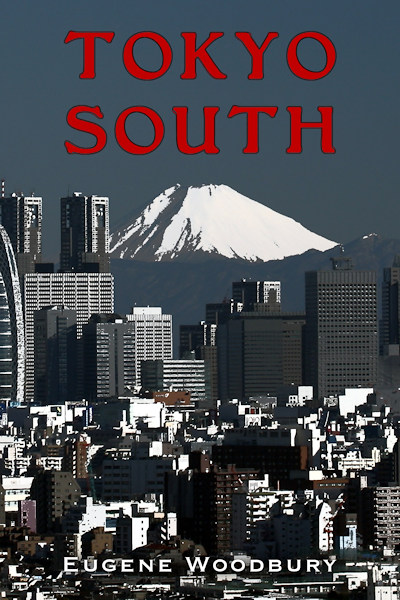
Tokyo South
The first chapter of Tokyo South, "Lost in the Works," was the innagural story of my writing career. I'd signed up for a computer programming class at BYU and discovered that I liked using the Pascal editor as a crude word processor (this was back during the Apple II era) more than programming.
Then "Number Games" won second place in the 1984 Vera Hinckley Mayhew Awards, my first solid bit of external validation. (I doubt the story would be so well received today; I like to call the first half of the 1980s at Brigham Young University under President Jeffrey Holland its glasnost era.)
Over the last two decades, a series of reorganizations and consolidations and force reductions finally resulted in the the Tokyo North and South missions being reunited in 2007. This Ted Lyon interview makes it clear that the shenanigans I describe in Tokyo South were by no means unique to Japan.
If anything, time and nostalgia and the detached sense of sang-froid that comes with age and experience led me to pull my punches a bit.
Tokyo South will be made available at a later date.
Related posts
The evolution
Tokyo South is alive
Tokyo South is dead
The weirdest two years
The problem with projections
Labels: books, BYU, ebooks, japan, japanese culture, kindle, peaks island press, publishing, religion, tokyo south
August 07, 2024
Tear down this e-wall!

In Japan, copyrighted works like music, movies, and books are exempt from price fixing laws that prohibit the imposition of resale price maintenance rules on resellers. That means a Japanese publisher can enforce the manufacturer's suggested retail price (MSRP) on intellectual property published and sold in Japan.
Even so, the reimportation of Japanese books has never been part of the debate. Piracy has since become a bigger problem. But, if anything, walled gardens exacerbate the piracy problem.
And yet those walled gardens persist.
When you publish a Kindle ebook on Amazon's KDP platform, you can make it available on all Amazon platforms. In a sane world, every digital title in the Amazon catalog would be listed in every Amazon store worldwide. But purchasing Japanese Kindle ebooks on Amazon outside of Japan requires jumping through a bunch of hoops.
Precisely the sort of thing the World Wide Web was supposed to eliminate by being, you know, World Wide. Some progress has finally been made on that front, with legal Japanese IP finding purchase outside the walls.
Amazon US breaks out Japanese as its own category in the Foreign Language section of the Kindle store. Given the great appeal of manga, the e-walls there are crumbling the fastest. The Japanese edition of Ascendance of a Bookworm can be purchased from Amazon US in both the ebook and paperback formats.

Those walled gardens still exist. Companies like Apple and Amazon are basically tossing titles over the walls rather than breaking them down and creating an all-inclusive catalog in the cloud.
This makes sense for paperbacks, as warehousing and shipping traditionally printed books is expensive. It shouldn't be an issue with ebooks.
Except it is. For the customer, even in the digital realm, Amazon Japan is treated as a completely separate entity from Amazon US. For example, Amazon Japan carries the Japanese and English editions of Yokohama Shopping Log. Amazon US only has only the English edition.
By contrast, you can access both the Kadokawa BookWalker English and Japanese catalogs from a single account. And with yen exchange rates hitting lows not seen in forty years, Japanese ebooks are a bargain abroad. You can read BookWalker ebooks in a browser or by using their apps, which work like the Kindle Reader apps.
BookWalker has the English and Japanese ebooks for Yokohama Shopping Log on its respective websites. Granted, BookWalker is the storefront for a single publisher. But the only obstacle here is scale.
Amazon Web Services is the biggest cloud computing platform in the universe. Scale isn't a problem. Amazon could merge their ebook catalogs or take the single-login approach. Either way, "Mr. Bezos, tear down this e-wall!" (Yeah, I know, he's not really in charge anymore, but I couldn't resist the reference.)
Related links
BookWalker (English)
BookWalker (Japanese)
Kindle Store
Yes Asia
Labels: books, bookwalker, business, ebooks, kadokawa, kindle, manga, publishing, streaming, technology
May 11, 2024
Japanese language links

My main online dictionary is Weblio. I also reference Eijirou and Word Bank.

NHK World Japan is NHK's English language service. The live feed can be viewed online, along with an extensive VOD library and OTA in some areas (9.4 in Northern Utah). There are apps for most streaming platforms.

The previous 24 hours of NHK Radio newscasts can be streamed online.

For now, my primary sources for anime and Jdrama are Crunchyroll, Netflix, and Tubi. Many of the Japanese historical dramas on Tubi are distributed by Samurai vs Ninja. I purchase emanga at BookWalker.
A Japanese tutoring YouTube channel I watch on a regular basis is Kaname Naito.
Related links
Weblio
Eijirou
Word Bank
Word Hippo
NHK World (Japanese)
NHK World (English)
News from Japan
NHK Radio News
Crunchyroll
Tubi
Netflix
Samurai vs Ninja
BookWalker (Japanese)
BookWalker (English)
Kindle Store
Yes Asia
Labels: anime, bookwalker, crunchyroll, ebooks, hidive, japanese, japanese tv, jdrama, jme, kindle, language, netflix, nhk, nhk world, samurai vs ninja
June 23, 2011
This screensaver for sale
Of course, the hoity-toities who live to be offended by and and all "capitalistic" innovations will take offense (hey, then don't buy one), but this strikes me as a perfectly appropriate commercial activity.
It's the same advertising strategy employed by PBS and National Geographic (the print magazine): content framed by "a word from our sponsors" at the beginning and end. They make it work by running ads that appeal to the intellectual vanity of their audience.
Public radio and television have perfected the art of the non-ad ad. As with movie trailers, it's important to get the right balance so it doesn't become annoying and ruin the "commercial-free" spell. (On second thought, treat movie trailers as a cautionary tale.)
How many high-falutin' literary magazines don't take advertising?
In any case, what are book covers and blurbs but ads? Flipping to the end of a dull reference book I keep next to my desk, I find ten pages of promos. As long as I've been ordering books from Japan, I've been pulling out the blow-ins (and using them as bookmarks).
Advertising is information. Back in the pre-Internet computer magazine days, the ads were where the bleeding edge turned real, where the hypothetical turned into hardware. One reason I visit sites like Anime News Network is to check out the ads in rotation.
So bring it on, Amazon. Get creative. If the customer doesn't like it, you'll find out soon enough. That's what the experiment of capitalism is all about.
Related posts
Amazon innovates
Digital hoarders and literary snobs
Labels: advertising, books, ebooks, economics, kindle
June 13, 2011
The E-ink revolution
I have three Kindle emulators/readers and two ePub readers on my computer. I've been coding and publishing ebooks for going on three years. In any case, I'm not talking about reading ebooks. I'm talking about the ebook reader screen.
This isn't some neato-keen gizmo, old technology in new bottles. It really is a paradigm shift.
Mention a grayscale display and I even I can't help thinking of my old Toshiba T1200 laptop with a 640×200 monochrome LCD screen. I'm not alone with this, hence the standard: "Who wants to read a book off a screen?" reaction.
E-ink really is much more like ink than any conventional LCD. To start with, the pixels are white and black--reinforcing the appearance of real paper--not black and "transparent."
My first reaction upon seeing a real Kindle at Walmart was that it was a dummy model plastered with a fake screen decal. I looked closer. I picked it up. It weighed less than a paperback. No, that was the real screen. And it was on.
E-ink is a "passive" technology. If you don't do anything, it doesn't do anything. It doesn't flicker, it doesn't refresh. It just sits there--like print. And uses precious little power doing so.
Press a button, and all those E-ink pixels haul their little butts out of one digital Barcalounger and plop themselves back down in another, which takes much longer than their LCD cousins. Don't expect E-ink video anytime soon.
That and the 16 level grayscale are the current technological limiting factors. Not color. Leave color to tablets for now. The immediate goals of ebook readers should be portability, format universality, and 256 level grayscale.
Plus an intuitive interface (the Kindle interface is a tad overcomplicated) and a price point that turns the product into an appliance and makes it disposable.
Once the book-buying public replaces their outdated assumptions about the capabilities of digital screens with the reality of E-ink, the paperback in particular will go the way of the LP. (And, yes, the LP is still around.)
Related posts
This screensaver for sale
Amazon innovates
Digital hoarders and literary snobs
Labels: appliances, ebooks, kindle, publishing, technology
August 23, 2010
It's a power law world

Granted, the long tail at Amazon is by now so long that this is the result of selling on average one Kindle book a day for two weeks. Moving into the top 1000 would require selling ten times as many. But you never know!
I'd like to see Amazon plot the Brownian motion out here on the long, long tail, and observe how some titles break away while most others sink into (or stay rooted in) oblivion. It'd make for a fascinating bit of visual modeling.
For the self-pubs, just as with the pros, there's an irreducible complexity at work, the eddies and currents of taste and fickle chance choosing one thing and not the other for reasons that can never be completely fathomed.
Consider that Netflix was willing to shell out a cool $1 million in order to improve its predictive movie matching service a mere 10 percent. (In practice, it reminds me of Word's grammar checker: useful but totally unreliable.)
The self-pub hand-wringers are of the same stripe as those who don't trust Adam Smith's invisible hand because they can't see "how it works," because obviously nothing works without an identifiable brain trust behind it.
Study a little physics, though, and you must quickly come to terms with the fact that the world continues to work just fine even when it is completely incomprehensible.
July 29, 2010
Wily Wylie
Random House gets mad because now it can't make boatloads of extra cash for doing what, heck, I do. Remember when the music industry made boatloads of cash burning CDs from the master tapes in its vaults, and sold them to people who'd already bought the LPs and cassette tapes?
Remember what happened next? Remember how the music industry responded with cool heads and innovative, forward-looking business plans? No?
Random House, the country's leading trade publisher, announced Thursday that it would conduct no new English-language business with the Wylie Agency, which earlier in the day launched an e-book line that would release works by John Updike, Salman Rushdie and other Random authors through online retailer Amazon.
Random House lost a similar e-rights case with Rosetta Books a few years back. So, in the words of Authors Guild President Scott Turow,
[Random House isn't] gonna take anything out on the behemoth Amazon . . . [they're] gonna walk down the beach and kick some sand in the face of the 99-pound weakling [i.e., the midlist authors Wylie represents].
The problem is that, as Lynn Neary further explains on Morning Edition, "Publishing [used to be] about putting books on shelves. If you don't need to put books on shelves, you don't need the [traditional] publishing houses."
Seth Godin echoes this sentiment, wondering why publishers act as if they are in tree-growing or papermaking or offset printing or shipping businesses. He concludes,
Many businesses act as if they have a stake in their suppliers and other vendors. Instead of scaling the part of their business that can move quickly and well, they defend the part they don't even own. [He expounds more on the subject here.]
Unlike Wylie, the problem with poor Wile E. Coyote is that no matter what his goals when he starts out, he always ends up in the ACME anvil & explosives business, not in the bird-eating business.
UPDATE: Jeff Bezos talks about the Amazon vision and the new Kindle 3 on Charlie Rose. Bezos understands what business he is in (and I'm glad he's still avoiding the touch screen).
UPDATE: Wylie calls Random House's bluff big time.
Labels: business, ebooks, kindle, publishing
November 30, 2009
Digital hoarders and literary snobs
There's little for me to disagree with, except I think it's a mistake to try and compare the digital versions of anything with the "standalone" physical (paper) product. Though Friedman's suggestion of a trade paperback pricing standard is more enlightened than treating ebooks as hardcovers.
And she says up front she's open to changing her mind if market forces so dictate.
Compare an episode of House that you can watch for "free" on broadcast TV or Hulu. You can also rent it through Netflix for around $2.00. Or pay a ten dollar premium on top of that to own the DVD. Which lots of people do, even if they'll never watch it enough times to amortize the cost.
Renting's fine with me. Pretty much the only DVDs I buy are anime titles going out of print. The scarcity threat. I'm sure at the heart of this behavior is a primitive pack-rat mentality about hoarding and possessing. We happily pay a premium for "things." Not data. Owning data is like owning smoke.
If the typical trade paperback price is $15.00, then minus the ten buck "hoarding" premium puts the price at $5.00, or more in line with mass market paperbacks, which are also not intended to be hoarded. And that's non-DRM. There's also the "sharing" premium enjoyed by books and CDs and DVDs.
My local library rents DVDs for a dollar. Books and CDs are "free" (beyond taxes, but you bought a TV to watch "free" TV). When I was growing up, any book in the house would be read by everybody in the house, and then often donated to the library to be read by hundreds more.
And when I was in college (during the late Bronze Age), there was always a kid in the dorm who had a nice stereo system, including a high-end turntable and tape deck. So if somebody you knew had an album you liked, you bought a cassette, borrowed the album and made your own mix tape.
I wonder how much of such "borrowing" goes on with physical books, CDs and DVDs, versus the typical Kindle owner or iTunes subscriber (with and without piracy factored in).
But the most brutal realization for publishers may be that digitization has shifted the value of status seeking and signaling from the content to the device. Your album collection doesn't impress as much as your MP3 player. Your bookshelf doesn't impress as much as your ebook reader.
Being infinitely reproducible at almost zero cost puts the value of hoarded digital content at close to zero. Digital pirates hoard so much because the added value of each file--both in real and psychological terms--is so low, and so they end up hoarding more than they could possible consume.
Content sharing and social networking software could address that. But making that work would require a significant rethinking of the bad unintended consequences of DRM and the good unintended consequences of technologies like text-to-speech when assessing what people are really paying for.
Even the diehards at the RIAA won't deny that pretty much the whole point of a boombox is so that other people can hear what you are listening to.
For example, combine social DRM with managed file sharing. When enabled, anybody within WiFi or Bluetooth distance could preview your stored ebooks (or your marked selections). Free advertising for the publisher while broadcasting your literary tastes and marking your social status.
This suggests a value in backlists and "classics" other than reading. I can't help rolling my eyes when people post those "favorites" lists invariably salted with the egghead titles everybody was supposed to read in college but never actually did. Or if they did, because they had to and never will again.
I cheerfully admit to being a cynical literary populist who puts a premium on "entertainment." But perhaps ebook publishers should stop treating their readers solely as consumers, and rather as status-seeking snobs at a tony cocktail party, who want their purchases to say (in part), "Look at me!"
And at the other end of the social spectrum, as introverted otaku desperate for electronically extroverted ways of sharing their obsessions with other like-minded geeks. Not to mention all those writers with their interminable works-in-progress who could now show, not just tell!
Labels: advertising, books, ebooks, kindle, netflix, publishing
November 18, 2009
Thinking more about hyphenation
Such an algorithm would look for common prefixes and suffixes and double consonants and the like, and then use a few arithmetic formulae to calculate the maximum kerning and word-spacing boundaries and a simple decision matrix to decide if and where to throw in a hyphen.
Japanese character fonts are non-proportional. "Lined paper" for writing kanji is slightly modified grid paper. When typesetting Japanese, justification (the bottom margin) is by default. "Words" can wrap anywhere. You just keep reading characters until you hit a punctuation mark. It's not as confusing as you might imagine.
(This is due to the orthographically cataclysmic decision a thousand-plus years ago to import Chinese characters into what was the world's most elegant syllabary. The clear kana/kanji "word" boundaries and the use of explicit case markers makes parsing the written language fairly straightforward.)
My own feeling is that other than the most glaring violations of the basic syllable structure of the language, most readers would scan right through a "misplaced" hyphen and not notice it unless they stopped and thought about it.
Labels: books, ebooks, japanese, kindle, language, publishing
November 13, 2009
MS Reader vs. Kindle for PC
Kindle for PC is a really a stripped-down MobiPocket Reader with a cleaner look and the DRM stuff. The interface is so minimalistic as to be fairly pointless, except, I suppose, in order to demo for non-Kindle users the look and feel of the physical device. This is a "1.0 Beta" with emphasis on the "0" and the "Beta." There isn't even a find function.
Kindle for PC, like MobiPocket, renders everything in the same font. As a test, I set an <H1> tag to sans-serif using an inline style. The style displays in MobiPocket but is ignored by Kindle for PC. It implements a KISS strategy to the max.
For the time being, unless you need the DRM, I'd stick with the MobiPocket Reader. (And if you are using Kindle for PC to preview a file you intend to upload to the Amazon DTP, like the MobiPocket Reader, set the horizontal width of the window to the minimum size.)
Recompiling the LIT for The Path of Dreams reminded me that while the orphaned Microsoft Reader (last updated in 2005) lacks the bells and whistles of the Mobipocket Reader (the "find" function is particularly clumsy), and its neglected compiler is still stuck on version 2.0, it remains the most visually "elegant" of the desktop ebook readers.
One of its neatest features--that other readers are inexplicably yet to implement--is built-in hyphenation. This allows the MS Reader to avoid the gaping white spaces produced by full justification and appear more "book-like." I think that even a simple algorithm-based hyphenation system (as opposed to dictionary-based) would be preferable to none.
The Microsoft Reader (X)HTML is more CSS-friendly than MobiPocket and is less reliant on proprietary tags. The compiler could easily be modified to crank out ePub. With a little investment, Microsoft could produce a cross-platform ePub platform that could turn every Windows Mobile product into a universal ebook device based on open standards.
Microsoft might be thinking along those lines, as it recently updated the Reader for Windows Mobile (not the desktop version). Moreover, the announcement of a partnership between Tokyo-based publishing giant Shueisha and Microsoft to distribute emanga on mobile phones suggests Microsoft is taking the platform and the market seriously this time.
Labels: computers, ebooks, kindle, publishing
July 25, 2009
Tokyo South (excerpt)

Introduction
If there is a genre of literature unique to Mormon letters in terms of the church’s social culture (as opposed to being unique, say, in terms of its theology), it is the missionary memoir—the autobiographical account of the two years a young Mormon man (and the occasional woman) spends spreading the message of the church in distant lands.
For a kid from Provo, Utah, that “distant land” may well turn out to be Los Angeles. For a kid from upstate New York, it was Tokyo, Japan. This is certainly not to say that the narratives penned by ministers of other faiths possess less literary merit or a less interesting perspective. The Mormon missionary memoir measures itself only against its own historical standard: always the same, only different.
The typical missionary hails from North America and the suburban middle class, begins his service at the age of nineteen, and sallies forth with a thin comprehension of his religion (but making up for it with zeal to spare). In the end, he’s been there and done that with the rest of his peer group, been subject to the same institutional regimes and regimens, has dealt with the same heroes and jerks.
And yet the inescapable mystery remains—that these identical pressures and deformations, punishments and rewards, produce such wildly different products at the end of the spiritual assembly line.
The majority, to be sure, are spared any true physical hardships or trials of the soul. They carry purse and scrip and wear shoes made for walking. They are weekend warriors in a lay army. The work is the kind that prepares a young mind for the challenges of the post-industrial world: long, dull hours of often purposely pointless effort interrupted by occasional moments of inexplicable wonder and discovery.
These moments can propel them into the shocking embrace of a world completely different from everything they thought they knew. It can shake the complacency out of them, and a good complacency-shaking is what the average teenager needs.
This is not, of course, the stated purpose of the program—the stated purpose being Preaching the Gospel and Saving Souls. Alas, as a purely evangelical enterprise, the missionary program hardly constitutes the most efficient use of the church’s resources. The number of graduates from the Missionary Training Center has more than tripled since I spent my two months there—evidence of enormous success, one would think—except that baptisms per missionary have dropped by half over the same time period (and continue to fall).
And, as I illustrate in the largely autobiographical account that follows, those baptisms have only an abstract statistical relationship to the official membership numbers the church publishes.
Hence the admonition that “every young man” should serve a mission was, for a time, qualified to mean not every young man (and you slackers know who you are).
Similar and understandable objections are raised by professional soldiers when presented with proposals to reintroduce the draft—not to better fight wars, but in the pursuit of high-minded goals of social engineering.
But when it turned out that the slackers knew exactly who they were, and there were a lot of them, the church reversed course once again and declared that the admonition henceforth applied to every young man and woman. And shaved a year or two off the minimum qualifying age to encourage their parents to kick them out of the house and into the arms of their ecclesiastical leaders.
The mission was thus rechristened the church’s retention tool of choice. And why not? We are an imperfect species, and the modern church remains in short supply of what universal conscription supplies a nation in times of crisis (an organized religion, by definition, being constantly in a time of crisis): a common cause and a shared experience that bridges the social fault lines.
All politics is local, Tip O’Neil observed, and that is especially true of religious politics. A geographically concentrated church can only achieve “worldwide” status by uprooting its youth and sending them abroad—as metaphysical pirates, scavengers, and ambassadors of good (and bad) will—so that they will bring home with them a more expansive sense of the world “out there.”
Self-funded and run and staffed by rank amateurs, the missionary program is not sustainable as a proselytizing organization. But compromises must be made, and without the draw of a universal, shared (and occasionally exotic) experience, there soon wouldn’t be anybody left to spend two years even pretending to proselytize.
It is especially important for young men, who are provided by modern society with little in the way of canonized “coming of age” ceremonies. (Which is why I find it difficult to disparage missionary farewells and homecomings, their silly and self-aggrandizing tendencies notwithstanding.)
The exponential expansion of the number of missionaries means there is a lot more pretending going on these days (about what all these missionaries are actually going to accomplish). And, by force of circumstance, also a lot less lying about what teenagers are actually capable of when it comes to recruiting converts.
The rise and fall of the Tokyo South Mission (itself a Buddhist metaphor for the fleeting nature of things) set in motion a reactionary but rational response that, decades after the fact, still outlaws anything resembling “catch sales” street proselyting techniques.
At some point in the final decades of the twentieth century, the church was finally forced to abandon (without ever admitting it) the long-held triumphalist fantasy of becoming something other than an oddball fringe offshoot of Christianity.
This was the dazed and confused end of an era, when a naive teenager from upstate New York could mingle with the saints and sinners (meaning the saints and sinners found among his fellow missionaries) without anybody asking what in the world he was doing there or what he hoped to accomplish.
So I remain grateful for those two years when The Powers That Be shrugged at my real reasons—because I was supposed to, because it was what all my friends at church were doing, because I’d never honestly considered the alternatives, or, for that matter, deeply questioned any aspect of my religious life—and said, “Fine, if that’s what you want to do. Maybe it’ll do you some good.”
Well, it did. But not in the way I expected or the way they intended.
First District: Senzoku
Chapter 1. Lost in the Works
Elder Thomas Thackeray pressed the glowing button. Nothing happened. He stared at the strange Japanese writing and wondered what to do next. He was supposed to buy a 270 yen ticket. But the machine had all his change and he still didn’t have a ticket. So he hit it. Hard.
There he was, an American in an off-the-rack, three-piece suit, beating up on a ticket machine in Shinjuku station. But the people standing in the line behind him seemed to approve.
He was winding up for another try when the machine surrendered with a metallic thunk. The copper and silver coins jangled down into the smooth metal tray.
Thackeray scooped up the coins and shoved them into the adjacent machine, glancing over his shoulder in time to see Elder Patrick shepherding the rest of the missionaries down the staircase to the subway platform.
“Wait!” he shouted. He punched the button. The ticket spit out into his hand. He sprinted to the turnstiles and stumbled down the steps to the platform.
Subway cars waited on each side of the platform, pneumatic doors gaping wide open. Thackeray froze. WHICH ONE?
He ran down the platform, searching frantically for the navy-blue suits and pale Caucasian faces. A bell clanged loudly above his head. The conductors blew their whistles. Red running lights flickered to green. The doors hissed shut.
“WAIT!” He held out his arms as if he could bring the trains to a halt through shear force of will. The couplers pulled tight with a dull thud. The cars rolled away from the platform.
“Wait—” he said again, his voice fading to a taut whisper.
Thackeray paced the platform in a daze. For an hour he watched the subways come and go. But after each arrival and departure, after the crowds dispersed, he was still alone.
Finally he walked back up the stairway to the concourse. “I should have gone with Elder Carpenter,” he muttered to himself. Carpenter had carted the luggage back to the mission home in the mission van. Two new missionaries went with him.
He looked up and stopped. A policeman was standing in his path. “Excuse me,” he said, backing up a step. The policeman frowned and said something. Thackeray shook his head and the policeman repeated himself.
Thackeray concluded he was asking for his passport. He produced it from his suit coat pocket. The policeman snapped open the booklet, peered at Thackeray, then at the photograph in the passport.
“Nyu Yoku desu ne!” The policeman raised an eyebrow and said something Thackeray took as a reference to New York City. He wasn’t from New York City but figured the best tactic was to agree with whatever the cop said.
“Can I help?” said a voice in heavily-accented English.
“I think I’m lost.” Thackeray didn’t know who had spoken to him, but the English was gracious music to his ears. A college student walked up and introduced himself. He and the policeman exchanged a few words.
“Where you going?” the student asked.
“I’m not sure. I think—I think maybe I have something—” He reached into his pocket and pulled out the envelope Elder Patrick had given him at the airport. “Will this do?”
The two Japanese men examined the return address on the envelope. The policeman’s eyes lit up. “Ah! Hiro desu.”
He knows the address,” the student explained. “It’s not far from here.”
The policeman sketched a map on the back of the envelope. He traced over the coarsely drawn lines with his pen as he spoke.
“Go through the turnstiles over there,” translated the student, pointing. “And take the right subway. Hiro is the seventh stop. Go up the stairs and left. About a hundred meters down the street.”
Thackeray didn’t stop to think why the subway to Hiro was in a completely different direction than where he’d last seen Elder Patrick. All he knew was that he could get from here to there. The icy desperation in his gut began to melt.
“The policeman will change the ticket,” said the student.
Thackeray turned to thank him but he was already gone, lost in the crowds.
“Come, come,” said the policeman, assuming an impatient, official tone. He approached the ticket taker sitting in the booth between the entry and exit turnstiles and spoke briefly. He turned and snapped his fingers. Thackeray held out the ticket. The ticket taker marked it with a transfer stamp and handed it back.
“Uh, domo arigato.” Thackeray stuck out his hand, then corrected himself and bowed. The officer grinned and nodded in return.
Thackeray pushed through the turnstiles and walked down the stairs to the subway platform.
Hiro was the seventh stop, just as the student had promised. The station name was written in bold romaji letters on backlit signs along the station wall.
Up on the street, the city was dark and quiet. It was past ten at night. Thackeray vaguely remembered eating breakfast in the Missionary Training Center in Provo twenty hours before. But he wasn’t tired. He set off down the sidewalk.
The mission home was an office building, five stories of gray metal and tinted glass that glistened in the rain-streaked darkness like black, polished granite. “The Church of Jesus Christ of Latter-day Saints,” Thackeray read aloud. The lettering was etched into the glass above the entranceway. He walked up the short flight of steps to the landing and pulled on the door handle.
It didn’t budge. The door was locked. He pushed. Definitely locked. Had they forgotten about him altogether?
“Hey! Anybody home?”
Thackeray paced back and forth on the narrow landing. He felt stupid, the same way he’d felt his first month in the MTC. Boy, was he glad that was over. Eight weeks memorizing discussions and cramming vocabulary lists. By the halfway point, four groups of Japan-bound missionaries had come in behind him. At least they knew less than he did. By the time he left he was an old sage. Knew everything about the MTC, everything about Japan. Or so he thought.
Now he didn’t know a thing. He was losing IQ points by the minute. He stepped down to the sidewalk and stared up at the obsidian-like glass.
A man strode down the sidewalk. He was wearing a bowler hat and a charcoal gray overcoat. Even more unusual, he was a good two or three inches taller than the missionary. He touched the rim of his hat as he passed.
“Good evening,” he said in a clipped British accent.
“Good ev— Hey, wait!” Thackeray ran down the sidewalk after him.
“What is it?”
“I—I think I’m lost.”
“So where do you want to be?”
“The Tokyo South Mission?” It was as much a plea as a statement.
“South?” The man chuckled. “You definitely are lost. You found the right place on the wrong side of town. These are the offices of the Tokyo North Mission.”
“Tokyo North—”
“Yes. President Atkinson’s children attend my school.” The man asked, slightly puzzled, “How did you get here in the first place?”
Thackeray handed him the envelope.
“Ah, yes. That’s the address. Do you have anything else?”
“I don’t know.”
“Well, there might be something in this envelope.”
“I guess,” said Thackeray. He’d only looked inside the envelope to get traveling money. Dumb and dumber.
The man sorted through the contents: a letter of greeting from the mission president, a handful of proselyting leaflets, and several thousand-yen notes. The man pulled out one of the leaflets and turned it so the light from the street lamp fell on the paper.
“There you go.” He pointed at two telephone numbers and a small map printed on the back of one of the leaflets. “Those are probably the phones at your office. Give them a ring. They should be able to help.” He handed the envelope and leaflet back to the missionary. “Good luck, eh?” he said, waving off. “If you get lost again, find a koban—a police box—and give that slip of paper to an officer.”
“Where’s a phone?”
“There’s a cafe up the street.”
“Thank you!” said Thackeray. The Englishman waved back without turning around.
The cafe was closed. A single bulb burned in an overhead fixture. An old woman, wearing a pleated white smock over a faded kimono, was meticulously sweeping the floor in the warm, yellow light. She looked up with squinted eyes when Thackeray rapped on the colored panes.
She opened the door a crack and peered out.
“Denwa?” said Thackeray. At least he remember the word for telephone.
The cleaning woman slowly opened the door and stepped back into the middle of the room, giving him a wide berth. She pointed at a pay phone in a small nook behind the cash register. There was a single slot on the top of the phone, a large “10” stamped into the chrome. Thackeray dug into his pockets and pulled out several coins, but he had none in a 10 yen denomination.
“Uh, sumimasen? Excuse me?” He held up one of the silver coins and pointed at the phone. The woman took the coin and walked over to the cash register and scooped out ten copper coins. Thackeray nodded and returned to the phone.
The phone at the other end of the line rang once.
“Hello?”
“Hello? Who is this? Thackeray—is that you!? Where are you!?”
“A cafe about a block from the North Mission in Hiro.”
“WHAT!”
“Uh, that was the address on the envelope I got at the airport.”
“THAT’S OLD STATIONERY!” wailed Elder Patrick.
“Oh.”
“You found our address, didn’t you?”
“Well, there was this leaflet in the envelope and—”
The phone clicked and went dead. The dial tone hummed.
“Hello?”
Thackeray pushed another coin into the slot. He dialed the mission home number. Busy. He looked at the leaflet and dialed the second number. The phone rang several times.
“Hello!” wheezed Patrick, having sprinted from the clerk’s office back to the secretary’s office. “Listen, Thackeray Choro, how many ju-en do you have? That’s those ten yen coins.”
“Ju-ens? Oh, eight.”
“Put them all in.”
Thackeray slipped the coins into the slot. The receiver clicked as each coin rattled down through the mechanism.
“Listen,” Patrick went on. “Can you remember how you got to Hiro from Shinjuku?”
“Shinjuku?”
“The place you got lost.”
“Oh, I think so.”
“Go back to Shinjuku and get on the Keio train, outbound. That’s the one on the right going down the stairs from the ticket machines.”
“How do I know when to get off?”
“Just ask someone,” said the exasperated Patrick. “Just ask, Fuchu desu ka? That’s where you want to go. Fuchu.”
“Right.”
“You got that? If you get lost again, call!”
The line went dead. Thackeray hung up the phone. Three coins rattled down into the coin return slot. He picked them up and turned to leave.
“Domo arigato,” he said, bowing. The woman smiled, likely in relief at his imminent departure, and bowed in return.
The Shinjuku-bound subway was more crowded than the one to Hiro. A pack of teenagers wearing copycat James Dean leather jackets milled together at the far end of the car. They were surprisingly unintimidating.
The train jerked forward. Thackeray grabbed a strap. A girl with blue and red hair held onto the strap next to him. Unique, he thought. It was all unique. He was from upstate New York. He’d never been on subway before. He’d never been lost before. He’d always known where he was going. Until now.
The train pulled into a station. Thackeray glanced out the window to check the destination sign, but it flashed by too fast. I missed it! he thought. He leaned over the seats and craned his head to look down the platform. Was this stop five or stop six? It couldn’t be stop seven—could it? The girl with the rainbow hair eyed him curiously. He looked at the open subway doors and back at the girl. He took a deep breath.
“Is this Shinjuku?”
“Chigaimasu.”
What does that mean? The bell clanged. He stepped towards the door.
The girl grabbed his arm. “No! No!”
“The next one?”
She nodded. When the subway arrived in Shinjuku, the girl touched him on the shoulder. “Shinjuku desu,” she said.
“Domo arigato,” said Thackeray. He wanted to say more but didn’t know how.
He found his way back to the concourse, back to where he’d started. He was no longer afraid of the city. In fact, he was enjoying himself and was sorry that the adventure would have to end. He bought a 270 yen ticket and walked down to the Keio line platform. The train arrived several minutes later.
“At least I know my way around Shinjuku Station,” he told himself as he found an open seat.
At the next station a young boy, no older than fourteen, boarded the train and slid into a seat across the aisle from him. The boy wore a dark blue suit that Thackeray recognized as a school uniform. He held a small black leather attaché case on his lap. The salaryman training started early.
The train pulled into a station. Thackeray turned around to see the destination sign. When he turned back, the boy blurted out, “Are you American?”
Thackeray nodded.
“Where are you from?” The boy strained at each word, but his accent was better than the college student’s.
“New York.”
“New York City?” said the boy with wide eyes.
“No.” Thackeray laughed. “Upstate. Uh, the country—” He gestured with his hands trying to mime the word.
“Oh. Inaka,” said the boy.
“Yes. Hai. Inaka desu.”
“What do you do?”
“I’m a missionary. Senkyoshi desu.” Thackeray handed him a leaflet.
The boy took it eagerly. “I don’t know Morumon Kyokai,” he said, studying the small map on the leaflet. “You going here?”
“Yes.”
“Lots of Americans here.”
“Yeah. There probably are.”
The train slowed as it approached a station, the sharp hiss and squeal of the air brakes. The boy jumped up and stood by the exit doors. “Can I keep?” he asked, holding up the leaflet.
“Sure.”
The train shuddered to a stop. The doors hissed open.
“Fuchu wa tsugi no tsugi. Next after next.” The boy hopped down onto the platform and scooted away into the night.
Thackeray listened carefully as the train coasted into Fuchu station. “Fuchu de-gozaimasu, Fuchu de-gozaimasu,” the conductor’s voice squawked over the loudspeakers.
Thackeray stood by the door as the boy had. The train stopped. He stepped out into the cold night air. As he walked down the short flight of stairs from the platform, he could see Elder Patrick and another missionary waiting next to the turnstiles. He handed his ticket to the ticket taker and joined them.
“Well, tell me, Thackeray,” said Elder Patrick. “What was it like getting lost in the biggest flippin’ city in the world?”
He shrugged. “Not so bad, I guess.” He glanced back over his shoulder at the empty station platform. He could still feel where the girl with the rainbow hair had grabbed his arm.
Tokyo South will be republished on this blog at a later date.
Labels: ebooks, japan, japanese culture, kindle, lds, peaks island press, publishing, religion, tokyo south, utah
July 07, 2009
Paying the piper
Newspapers, Gladwell incredulously reports Anderson concluding, "need to accept that content is never again going to be worth what they want it to be worth, and reinvent their business."
I wasn't aware that this conclusion was being debated by anybody. In any case, I'm not interested Gladwell's opinion of Anderson's book, except to say that I think Anderson is making an obvious point (and, yes, perhaps too glibly), and Gladwell is doing his level best to miss it.
To start with (as Anderson himself can't help quipping), Gladwell's review is free too.
But a long paragraph later, Gladwell marries that first anecdote with his thesis by concocting a straw man. Moroney was originally protesting Amazon's 70 percent cut on Kindle subscriptions. Then Gladwell tells us that "Amazon wants the information in the Dallas paper to be free."
As Clint Eastwood's Will Munny would put it, "Want's got nothing to do with it." I want to get paid the same rates that Gladwell gets paid, but that's not going to happen anytime soon.
The more important question Gladwell completely misses--despite it staring him and James Moroney in the face--is why Amazon can charge those usurious rates. The answer is easy: because Amazon has a monopoly (or when it comes to buying Kindle content, a monopsony).
And why does Amazon have a de facto Kindle monopsony? Because what we learn from history is that nobody learns from history. Especially, these days, publishers.
The RIAA spent the better part of the past twenty years insisting that CDs are king! And if they aren't, then any content produced by RIAA members is worth a gazillion dollars! And so must be locked up and DRM'ed like Fort Knox lest it fall into too many prole hands.
Of course, the cruel fact is that most musicians and writers make minimum wage at best. The RIAA exists to protect an aristocracy. Yet I believe in copyright protection (though reasonably limited to the life of the artist) and believe that ISPs can and should block file sharing ports.
But most content is not worth what the content producers wish it was. It sure isn't worth what I wish it was. And the actions of publishers to defend that fantasy are only making the situation worse.
It was Steven Jobs--not the RIAA--who married the MP3 player to a storefront and started making lots of money. Jeff Bezos added a twist: Amazon would do the same thing but use a non-proprietary format. So now it's the retailers--not the RIAA--running the show.
With the Kindle, I wouldn't be surprised if Bezos got the idea from Jobs: mash up a storefront and proprietary hardware and make the content creators come to him. Ironically enough, he can count on the Luddite publishing industry to enforce his marketing monopoly.
He dangles DRM before their eyes and they bite down hard. Hook, rod and reel. But at the end of the day, Bezos is the one holding onto the end of the pole.
If James Moroney doesn't like Amazon's terms, why haven't he and his fellow publishers deployed their own push technology? There are plenty of e-readers out there and a non-proprietary standard (ePub). I believe it again comes down to delusions about content value.
As a running-dog capitalist, I'm mostly fine with charging what the market will bear. The flipside of that equation, though, is that when the market can't bear so much, the price must go down. As with a housing bubble, that painful realization takes time to sink in.
By the time it does, though, book and newspaper publishers may find themselves again in the unenviable position of having the more technologically adventurous distributors and retailers dictate the terms to them.
Labels: books, business, ebooks, kindle, publishing, technology
September 18, 2008
The end of publishing
What's amazing is how much the publishing business today resembles the music business a decade ago. The latter thought its business was selling pieces of plastic, not music. The former still thinks its business is selling pieces of paper, not stories. In the real world, paying 99 cents for a three-minute track is generous, and the real world won.
Ditto paying $4.95 for a 100,000 word novel. The panicked reaction to Amazon and the Kindle is telling. The industry is so scared about being overtaken by the next iTunes that can't contemplate becoming the next iTunes. As Kachka quotes one publishing insider, "We're an industry more willing to watch the boat sink than rock it a wee bit."
Labels: business, ebooks, kindle, publishing
June 19, 2008
eBook suicide
Publishers say that they generally sell electronic books to Amazon for the same price as physical books, or about 45 percent to 50 percent of the cover price.
Brilliant! Obviously because this business model worked out so well for the music business!
Seth Godin wonders what's in it for the publishers (other than obscene profit margins), pointing out that book publishers aren't in the tree-growing or papermaking or offset printing or shipping businesses. He concludes,
Many businesses act as if they have a stake in their suppliers and other vendors. Instead of scaling the part of their business that can move quickly and well, they defend the part they don't even own.
This is somewhat out of left field, but Bill Steigerwald comes to the same conclusion about mass transit:
For most transit agencies in the United States, if they were to write a mission statement that is reflective of what they do, they would indicate that they exist for the purpose of serving their employees and vendors.
You could say the same thing about public education. Steigerwald's article also contains a fascinating short history of the Tokyo subway system (profitable, largely privately-owned, answering to supply and demand).
UPDATE: Seth Godin adds in a subsequent post, "The pricing of [Kindle] books is whacked. $9.95 is a publisher-friendly price, not an author-friendly or reader-friendly price."
Labels: business, japan, kindle, publishing