

September 05, 2019
"Anne" illustrated
Mangaka Chica Umino, best known for Honey and Clover and March Comes in Like a Lion, created the cover art for Shueisha's new translations of the first three books in the Anne of Green Gables series.
For her original translation published in 1952, Hanako Muraoka chose the title Akage no Anne (「赤毛のアン」). Due to the book's immense popularity, translations since have stuck with it.
The kanji for "adolescence" is seishun (青春), literally "green spring." In this context, the word takes on an aura of classical romanticism tinged with sentimentality, the "blossom of youth."
Though now a century old, Anne of the Island reads very much like a contemporary shojo manga, right down to the emphasis on competitive academic performance.
 |
| "Red-Haired Anne" (Anne of Green Gables) |
For her original translation published in 1952, Hanako Muraoka chose the title Akage no Anne (「赤毛のアン」). Due to the book's immense popularity, translations since have stuck with it.
 |
| "Anne's Adolescence" (Anne of Avonlea) |
The kanji for "adolescence" is seishun (青春), literally "green spring." In this context, the word takes on an aura of classical romanticism tinged with sentimentality, the "blossom of youth."
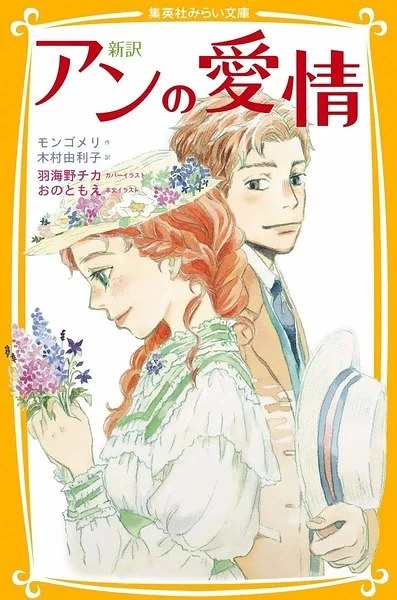 |
| "Anne in Love" (Anne of the Island) |
Though now a century old, Anne of the Island reads very much like a contemporary shojo manga, right down to the emphasis on competitive academic performance.
Related links
Honey and Clover
March Comes in Like a Lion
The orphan's saga
Hanako and Anne
Labels: anime, anime lists, anne, art, books, manga, publishing


November 01, 2018
Bakuman (the review)
Bakuman was created by two best-selling mangaka, Tsugumi Ohba and Takeshi Obata. So it is only natural that the protagonists of their manga about writing manga should also be a writer/illustrator team.

We first meet Moritaka Mashiro and Akito Takagi in the ninth grade. Observing Moritaka's talents as an artist, Akito approaches him and proposes they team up to create manga.
Akito doesn't pluck this idea out of thin air. Nobuhiro Mashiro, Moritaka's uncle, was a mangaka with one published series and an anime adaptation to his credit. Then he literally worked himself to death trying to write another. "I'm not a mangaka," he often said with a wry grin. "I'm a gambler."
 Moritaka's parents aren't eager for him to follow in his uncle's footsteps. Akito is also taking a leap. He is the school's top academic performer. Top academic performers aspire to attend Tokyo University, not become mangaka (this class conflict later gets its own story arc).
Helping Moritaka make up his mind is Miho Azuki, the girl he longs for from afar (or from across the classroom or from the adjacent desk).
With a helpful push from Akito, she reveals to Moritaka that she wants to become a voice actor. Moritaka promises to write a manga that will get made into an anime and Miho will star in it. Goofy, yes, but hardly out of sync with the mindset of a couple of ninth graders.
Taking place at arm's length, though, their romance is not terribly consequential in story terms. Rather like Gilbert in Anne of the Island, Miho remains mostly off-screen as Moritaka's muse.
 A more emotionally compelling narrative follows the blossoming friendship between Akito and Kaya Miyoshi, Miho's classmate. They squabble like Anne and Gilbert from the first two Green Gables books. The blue-collar Kaya doesn't aspire to a whole lot, other than being with Akito.
But Kaya's down-to-earth nature keeps Akito and Moritaka and the studio on an even keel. Her relationship with Akito matures in a positive direction. It gives the series much of its heart and warmth. The series could have used more Kaya. And Miho needn't have been quite so absent.
The story does start with a few cheats. Moritaka's grandfather lends Moritaka the use of Nobuhiro's studio. Hisashi Sasaki, the managing editor at Shonen Jack, worked with Nobuhiro. So he knows Moritaka, though doesn't do him any favors, other than giving him a fair shot.
A fair shot at Shonen Jack, née Shonen Jump. From the start, Moritaka and Akito aim for the top.
Shonen Jump is the best-selling manga magazine in Japan. At its height during the mid-1980s, it sold a staggering 6.5 million copies a week. Though demographic changes have cut deeply into those numbers, Shonen Jump still boasts a weekly circulation of two million.
In the anime adaptation, the magazine is called Shonen Jack and the publisher is called Yueisha instead of Shueisha. The posters of One Piece and Naruto decorating the lobby walls make it clear what publication they're referring to.
Shonen Jump has a sister publication called Next, where up and coming manga artists can test out their talent. So does Shonen Jack.
One of Moritaka and Akito's submissions ends up on the desk of Akira Hattori. The junior editors at the magazine sort through the submissions to find mangaka with promise. The careers of the editors depend on how well they can develop a mangaka's career and sustain a successful series.

After asking for revisions, Hattori enters the manuscript in an upcoming contest at Next. These contests are another way of recruiting and judging new talent. Moritaka and Akito do well and are invited to submit a one-shot to the prestigious Tezuka Award at the main magazine.
They don't make the final cut but Hattori is sufficiently impressed to ask for more submissions.
In a highly iterative process that any old-school freelance writer is familiar with, they revise and resubmit, revise and resubmit until they get an acceptance. This process takes months, even years. So the the series often makes big jumps in the timeline from episode to episode.
Once they have established their bona fides as artist and writer, they are invited to submit a one-shot that could be serialized. Essentially a pilot episode.
Everything published in Shonen Jack gets rated. A steady stream of reader surveys are compiled twice weekly into spreadsheets. If a one-shot with serialization prospects delivers good ratings, the editor petitions his senior editor to present it at a serialization meeting.
But every new series means an existing one must be canceled. As the managing editor likes to say, "If you write a good manga, you will get published. But not necessarily by us."
While working on their projects and waiting for the thumbs up or thumbs down, mangaka often free-lance as assistants. The pressures of turning out two-dozen finished pages every week is such that, once serialized, a mangaka depends on assistants to do the inking and background work.

Eiji Niizuma is a boy genius, the same age as Moritaka and Akito. The managing editor personally recruited him to write for Shonen Jack. When we first meet Niizuma, he is a bundle of ticks and idiosyncrasies, a sort of artistic Sheldon Cooper after a dozen shots of espresso.
But he proves to be a great asset, both as a rival and a friend, with a keen eye for what works and what doesn't (though he's not very good at explaining why). During his short stint as Niizuma's assistant, Moritaka meets several of the other key players in the series (his competition).
 First is Shinta Fukuda. Cocky and brash, a rebel in search of a cause, he appoints himself the leader of the new recruits. He aspires to write gritty urban dramas.
In his mid-thirties, Takuro Nakai is the oldest in their circle. He is the most technically proficient artist but hasn't ever been serialized. As each year passes, the odds grow longer and he grows more desperate, a desperation that has produced several self-destructive behavioral quirks.
He eventually teams up with Ko Aoki, who comes to Shonen Jack from the shojo manga side. (The real Shueisha publishes over a dozen manga magazines in all genres.) They get the green light for a series. The question is whether Nakai can hold his personal life together in the meantime.
Although working in utterly unlike genres, Fukuda and Aoki exemplify an important point that Bakuman makes about popular art. In dramas about "artists," the market-driven demands of the audience and the imposition of editorial constraints are typically cast as the bad guys.
In Bakuman they are the unavoidable—and not necessarily unwelcome—reality.
 The immense popularity of Shonen Jump pulls in readers of all ages. But the shonen (少年) in Shonen Jump means "boy," the target audience being between ten and fifteen years old. "Fan service" is fine but no nudity. Action is emphasized but the violence can't get gory.
Fukuda could easily write for a seinen magazine, aimed at older teens and college students.
Takao Saito, for example, has been writing Golgo 13 for fifty years. A gritty series about a professional hitman, Golgo 13 runs in Big Comic, a seinen manga magazine. A circulation of 300,000 is nothing to sneeze at. But it is one-sixth that of Young Jump.
Aoki could easily write for one of Yueisha's shojo (少女) magazines. But the most popular shojo manga also have circulations in the mid-six figures. Getting published in Shonen Jump means reaching the biggest audience possible. It also means hewing to the magazine's editorial guidelines.
So her fantasy series must have more vivid action sequences and her romance series must have more fan service. In one of the funnier arcs, Fukuda takes it upon himself to tutor Aoki about how to appeal to the prurient interests of twelve-year-old boys (without outraging their parents).
These compromises are a constant. Action-oriented "battle manga" are the most popular. A mid-list "gag manga" has the most reliable staying power. But Akito turns out to excel at a Rod Serling approach, writing stories with a surreal or paranormal edge that are layered with social commentary.
At first, Hattori suggests that being "the best of the rest" isn't a bad place to end up. Except Moritaka and Akito want to compete at the top with Eiji Niizuma (everything's a competition in a shonen series). In the process, they give every genre a shot, frequently fail, and start over.
But this is a melodrama and not a documentary. They do finally find the success they are looking for. And their editors are there every step of the way. I can't think of another drama series about the arts that gives the lowly editors so big a role and makes them the good guys to boot.
And gives them so many smart things to say about what makes a story successful.
The original Bakuman was published in 176 chapters over four years. The anime ran for 75 episodes in three seasons on NHK Educational television. The art and animation can't match that of a dozen-episode cour from Kyoto Animation. But this is a series where the ideas matter more.
With so much material to generate, Tsugumi Ohba and Takeshi Obata often fall back on a problem-of-the-week approach to creating drama. While predictable, this is actually a great advantage of the series.
 As a result, we get a crash course in every kind of manga, every issue, conflict, and editorial decision that arises in the manga publishing business. The constant search for new ideas, the stress of weekly ratings, the business decisions that go into making a manga into an anime.
And, yes, all those dysfunctional mangaka.
For example, Kazuya Hiramaru, who abruptly quits his job as a salaryman to write a surreal Dilbert-like gag manga about an otter in a business suit. Only to discover, to his horror, that he's abandoned one rat race to join another where the rats have to run even faster.
"At least when I was a salaryman I had weekends off!" he complains to his editor. But poor Hiramaru is cursed to be a talented and popular—if lazy and unmotivated—mangaka. So his Svengalian editor will stop at nothing to trick, coerce, and manipulate him into making his deadlines.
Hiramaru isn't exaggerating too much. As Shuho Sato documents in Manga Poverty, simply breaking even can take a mangaka years. Those assistants get paid out of the mangaka's page-rates. So turning a profit depends on how fast the mangaka can run his production line.
Sure, there will always be writers who produce best-sellers right out of the box and rake in millions. And I certainly enjoy following the adventures of the Richard Castles and Temperance Brennans, who somehow find the time to solve murder mysteries in between writing yet another best-seller.
But back in the real world, commercially successful art requires more work, discipline, single-minded determination, and, yes, creativity than most of us are capable of. Along with a large dose of luck. Which makes me all the more appreciative of those who can pull it off.

We first meet Moritaka Mashiro and Akito Takagi in the ninth grade. Observing Moritaka's talents as an artist, Akito approaches him and proposes they team up to create manga.
Akito doesn't pluck this idea out of thin air. Nobuhiro Mashiro, Moritaka's uncle, was a mangaka with one published series and an anime adaptation to his credit. Then he literally worked himself to death trying to write another. "I'm not a mangaka," he often said with a wry grin. "I'm a gambler."

Helping Moritaka make up his mind is Miho Azuki, the girl he longs for from afar (or from across the classroom or from the adjacent desk).
With a helpful push from Akito, she reveals to Moritaka that she wants to become a voice actor. Moritaka promises to write a manga that will get made into an anime and Miho will star in it. Goofy, yes, but hardly out of sync with the mindset of a couple of ninth graders.
Taking place at arm's length, though, their romance is not terribly consequential in story terms. Rather like Gilbert in Anne of the Island, Miho remains mostly off-screen as Moritaka's muse.

But Kaya's down-to-earth nature keeps Akito and Moritaka and the studio on an even keel. Her relationship with Akito matures in a positive direction. It gives the series much of its heart and warmth. The series could have used more Kaya. And Miho needn't have been quite so absent.
The story does start with a few cheats. Moritaka's grandfather lends Moritaka the use of Nobuhiro's studio. Hisashi Sasaki, the managing editor at Shonen Jack, worked with Nobuhiro. So he knows Moritaka, though doesn't do him any favors, other than giving him a fair shot.
A fair shot at Shonen Jack, née Shonen Jump. From the start, Moritaka and Akito aim for the top.
Shonen Jump is the best-selling manga magazine in Japan. At its height during the mid-1980s, it sold a staggering 6.5 million copies a week. Though demographic changes have cut deeply into those numbers, Shonen Jump still boasts a weekly circulation of two million.
In the anime adaptation, the magazine is called Shonen Jack and the publisher is called Yueisha instead of Shueisha. The posters of One Piece and Naruto decorating the lobby walls make it clear what publication they're referring to.
Shonen Jump has a sister publication called Next, where up and coming manga artists can test out their talent. So does Shonen Jack.
One of Moritaka and Akito's submissions ends up on the desk of Akira Hattori. The junior editors at the magazine sort through the submissions to find mangaka with promise. The careers of the editors depend on how well they can develop a mangaka's career and sustain a successful series.

After asking for revisions, Hattori enters the manuscript in an upcoming contest at Next. These contests are another way of recruiting and judging new talent. Moritaka and Akito do well and are invited to submit a one-shot to the prestigious Tezuka Award at the main magazine.
They don't make the final cut but Hattori is sufficiently impressed to ask for more submissions.
In a highly iterative process that any old-school freelance writer is familiar with, they revise and resubmit, revise and resubmit until they get an acceptance. This process takes months, even years. So the the series often makes big jumps in the timeline from episode to episode.
Once they have established their bona fides as artist and writer, they are invited to submit a one-shot that could be serialized. Essentially a pilot episode.
Everything published in Shonen Jack gets rated. A steady stream of reader surveys are compiled twice weekly into spreadsheets. If a one-shot with serialization prospects delivers good ratings, the editor petitions his senior editor to present it at a serialization meeting.
But every new series means an existing one must be canceled. As the managing editor likes to say, "If you write a good manga, you will get published. But not necessarily by us."
While working on their projects and waiting for the thumbs up or thumbs down, mangaka often free-lance as assistants. The pressures of turning out two-dozen finished pages every week is such that, once serialized, a mangaka depends on assistants to do the inking and background work.

Eiji Niizuma is a boy genius, the same age as Moritaka and Akito. The managing editor personally recruited him to write for Shonen Jack. When we first meet Niizuma, he is a bundle of ticks and idiosyncrasies, a sort of artistic Sheldon Cooper after a dozen shots of espresso.
But he proves to be a great asset, both as a rival and a friend, with a keen eye for what works and what doesn't (though he's not very good at explaining why). During his short stint as Niizuma's assistant, Moritaka meets several of the other key players in the series (his competition).

In his mid-thirties, Takuro Nakai is the oldest in their circle. He is the most technically proficient artist but hasn't ever been serialized. As each year passes, the odds grow longer and he grows more desperate, a desperation that has produced several self-destructive behavioral quirks.
He eventually teams up with Ko Aoki, who comes to Shonen Jack from the shojo manga side. (The real Shueisha publishes over a dozen manga magazines in all genres.) They get the green light for a series. The question is whether Nakai can hold his personal life together in the meantime.
Although working in utterly unlike genres, Fukuda and Aoki exemplify an important point that Bakuman makes about popular art. In dramas about "artists," the market-driven demands of the audience and the imposition of editorial constraints are typically cast as the bad guys.
In Bakuman they are the unavoidable—and not necessarily unwelcome—reality.

Fukuda could easily write for a seinen magazine, aimed at older teens and college students.
Takao Saito, for example, has been writing Golgo 13 for fifty years. A gritty series about a professional hitman, Golgo 13 runs in Big Comic, a seinen manga magazine. A circulation of 300,000 is nothing to sneeze at. But it is one-sixth that of Young Jump.
Aoki could easily write for one of Yueisha's shojo (少女) magazines. But the most popular shojo manga also have circulations in the mid-six figures. Getting published in Shonen Jump means reaching the biggest audience possible. It also means hewing to the magazine's editorial guidelines.
So her fantasy series must have more vivid action sequences and her romance series must have more fan service. In one of the funnier arcs, Fukuda takes it upon himself to tutor Aoki about how to appeal to the prurient interests of twelve-year-old boys (without outraging their parents).
These compromises are a constant. Action-oriented "battle manga" are the most popular. A mid-list "gag manga" has the most reliable staying power. But Akito turns out to excel at a Rod Serling approach, writing stories with a surreal or paranormal edge that are layered with social commentary.
At first, Hattori suggests that being "the best of the rest" isn't a bad place to end up. Except Moritaka and Akito want to compete at the top with Eiji Niizuma (everything's a competition in a shonen series). In the process, they give every genre a shot, frequently fail, and start over.
But this is a melodrama and not a documentary. They do finally find the success they are looking for. And their editors are there every step of the way. I can't think of another drama series about the arts that gives the lowly editors so big a role and makes them the good guys to boot.
And gives them so many smart things to say about what makes a story successful.
The original Bakuman was published in 176 chapters over four years. The anime ran for 75 episodes in three seasons on NHK Educational television. The art and animation can't match that of a dozen-episode cour from Kyoto Animation. But this is a series where the ideas matter more.
With so much material to generate, Tsugumi Ohba and Takeshi Obata often fall back on a problem-of-the-week approach to creating drama. While predictable, this is actually a great advantage of the series.

And, yes, all those dysfunctional mangaka.
For example, Kazuya Hiramaru, who abruptly quits his job as a salaryman to write a surreal Dilbert-like gag manga about an otter in a business suit. Only to discover, to his horror, that he's abandoned one rat race to join another where the rats have to run even faster.
"At least when I was a salaryman I had weekends off!" he complains to his editor. But poor Hiramaru is cursed to be a talented and popular—if lazy and unmotivated—mangaka. So his Svengalian editor will stop at nothing to trick, coerce, and manipulate him into making his deadlines.
Hiramaru isn't exaggerating too much. As Shuho Sato documents in Manga Poverty, simply breaking even can take a mangaka years. Those assistants get paid out of the mangaka's page-rates. So turning a profit depends on how fast the mangaka can run his production line.
Sure, there will always be writers who produce best-sellers right out of the box and rake in millions. And I certainly enjoy following the adventures of the Richard Castles and Temperance Brennans, who somehow find the time to solve murder mysteries in between writing yet another best-seller.
But back in the real world, commercially successful art requires more work, discipline, single-minded determination, and, yes, creativity than most of us are capable of. Along with a large dose of luck. Which makes me all the more appreciative of those who can pull it off.
Related posts
Bakuman (the context)
Bakuman (the future)
Bakuman (the anime)
Manga economics
The teen manga artist
Manga circulation in Japan
The manga development cycle
Labels: anime lists, anime reviews, anne, art, business, japanese culture, publishing, tubi
October 25, 2018
Bakuman (the context)

So writers write books about writing. And about writers. So Stephen King wrote Misery and The Shining and Bag of Bones. And On Writing. And so Hollywood makes movies about making Hollywood movies. And so we get Singing in the Rain and La La Land.
Television dramas love writers. And so we have Richard Castle and Robin Masters (whom we never see) and Temperance Brennan, and, of course, John Watson. Along with all the frustrated writers who show up alive and dead on the the Law & Order franchise.
These tropes hold in Japan too, though with a few necessary tweaks. Publishing contracts are so standardized that the job of the literary agent only exists in a very narrow niche. A writer deals with the publisher through an editor, so that is where the conflicts will arise.
Such as the combative relationship between Shigure Sohma and his editor in Fruits Basket.
And unlike the North American market, manga, anime, and (especially of late) light novels are far more dominant players in the popular culture. So we can expect that there will be manga about writing manga and anime about making anime. Along with light novels about writers writing light novels.
The light novel, to clarify, is essentially a young adult novella that
incorporates elements from anime, manga, video games, fan art and fan fiction. It is character and dialogue-driven, replete with provocative illustrations and heavily reliant upon the viral energy of the Internet, where many of the stories get their start.

High school student Masamune Izumi writes light novels of an—ahem—provocative nature. His kid sister, who goes by the nom de plume of "Eromanga Sensei," is the illustrator. Masamune is brainstorming a new series when the reigning teenage queen of the light novel moves in next door.
Realism is hardly the intent. Still, it makes several pertinent points about the mechanics of the trade. We see the cubicles used by editors to conference with their writers (no agents, remember) and observe how contests are run to recruit new talent and test established talent against the competition.
The light novel as a cultural trend-setter is a fairly recent phenomenon so we should see more stories like this in the future.
Anime has been ascendant for longer and so has been talking about itself for longer. The parody anime that parodies other anime is a thriving genre. Anime about making anime include Animation Runner Kuromi (about the frenetic life of a producer) and Girlish Number (about voice actors).
 And then there's Shirobako, which sets the bar so high it exists in a category of its own. Over two cours, Shirobako closely documents the production of two anime series, while throwing in so many inside jokes about the major players in the business that you'll need a reference manual.
Manga reaches even further back. Rather like minor league baseball, an entire industry has built up around the amateur manga artist. Comic Party and Genshiken, for example, focus on the doujinshi market and the goal of selling at Comiket, the largest fan convention in the world.
Manga about manga professionals tend to emphasize the chaotic and financially unstable process of running a manga publication, as in Mangirl, or the comically weird juxtaposition of the mangaka's personality and the genre he specializes in.
The best illustration of the latter may be Yasuko and Kenji. After their parents are killed in an accident, Kenji, the hard-core leader of a biker gang, quits to take care of his kid sister Yasuko. To make ends meet, he and a couple of his associates draw a fluffy girl's romance manga.

American manga and anime fans are probably more familiar with Monthly Girls' Nozaki-kun. From all outward appearances, Umetaro Nozaki is a straight-laced high school student. Unbeknownst to all but a select few of his classmates, he writes a romance manga under a girl's pen name.
As the story begins, Umetaro Nozaki is already an established mangaka with an popular series. The focus is on the ongoing production of the manga and his developing relationship with Chiyo, who approached him at school hoping for a date but ended up getting drafted as one of his assistants.

Highly recommended. But if you want to learn about the manga writing and publishing business from the ground up, from start to finish, the one series that rises to the level of Shirobako in its attention to detail is Bakuman. More about this groundbreaking series next week.
Related links
Bakuman (the review)
Bakuman (the future)
Bakuman (the anime)
Eromanga Sensei
Genshiken
Girlish Number
Mangirl
Monthly Girls' Nozaki-kun
Shirobako
Labels: anime, anime lists, anime reviews, art, business, manga, publishing, thinking about writing, tubi
May 25, 2017
Miss Hokusai
Speaking as I was last week of art about artists being artists, Miss Hokusai is a fine addition to the genre (click image to enlarge).

Based on the manga by the late Hinako Sugiura, the film is episodic in nature, with no real plot or even much in the way of character development. Told from the perspective of O-Ei, Hokusai's elder daughter and an accomplished painter in her own right, it is series of vignettes about Hokusai, his two daughters, and his apprentice, living and working in Edo (Tokyo) during the first half of the 19th century.
If there is a theme to the movie, it concerns the limits of technical ability alone to produce great art (here also meaning that people will pay to see it). The much fabled eccentricity of the creative type thus reflects the ongoing struggle to resolve that conflict ("good artists copy; great artists steal").
But the setting is the real story. These slices-of-life take place in the surreal Edo of the popular period drama, untroubled by politics or the impending collapse of the Tokugawa regime (mentioned in an afterword). As with the imaginations of the characters, it is infused with magical realism, the threads of folk tales and religious figures winding through the fabric of the scenes, sketches, and anecdotes.
The title of the movie in Japanese is Sarusuberi (百日紅) or "crepe myrtle." The flower symbolizes the subtle tragic arc that bridges the narrative, though the matter-of-fact tone of the presentation never threatens to overwhelm us with emotion. Rather, the movie invites us to watch and observe and examine it like a painting. Whatever sentiment you wish to bring to the subject is entirely up to you.
Miss Hokusai is like a slow stroll through a stately old museum (whose director is doing his best to make it more "accessible"). Nobody is going to clobber you over the head with ART, but if you wish to look, it's hanging on the walls all around you to see.
The soundtrack on the GKids DVD defaults to a pretty good English dub version.

Based on the manga by the late Hinako Sugiura, the film is episodic in nature, with no real plot or even much in the way of character development. Told from the perspective of O-Ei, Hokusai's elder daughter and an accomplished painter in her own right, it is series of vignettes about Hokusai, his two daughters, and his apprentice, living and working in Edo (Tokyo) during the first half of the 19th century.
If there is a theme to the movie, it concerns the limits of technical ability alone to produce great art (here also meaning that people will pay to see it). The much fabled eccentricity of the creative type thus reflects the ongoing struggle to resolve that conflict ("good artists copy; great artists steal").
But the setting is the real story. These slices-of-life take place in the surreal Edo of the popular period drama, untroubled by politics or the impending collapse of the Tokugawa regime (mentioned in an afterword). As with the imaginations of the characters, it is infused with magical realism, the threads of folk tales and religious figures winding through the fabric of the scenes, sketches, and anecdotes.
The title of the movie in Japanese is Sarusuberi (百日紅) or "crepe myrtle." The flower symbolizes the subtle tragic arc that bridges the narrative, though the matter-of-fact tone of the presentation never threatens to overwhelm us with emotion. Rather, the movie invites us to watch and observe and examine it like a painting. Whatever sentiment you wish to bring to the subject is entirely up to you.
Miss Hokusai is like a slow stroll through a stately old museum (whose director is doing his best to make it more "accessible"). Nobody is going to clobber you over the head with ART, but if you wish to look, it's hanging on the walls all around you to see.
The soundtrack on the GKids DVD defaults to a pretty good English dub version.
Labels: anime, anime reviews, art, gkids, japan, japanese culture, japanese movie reviews, movie reviews, movies about japan
December 15, 2016
Hearing what you see
Over at Popular Mechanics, Avery Thompson explains "Why You Can't Remember What Modern Movies Sound Like." Or rather, he presents the following arguments from the "Every Frame a Painting" blog and Dan Golding.
The former begins with man-on-the-street interviews, asking if anybody can hum a few bars from Star Wars. Everybody can. But what about the theme from any blockbuster Marvel movie made in the last decade?
Nobody can.
The culprit in this case is the "temp track." While a movie is being edited and the music is still being composed, the director uses excerpts from
existing compositions, often movie soundtracks, as stand-ins for what he expects the final product to sound like. Then he tells the composer: "I want it to sound like this only different."
When The Simpsons sets out to parody a musical but doesn't want to pay the royalties, the composer (usually Alf Clausen) will arrange melodies that are different enough legally while still being completely recognizable.
Similarly, many temp tracks end up sounding like the finished version. And some careless directors even forget about the "different" part and end up using the original temp track "by mistake." Either way, the result is an utter lack of originality.
Then again, counters Dan Golding, maybe not. Artists borrow from each other all the time. Or as Picasso (and Steve Jobs) put it, "Great artists steal." For Star Wars, John Williams borrowed from classical composers like Holst and the scores from old Hollywood westerns. Golding instead points to non-linear editing as the root cause.
Instead of a composition composed for an entire cinematic work, soundtracks can be created and performed digitally, and inserted in discrete units: five seconds here, ten seconds there. The soundtrack thus becomes another sound effect, creating mood and ambience with orchestrated sound, not telling a story through melody.
Not that there's anything wrong with that.
Then again, memorable movie soundtracks that spring to my mind do often predate the fully digitized non-linear era that came of age in the mid-1990s. Along with Star Wars (1977) by John Williams, Patrick Doyle's Henry V (1989) and Last of the Mohicans (1992) by Randy Edelman and Trevor Jones.
Chariots of Fire (1981) and Blade Runner (1982) by Vangelis were unique in being mostly digital scores that mostly predated non-linear editing.
On the other hand, the music in the original Star Trek television series is, well, "noisy." And it was orchestrated the old-fashioned way. Yes, the opening theme is timeless, but the stuff in the middle is often too loud and intrusive, manipulative and simply redundant.
Given the choice, I'll take the minimalist mood-shaping approach, music that creates ambience without encouraging you to pick up a baton or choreograph a marching band, even it means composers aren't using all the emotional arrows in their musical quivers.
Producers have concluded that if they're not making a musical or doing the American Graffiti thing, where the movie accompanies the soundtrack, less is more. And most of the time, they're right.
But that sorely lessens the chance of a composer and director coming up with the perfect combination that hits you right in the emotional solar plexus. As with Patrick Doyle's score, slowly building beneath Kenneth Branagh's Saint Crispian's Day speech, the right movie music has the power to raise a scene to a state of transcendence.
And speaking of borrowing from the classics, here is Bill Pullman's "Saint Crispian on the Fourth of July" speech from Independence Day. You won't remember the music but it heightens the impact of the words without overpowering them.
The former begins with man-on-the-street interviews, asking if anybody can hum a few bars from Star Wars. Everybody can. But what about the theme from any blockbuster Marvel movie made in the last decade?
Nobody can.
The culprit in this case is the "temp track." While a movie is being edited and the music is still being composed, the director uses excerpts from
existing compositions, often movie soundtracks, as stand-ins for what he expects the final product to sound like. Then he tells the composer: "I want it to sound like this only different."
When The Simpsons sets out to parody a musical but doesn't want to pay the royalties, the composer (usually Alf Clausen) will arrange melodies that are different enough legally while still being completely recognizable.
Similarly, many temp tracks end up sounding like the finished version. And some careless directors even forget about the "different" part and end up using the original temp track "by mistake." Either way, the result is an utter lack of originality.
Then again, counters Dan Golding, maybe not. Artists borrow from each other all the time. Or as Picasso (and Steve Jobs) put it, "Great artists steal." For Star Wars, John Williams borrowed from classical composers like Holst and the scores from old Hollywood westerns. Golding instead points to non-linear editing as the root cause.
Instead of a composition composed for an entire cinematic work, soundtracks can be created and performed digitally, and inserted in discrete units: five seconds here, ten seconds there. The soundtrack thus becomes another sound effect, creating mood and ambience with orchestrated sound, not telling a story through melody.
Not that there's anything wrong with that.
Then again, memorable movie soundtracks that spring to my mind do often predate the fully digitized non-linear era that came of age in the mid-1990s. Along with Star Wars (1977) by John Williams, Patrick Doyle's Henry V (1989) and Last of the Mohicans (1992) by Randy Edelman and Trevor Jones.
Chariots of Fire (1981) and Blade Runner (1982) by Vangelis were unique in being mostly digital scores that mostly predated non-linear editing.
On the other hand, the music in the original Star Trek television series is, well, "noisy." And it was orchestrated the old-fashioned way. Yes, the opening theme is timeless, but the stuff in the middle is often too loud and intrusive, manipulative and simply redundant.
Given the choice, I'll take the minimalist mood-shaping approach, music that creates ambience without encouraging you to pick up a baton or choreograph a marching band, even it means composers aren't using all the emotional arrows in their musical quivers.
Producers have concluded that if they're not making a musical or doing the American Graffiti thing, where the movie accompanies the soundtrack, less is more. And most of the time, they're right.
But that sorely lessens the chance of a composer and director coming up with the perfect combination that hits you right in the emotional solar plexus. As with Patrick Doyle's score, slowly building beneath Kenneth Branagh's Saint Crispian's Day speech, the right movie music has the power to raise a scene to a state of transcendence.
And speaking of borrowing from the classics, here is Bill Pullman's "Saint Crispian on the Fourth of July" speech from Independence Day. You won't remember the music but it heightens the impact of the words without overpowering them.
Labels: art, criticism, movies, music, technology
January 15, 2015
Cat girls
In Japan, the cat girl occupies the same pop-culture space as the bunny girl. Except that the Playboy Bunny logo itself is so benign that it adorns a fashion line aimed at teen girls (including school uniforms).
Anime's most popular bunny girl is probably Haruhi Suzumiya (here playing at a high school concert). The kemonomimi (獣耳) or "animal ears" is a well-nigh ubiquitous meme in anime, manga, and cosplay.

Ge-Ge-Ge no Kitarou, Shigeru Mizuki's long-running supernatural manga and anime series, featured a character whose name is "Neko Musume," literally "Cat Girl" (猫娘). She's a true werecat (bakeneko).

More recently, the cat girl has risen again to the fore, from girls pretending to be cats (K-On):

To girls who actually sprout ears and tails (Strike Witches):

As it turns out, the bakeneko (化け猫) has a long history in Japan, with literary references reaching as far back as the 12th century (click to enlarge).
Anime's most popular bunny girl is probably Haruhi Suzumiya (here playing at a high school concert). The kemonomimi (獣耳) or "animal ears" is a well-nigh ubiquitous meme in anime, manga, and cosplay.
Ge-Ge-Ge no Kitarou, Shigeru Mizuki's long-running supernatural manga and anime series, featured a character whose name is "Neko Musume," literally "Cat Girl" (猫娘). She's a true werecat (bakeneko).
More recently, the cat girl has risen again to the fore, from girls pretending to be cats (K-On):
To girls who actually sprout ears and tails (Strike Witches):
As it turns out, the bakeneko (化け猫) has a long history in Japan, with literary references reaching as far back as the 12th century (click to enlarge).
 |
| Courtesy Wikipedia Commons. |
Labels: anime, art, cats, fantasy, japanese culture
October 23, 2014
Hanasaku Iroha
Ohana's mother runs off with her boyfriend (a step ahead of the debt collector) and sends Ohana to live with her grandmother, who owns an inn way out in the sticks. The grandmother is in no mood to play babysitter and promptly sets Ohana to work in the inn.

Ohana is the quintessential heroine of Japanese melodrama: can-do and relentless optimistic (to the point of driving her roommate bonkers). And yet Hanasaku Iroha manages to stay true to the core of its main characters, even at the cost of a happily-ever-after ending.
The grandmother had wanted Ohana's mother to take over the inn, but moving to the boonies is absolutely the last thing she has any interest in. The key dramatic arc in the series explores this irreconcilable conflict between the mother and grandmother.
So it's up to Ohana's uncle to manage the place. Except everybody knows—including himself—that he simply hasn't got the chops, even when joined by his MBA-grad girlfriend (incapable of uttering a sentence unadorned by incomprehensible American business jargon).
These nuts and bolts are treated with a light touch throughout, making Hanasaku Iroha an altogether pleasant comedy about running a small (failing) business in the country.
Along with the "how to" genre (how to run a hot springs inn), Hanasaku Iroha also belongs to what I'd call the "wabi-sabi" genre. As Wikipedia defines it:
Characteristics of the wabi-sabi aesthetic include asymmetry, asperity (roughness or irregularity), simplicity, economy, austerity, modesty, intimacy and appreciation of the ingenuous integrity of natural objects and processes.
A more idealistic western counterpart might be the Hudson River School, that paints the countryside with a sepia-tinted palette. As urban and rural Japan have grown further apart, that distance hasn't lent itself to cool objectivity but to exaggerated romanticism.
Nevertheless, Hanasaku Iroha comes to a bittersweet conclusion more closely aligned with the realities of modern Japan: things that can't go on forever won't, no matter how much positive mental energy is poured into them. Though there is always room for a sequel.
Hanasaku Iroha is streaming on Crunchyroll and Tubi.
Labels: anime reviews, art, crunchyroll, personal favs
October 10, 2013
Manhole cover art
When you think of municipal support for the arts, a manhole cover is probably the last thing that would ever spring to mind. But "nearly 95 percent of the 1,780 municipalities in Japan sport their own specially-designed manhole covers." Explore the art of Japanese manhole covers here and here.
Labels: art, culture, japan, photo tour, politics
March 05, 2012
BOMM business lessons
Eduardo Braniff has discovered that pretty much everything anyone needs to know about business (and life) can be gleaned from The Book Of Mormon Musical, which he helpfully sums up in the this short Fast Company article.
Keep in mind the context. There are two problems with applying this too broadly. The first is to embrace heresy for the sake of heresy ("I offend, therefore I am"). The other is being unique for the sake of being unique, an idea that David Goldman argues has had "cataclysmic consequences in the arts."
Not just a Broadway outsider, a non-Mormon. This goes back to 1. When Mormons (or adherents of any stripe) dip their toes into heresy, the temptation is to beat a particular dead horse with Too Much Information. Or contrariwise, to completely miss the forest for the trees.
The most problematic taboos are the ones that evolve in an organization without anybody knowing why, without anybody questioning why. But because adherence to them signals loyalty to the organization, they're treated more seriously than commandments from on high.
Enterprises? It's shocking how slow churches are to define and live by their own gospels (you can't be held to your word if nobody knows what it is), or how willing they are to kick their gospels to the curb when they become inconvenient.
1. Taboos Shall Set You Free: [E]xperiences that afford us new behaviors and engender new beliefs are the ones we remember. So rather than preach the gospel, let's preach the forbidden.
Keep in mind the context. There are two problems with applying this too broadly. The first is to embrace heresy for the sake of heresy ("I offend, therefore I am"). The other is being unique for the sake of being unique, an idea that David Goldman argues has had "cataclysmic consequences in the arts."
2. Let the Philistines Past the Gate: I firmly believe that only an outsider would have been able to pull off The Book of Mormon on Broadway, and I'm not talking an off-off-off-Broadway outsider.
Not just a Broadway outsider, a non-Mormon. This goes back to 1. When Mormons (or adherents of any stripe) dip their toes into heresy, the temptation is to beat a particular dead horse with Too Much Information. Or contrariwise, to completely miss the forest for the trees.
The most problematic taboos are the ones that evolve in an organization without anybody knowing why, without anybody questioning why. But because adherence to them signals loyalty to the organization, they're treated more seriously than commandments from on high.
3. The Gospel According to Anyone: As much as we read about values-based corporate and brand cultures, it's shocking how slow enterprises have been to define and live by their own gospels. No matter where or what, people want to believe.
Enterprises? It's shocking how slow churches are to define and live by their own gospels (you can't be held to your word if nobody knows what it is), or how willing they are to kick their gospels to the curb when they become inconvenient.
October 10, 2011
In praise of caricatures
As I observed a while back, the supporting (stock) characters in How to Train Your Dragon are caricatures, but they come across as more "real" than flesh and blood actors in most live-action movies.
One thing that caught my attention early on was the running joke where the adults all speak with thick Scottish brogues and the kids don't. I think it's brilliant--because every teenager knows his parents speak a foreign language. They turned a caricature into a meaningful metaphor.
You can't play against types and expectations unless there are types and expectations to play against. This applies to storytelling. Just as cliche has great utility, so do caricatures. You can expend only so much time and so many words before getting a story underway.
It's the literary equivalent of the pyrotechnic crew adding gasoline to a cinematic explosion, because that's what people have come to expect. And it looks really cool. If "reality" is what you want, watch Mythbusters instead. As Sarah Hoyt puts it,
It's a balancing act at both ends of the scale. One of the great delights in genre fiction is starting with a stock character and watching as he first defines the caricature of a "bad guy," then moves beyond it, while doing what a stock character is supposed to--move the story forward.
A good example is Karl Urban in Red (he's McCoy in the latest Star Trek). For about 99 percent of the movie he is trying very hard to kill Bruce Willis. He starts off as a ruthlessly over-the-top stock villain, but slowly evolves into somebody we can almost empathize with.
This isn't one of those insipid gotcha! switcheroos, where the bad guys turns out to be the good guy (a truly uninspired dramatic device 99 percent of the time), but a simple recognition that making the bad guy a tad more interesting makes the good guy way more interesting.
To be sure, Karl Urban can't be more interesting than Bruce Willis. Especially in genre fiction, the protagonist is the character who changes the most or causes the most change. Bruce Willis goes from being a retired spy to action hero with a babe on his arm, plenty of change for an action flick.
Karl Urban doesn't have to do a one-eighty, just a ninety, or a forty-five. His character has to change enough to convince us of the open-ended possibilities in the big climax, and no more. Otherwise, the movie would be about him.
In Under Siege, Tommy Lee Jones gives us a caricature with two twists. Like Alan Rickman in Die Hard, he starts out as the sane thief pretending to be crazy. By the end, he really is nuts. But not without reason. He had this great plan and then Steven Seagal went and ruined it.
He's still the bad guy. We're not rooting for him to nuke Honolulu. But, yeah, I get where he's coming from, and that makes the cliffhanger ending all the more believable. Jones walks away with most of the movie in the process, but there's nothing wrong with that either.
One thing that caught my attention early on was the running joke where the adults all speak with thick Scottish brogues and the kids don't. I think it's brilliant--because every teenager knows his parents speak a foreign language. They turned a caricature into a meaningful metaphor.
You can't play against types and expectations unless there are types and expectations to play against. This applies to storytelling. Just as cliche has great utility, so do caricatures. You can expend only so much time and so many words before getting a story underway.
It's the literary equivalent of the pyrotechnic crew adding gasoline to a cinematic explosion, because that's what people have come to expect. And it looks really cool. If "reality" is what you want, watch Mythbusters instead. As Sarah Hoyt puts it,
Don't be afraid to give your characters outrageous characteristics or to make them larger than life. Even if you're writing "real life" you'll need to do that to some extent, or people will think they're blah and boring.
It's a balancing act at both ends of the scale. One of the great delights in genre fiction is starting with a stock character and watching as he first defines the caricature of a "bad guy," then moves beyond it, while doing what a stock character is supposed to--move the story forward.
A good example is Karl Urban in Red (he's McCoy in the latest Star Trek). For about 99 percent of the movie he is trying very hard to kill Bruce Willis. He starts off as a ruthlessly over-the-top stock villain, but slowly evolves into somebody we can almost empathize with.
This isn't one of those insipid gotcha! switcheroos, where the bad guys turns out to be the good guy (a truly uninspired dramatic device 99 percent of the time), but a simple recognition that making the bad guy a tad more interesting makes the good guy way more interesting.
To be sure, Karl Urban can't be more interesting than Bruce Willis. Especially in genre fiction, the protagonist is the character who changes the most or causes the most change. Bruce Willis goes from being a retired spy to action hero with a babe on his arm, plenty of change for an action flick.
Karl Urban doesn't have to do a one-eighty, just a ninety, or a forty-five. His character has to change enough to convince us of the open-ended possibilities in the big climax, and no more. Otherwise, the movie would be about him.
In Under Siege, Tommy Lee Jones gives us a caricature with two twists. Like Alan Rickman in Die Hard, he starts out as the sane thief pretending to be crazy. By the end, he really is nuts. But not without reason. He had this great plan and then Steven Seagal went and ruined it.
He's still the bad guy. We're not rooting for him to nuke Honolulu. But, yeah, I get where he's coming from, and that makes the cliffhanger ending all the more believable. Jones walks away with most of the movie in the process, but there's nothing wrong with that either.
Related posts
In praise of cliche
Playing by the rules
Labels: art, criticism, thinking about writing
May 19, 2011
In praise of cliche
In a post about writing for an RPG called "The Battle for Wesnoth," Eric Raymond describes how modern definitions of "creativity" often send art off the rails.
Or as Terry Pratchett puts it, "The reason that cliches become cliches is that they are the hammers and screwdrivers in the toolbox of communication."
We're all so marinated in the 20th-century idea that good art is required to challenge one's preconceptions and be original that it is perhaps difficult to receive this sort of deliberately derivative work as art at all. But it's worth remembering that standalone art intended primarily to express the artist's personal creativity is a very recent idea, not actually fully developed until the collapse of aristocratic patronage at the end of the 19th century and the "back to zero" impulse of modernism in the early 20th.
In most cultures at most times, quotation and bricolage have been as important to artists, or far more important, than individual creativity. Art was tied to and primarily generated for non-artistic purposes--as an evocative device for religions, as decoration for craft objects and architecture, as a peacock-tail display tactic for the wealthy and powerful. Individual creativity was restrained, additive, and incremental . . . too much originality would have separated art from its purposes and alienated its audience.
Or as Terry Pratchett puts it, "The reason that cliches become cliches is that they are the hammers and screwdrivers in the toolbox of communication."
Related posts
Playing by the rules
In praise of caricatures
Labels: art, criticism, thinking about writing