

January 01, 2025
Dragon Pilot
 Based on the manga created by Toshinao Aoki and Studio Bones, the animation in Dragon Pilot brings to mind the comic strip art of Bill Watterson. The premise of Dragon Pilot as well is the crazy kind of gross but hilarious and yet clever idea that Calvin of Calvin and Hobbes would come up with.
Unbeknownst to the rest of the world (and most Japanese), a select few of Japan's military aircraft, including an F-15J and an F-2 (Mitsubishi's made-in-Japan version of the F-16), are dragons disguised to look like fighter jets.
Hisone Amakasu is a rookie airman at the Japan Air Self-Defense Force Gifu Air Base. One day out of the blue she learns she has passed a "qualification" (she wasn't aware of) and is summarily transferred to a huge hanger way off in the corner of the base that no one seems to know about—except for an odd old woman who pushes a food cart around the base.
When Hisone finally finds the hanger, she walks in and is confronted by a huge dragon (she later names "Masotan") that promptly eats her.
The ground crew is delighted. It's been a while since a pilot passed muster with this particular OTF (an "Organic Transformed Flyer," as the military labels them). You see, the pilot doesn't ride atop the dragon like a horse. The dragon swallows the pilot, who "flies" the dragon from its guts. And when the flight is over, regurgitates her back out.
And, yes, the pilots have to wear special flight suits to keep from getting digested.
Needless to say, the dragon has a lot of discretion about who gets swallowed, and some, like Masotan, can get picky. The dragons are perceptive about the personalities of their pilots. They can even pick up mechanical issues with the real F-15Js they fly with (via the heads-up display in the helmets the pilots wear). But they don't talk.
It's eat or don't eat. Once they've formed an attachment, the one thing that really gives a dragon an upset stomach is his pilot forming a romantic relationship with another human being (which reminds me a similar plot device in My Zhime). No surprise, then, that the girls who make the best "D-Pilots" are not very socially adept.
For all its inherent silliness, Dragon Pilot raises fascinating questions about choice and free will. Hisone got something she didn't know she wanted. Nao wants something she can't get. Elle got what she didn't want instead of what she did. Moriyama gave up what she wanted and walked away to happily make another life for herself.
As Hisone tells Okonogi, a member of her ground crew and also, by family lineage (not something he had a lot of choice about either), a Shinto priest, "It's always best when the things you like and the things decided for you are in agreement."
That religious angle is no small matter. One of the old gods of Japan is a whale-sized monster, literally the size of a small island. It briefly comes out of hibernation every seventy-four years. The job of the dragon pilots is to escort it to a new resting place before it goes all Godzilla on Japan, and put it to bed with an ancient Shinto ritual.
The old school ritual required one of the miko attendants to stay behind in the "belly of the whale," so to speak. As far as Hisone is concerned, that is very much not okay. As it turns out, the food cart lady is the last living member of her squadron from the last time, when her reaction was the same as Hisone's.
In Calvin and Hobbes style, Hisone figures out an unlikely solution. It's a credit to the writing that the series manages to take these serious turns—and turn back again—without spoiling the comedic mood created earlier or making light of the dramatic decisions that Hisone faces (but be sure to stick through the final closing credits).
Masotan ultimately gets a character arc too, which suggests that perhaps the dragons will figure out how to compromise on the whole personal boundaries thing, and not force their pilots into the kind of all-or-nothing choice that Moriyama was left with. We have every reason to hope that the dragons will mature alongside their pilots.
Dragon Pilot is streaming on Netflix.
Labels: anime reviews, japanese culture, netflix, religion, shinto


December 04, 2024
Murder, they wrote

Much of the credit goes to Ranpo Edogawa (1894–1965), a tireless promoter of the mystery novel in Japan. His pen name is a pun on the Japanese pronunciation of Edgar Allan Poe. Edogawa is best remembered for the Kogoro Akechi and Boy Detectives Club young adult mystery novels, published between 1936 and 1962.
His efforts are widely acknowledged today. The mystery genre is prominent not only on prime-time television and the best-seller lists, but has long been a staple of young adult manga and anime.
Kindaichi Case Files, based on characters created by mystery writer Seishi Yokomizo, has been published by Kodansha since 1992. The ongoing Case Closed (titled Detective Conan in Japanese) was launched by Shogakukan in 1994, with the accompanying anime totaling more than 1140 episodes.

Speaking of Conan Doyle, Great Britain and Japan share similar cultural elements that make them ideal settings for the cozy mystery. Namely, generally accepted rules of propriety and a veneer of "polite society" easily disrupted (but not deeply damaged) by an otherwise "ordinary" crime. The world need not end in every episode.
Like a returning tide, we expect the greater cultural forces at work to wash away the disruptive elements and reset the stage for next week. So we shrug off the comically high murder rates in Midsomer and Cabot Cove, and the body counts in Kindaichi Case Files and Case Closed that can exceed that of the entire country on a weekly basis.
To be sure, a gun is rarely the murder weapon. But watch out for knives, rope, stairs, and every kind of blunt object! Reality forces Japanese crime writers to get creative, and they embrace all the plausible possibilities. It follows that the geeky appeal of the CSI subgenre has made it a favorite with audiences.


Crunchyroll has a boatload of Case Closed episodes. Sticking strictly to the puzzle-solving cozy mystery formula, five of my anime favorites are Holmes of Kyoto, Hyouka, In/Spectre, Beautiful Bones, and Onihei.
Hyouka and Holmes of Kyoto are classic whodunits that closely follow the classic formula, even though the cases often don't involve any actual crimes.
I love the clever English language title for In/Spectre, a supernatural detective series. It can get overly talky, especially in the first season, but Kotoko takes us through her reasoning process step by step. Though she is an often unreliable narrator, manipulating events to produce the outcome she prefers.

Onihei is an action-heavy Edo period police procedural that doesn't flinch from depicting the complete lack of due process rights for suspects at the time.
And although she only appears in a couple of episodes in a series that can't be classified in the genre, the hard-boiled vampire-hunting private eye in Call of the Night is such a great noir character that I'd like to see her get a show of her own.

Related posts
Scene of the crime writer
Labels: crunchyroll, dlibjapan, edogawa, hidive, japanese culture, japanese tv, mystery, streaming, tubi, viki
November 06, 2024
Matt Alt on minimalism

To begin with, ascetic practices attributed to Zen Buddhism are not the same as the disciplined use of space due to the fact that there isn't that much of it.
Ongoing population decline notwithstanding, Japan is still home to 126 million people who live in a country the size of California. Only 11 percent of the total land area is arable and less than a third of that is actually usable for housing.
That certainly sounds like a good argument for a less-is-more lifestyle. Except what space is available is nowadays bound to be crammed to the gills with stuff (as George Carlin delightfully put it).
After all, Kondo wrote originally for a Japanese audience, that had apparently forgotten they were supposed to be minimalists living in the land of minimalism.
Though to give Kondo the benefit of the doubt, I believe this is largely a postwar phenomenon brought about by both a booming economy and the additional confidence that all your stuff will still be here tomorrow.
As I discussed in a post about how Edo-period cities handled the constant plague of massive urban fires, perhaps Japanese minimalism simply evolved as a way to cope with that pretty grim reality.
Starting with the Great Fire of Meireki in 1657, fire was such ever-present fact of life that the average Edokko could expect his house to burn down at least once during his lifetime.
This expectation didn't end with the Meiji. As Edward Seidensticker writes in Low City, High City, "From early into middle Meiji, parts of Nihonbashi were three times destroyed by fire. There were Yoshiwara fires in 1871, 1873, 1891, 1911, and of course in 1923."

As late as 1995, the widespread damage from fires throughout Kobe following the Great Hanshin earthquake was a big wakeup call. Fire is no longer the threat it once was in Japan's urban centers, which has allowed clutter to proliferate.
When one of those old Edo period storehouses shows up in a modern mystery series, it will be crammed floor to ceiling with a haberdashery of clutter, that the detectives will have to comb through to find the critical clue.
As Kyoichi Tsuzuki points out, "Simplicity isn’t about poverty at all. It’s about wealth." It's about being able to buy all that stuff and then being able to afford to store it someplace else. Or replace it on a whim.
It's also a good way to have your minimalist cake and eat it too. Before the fussy relatives come over, cart all that materialistic excess to the storehouse and show off your splendidly simple life.
Or I guess you could hire Marie Kondo to eliminate the need in the first place.
Labels: economics, geography, history, japan, japanese culture, religion
October 30, 2024
Mieruko-chan

Donna Howard investigates the provenance of relics and antiques with the help of people from the past who are only visible to her.
For Natsume, his second sight (inherited from his grandmother) often results in the supernatural Shinto world intruding on his otherwise ordinary day-to-day life.
Mieruko can see dead people too. Her name is a pun on the verb meaning "I can see." That makes her privy to an extensive and weirdly thriving ecosystem of the living dead invisible to all but a select few.
Unfortunately for Mieruko, she has a hard time telling the good dead people from the bad dead people.
Even the guardian deities (inari) at the Shinto shrine are fierce and intimidating. Most of the dead people and creepy crawlies look like mutating corpses. Which is bad enough, except when they realize she can see them. Mieruko has gotten good at maintaining a look of deadpan indifference.
The rules governing Mieruko's abilities mirror those in Natsume's Book of Friends (which just debuted a new season). Creatures from the spirit world can only physically interact with you if they catch you looking at them first. Maintaining an attitude of stoic indifference can be the best recourse.
Which brings me to a new word I learned reading the manga: suruu sukiru (スルースキル), a transliteration of "through skill." Weblio defines it as the "ability to ignore bad things happening to you." In other words, the skill to work through a problem by tuning out and not getting upset about it.
But like Natsume, a girl's got her limits. There are times when Mieruko has no choice but to lend the ghouls an ear. Occasionally she discovers their intentions are benign. At other times, not so much. It's easier when the monsters behave like monsters, but even there she can jump to the wrong conclusions.
The occasional Sixth Sense twist will also fool the reader. And there's a touch of Dexter in the cat killer arc as well (which is featured in the anime).
Her best friend Hana is a ghost magnet ("Like moths to a flame," an old soothsayer ally observes), though not having second sight herself, she's clueless about their presence. One of their classmates also has second sight, though not being as powerful as Mieruko, she misjudges their respective abilities.
These moral dilemmas lend Mieruko-chan depth without being depressing or nihilistic. Some of the stories are genuinely heartwarming. If you're a fan of Edward Gorey or Charles Addams, Mieruko-chan is right in your wheelhouse.
Written and illustrated by Tomoki Izumi. Published in Japan by Kodansha and by Yen Press in the United States. The anime is based on the first three volumes of the manga. A live-action film adaptation is scheduled for release in 2025.
Related links
BookWalker (English emanga)
BookWalker (Japanese emanga)
Amazon (Kindle and paperback)
Crunchyroll (anime)
Labels: anime, bookwalker, crunchyroll, ebooks, japanese culture, kindle, manga, manga reviews, movies, religion, shinto
October 09, 2024
Anime reassessed (pacing matters)

The result of this little experiment? Far and away, anime remains my preferred medium for scripted entertainment. So I dropped Jme TV and won't renew Viki. Netflix stays on hiatus until its anime catalog refreshes.
It's not just me.
As Miles Atherton reports on Anime News Network, according to recent data released by Netflix, in terms of total hours viewed, anime not only overperforms in its category overall but makes up almost 80 percent of all Japanese language content viewed.
Starting with deep wells of proven source material, the inherent constraints of anime production sufficiently discipline the process (no anime studio has the resources to crank out a $200 million CGI flop) so that when everything comes together, a watchable work of art is the result on a reasonably regular basis.
Good stories told well.
To start with, this isn't about production values. HD video technology has largely leveled the playing field in that regard. Rather, the underlying problems come down to how the stories are structured, paced, and told.
Many hour-long Jdrama episodes should be thirty minutes shorter. (So should most movies.) I usually skip anime compilation films but doing the opposite works better. Editing Demon Slayer: Mugen Train into seven episodes improved on the movie. When it comes to single arc stories, a runtime longer than that just drags everything out.
The extended Yor arc in the second season of Spy x Family could have been easily compiled into a two-hour movie. But it works better in a five-episode format. And, frankly, I would have rather seen Code White handled the same way, creating a complete second season instead of a single cour.

Incidentally, comparing Kamen Rider: Kuuga (2001) and Kamen Rider: Zero-One (2020) illustrates how extraordinarily far budget CGI has progressed in the past two decades.
Yet despite the superior production values of the latter, the acting and dialogue elevate the former, even with its near-fatal plot holes and running a full two seasons (that's one season too many).
When Hollywood is running on all cylinders, it gets episodic television exactly right, with standalone episodes loosely linked by season-long dramatic arcs running in the background. So Fuyuhiko Takahori has the cause and effect backwards. The common point of failure is stretching a single story over more episodes than are needed to tell it.
There are writers who have mastered the formula. 99.9 Criminal Lawyer and Unnatural both run standalone episodes against background narrative arcs that pay off reasonably well. Three Star Bar in Nishi Ogikubo tells a complete story in six half-hour standalone episodes and completes a satisfying series-long arc.

This is why I prefer the slice-of-life genre. Challenges are taken on episode by episode, with an emphasis on the character arcs. In Komi Can't Communicate, Komi struggling toward her goal and Tadano simply being a genuinely good person (harder to depict than it sounds) make the story compelling.
Likewise, in the plot-heavy My Happy Marriage (Cinderella in early 20th century Japan), I find myself more interested in Miyo's self-actualization (that tired term actually applies here) than the tangled web of political machinations.
Interesting characters create interesting stories, not the other way around. In Jdrama romances especially, the realization too often dawns that, aside from the sturm und drang of the romance itself, these are really boring people. That and a smattering of common sense would fix most of their issues.
Both the abstract nature of anime as an artistic medium and the physical constraints of the production process make it easier to align the story to the viewing time in ways that are both more concrete and rewarding to the viewer.
Related posts
Anime reassessed (pacing matters)
Anime reassessed (culture matters)
Anime reassessed (numbers matter)
Labels: anime, anime lists, japanese culture, japanese tv, japanese tv reviews, jdrama, jme, netflix, streaming, tubi, viki
October 05, 2024
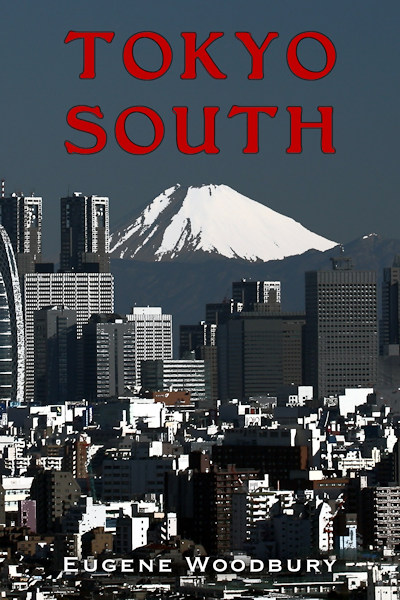
Tokyo South
The first chapter of Tokyo South, "Lost in the Works," was the innagural story of my writing career. I'd signed up for a computer programming class at BYU and discovered that I liked using the Pascal editor as a crude word processor (this was back during the Apple II era) more than programming.
Then "Number Games" won second place in the 1984 Vera Hinckley Mayhew Awards, my first solid bit of external validation. (I doubt the story would be so well received today; I like to call the first half of the 1980s at Brigham Young University under President Jeffrey Holland its glasnost era.)
Over the last two decades, a series of reorganizations and consolidations and force reductions finally resulted in the the Tokyo North and South missions being reunited in 2007. This Ted Lyon interview makes it clear that the shenanigans I describe in Tokyo South were by no means unique to Japan.
If anything, time and nostalgia and the detached sense of sang-froid that comes with age and experience led me to pull my punches a bit.
Tokyo South will be made available at a later date.
Related posts
The evolution
Tokyo South is alive
Tokyo South is dead
The weirdest two years
The problem with projections
Labels: books, BYU, ebooks, japan, japanese culture, kindle, peaks island press, publishing, religion, tokyo south
October 02, 2024
Tonbo!
Tonbo! (2024) is the best title in their anime portfolio so far. The manga by Ken Kawasaki and Yu Furusawa has been serialized in Weekly Golf Digest since 2014 and currently totals 52 volumes. So the viewer would do well to keep in mind that this isn't your usual shonen sports drama. It is written for golfers.

The plot merges the premises of Barakamon (2014), in which a professional calligrapher with a troubled past exiles himself to a tiny island and meets a bunch of quirky kids, and Rising Impact (2024), in which an eight-year-old golfing prodigy from the sticks is recruited to the elite Camelot Academy.
For idiosyncratic reasons I never divined, the names of several characters in Rising Impact are derived from the aforementioned Camelot, like Gawain and Lancelot. And speaking of Gawain (Misaki Kuno), a good part of the fun is listening to him (her) speak in a Tohoku accent you could cut with a knife.
In Tonbo! a professional golfer with a troubled past exiles himself to a tiny island in the Tokara archipelago and there encounters a quirky island girl named Tonbo, who turns out to be a golfing prodigy. He sees in her great potential, potential that will remain dormant and untested if she remains an island girl.
Along with smoothing out her more eccentric golfing habits (while not interfering with her unique approach to the game), he nudges her to leave the island when she graduates from junior high. The island has no high school. Students continuing their education live with relatives or attend boarding schools.
The Tokara archipelago is collectively governed as a village of Kagoshima Prefecture, so the favored destination for transfer students is the port city of Kagoshima and the surrounding areas.
While thoroughly entertaining, Birdie Wing (2022) and Rising Impact are so over the top that they more resemble superhero franchises that have to constantly invent new comically overpowered villains (and golf courses designed by M.C. Escher) to challenge the skills of the comically overpowered protagonists.
Tonbo! is far more realistic and treats the subject with the most technical accuracy. The main characters have actual character arcs, so there's no need for vaudevillian villains to create dramatic conflict. Instead, we focus our attention on how Tonbo evolves as an already gifted golfer and grows as a human being.
It's been an entertaining journey so far and I hope we can follow her all the way to a professional career.
The second cour is a continuation of season 1 starting with episode 14.
Related videos
Tonbo! (Tubi YouTube Prime)
Barakamon
Birdie Wing
Rising Impact
Labels: anime lists, anime reviews, geography, japanese culture, manga, remow, samurai vs ninja, sports, tubi
September 18, 2024
Yokohama Shopping Log

Happily, a few years later, the English translation has been published and the Japanese edition is available as an ebook.
Imagine that life as we know it came to a screeching halt. When the apocalypse was over and the dust settled, what remained looked like northern Maine in the summer and Yokohama was reduced to the size of Bangor. The world as we know it is over and human civilization has entered its twilight years. But otherwise we all feel fine.
Alpha Hatsuseno is an android (indistinguishable from a human being). No, she and her robot allies are not hunting down the few stragglers left. When she's not exploring the Hudson River School landscapes on her scooter or during one of her walkabouts, she runs an off-the-beaten-track coffee shop on the coast.
Until the coffee shop gets wiped out by a typhoon. But, hey, that's life. A good excuse for another walkabout.
In some places amidst the crumbling infrastructure, the street lights still come on at night. In others, the street lights have evolved into trees that glow in the dark where the streets used to be. The planet finds a way forward, simultaneously disintegrating and remaking itself as it takes a leisurely stroll into oblivion.
I like to imagine Yokohama Shopping Log as the sequel to Girl's Last Tour, as if Chito and Yuuri and their halftrack fell through a wormhole and ended up in the bucolic countryside of Non Non Biyori or Super Cub or Laid-Back Camp.
In the English language, the ending of the world has been most famously memorialized by Robert Frost.
Some say the world will end in fire,
Some say in ice.
From what I’ve tasted of desire
I hold with those who favor fire.
But if it had to perish twice,
I think I know enough of hate
To say that for destruction ice
Is also great
And would suffice.
But contrary to Dylan Thomas, there's something to be said for going "gentle into that good night." Yokohama Shopping Log exemplifies the iyashikei genre that portrays "characters living out peaceful lives in calming environments." As it turns out, the world will not end with fire or ice but with a long wistful sigh.
Written and illustrated by Hitoshi Ashinano, whose show-don't-tell pen and ink artwork is often devoid of text. Published in Japan by Kodansha and by Seven Seas in the United States.
Related links
BookWalker (English emanga)
BookWalker (Japanese emanga)
Amazon (Kindle and paperback)
Labels: anime, anime lists, apocalyptic fiction, bookwalker, ebooks, japanese culture, manga, manga reviews, technology
September 14, 2024
Spy x Sony CV-2000
Sony introduced the CV-2000 video tape recorder (VTR) in 1965 as part of its home electronics line. At the time, the CV-2000 retailed for $695. Adjusted for inflation, that'd be $7000 today. I'm sure Lloyd put it on his expense account (which his handler complains about).
In Japan, the initialism VTR is still used to refer to prerecorded video content on broadcast television (even though it's all digital by now).

Labels: anime, business, history, japanese culture, japanese tv, sony, tech history, technology, television
August 24, 2024
The Major

Atsuko Tanaka was the voice and soul of Motoko Kusanagi. Alas, the past tense is necessary here, as Atsuko Tanaka died on Tuesday at the age of 61. Her list of credits on ANN includes over four hundred video game and anime roles, including Harumi Kiyama in A Certain Scientific Railgun and Flamme in Frieren: Beyond Journey's End.
But she will be forever remembered as the Major, one of my favorite characters of all time in any medium and the one that truly ignited my interest in anime.
A fascinating cultural conundrum revealed by the advent of manga and anime in America is that traditional Japan is so much better at creating believable female action characters than progressive Hollywood. Motoko Kusanagi is a girl boss you never doubt deserves to be in charge.

Although the movie directed by Mamoru Oshii made Motoko and Ghost in the Shell famous, it was Kenji Kamiyama's Stand Alone Complex series and Solid State Society that defined the canon, into which Kamiyama and Aramaki have done a good job retrofitting their latest installment.
The opening arc of the new series takes place in a post-apocalyptic Los Angeles. Yeah, a bit on the been-there-done-that Mad Max side. But the series returns to form and Kamayama's classic Stand Alone Complex cyberpolice procedural roots once we get the Scooby Gang together again and back in Japan.
I like Purin taking over from Batou as the Tachikoma wrangler. The only real mark against SAC_2045 is that the Post Human storyline falls too far down the AI-as-antagonist rabbit hole. Granted, this AI is more interesting than most and Purin is the driving force during the concluding arc.

At its best, Ghost in the Shell: Stand Alone Complex is a cyberpunk Blue Bloods, and I consider that high praise. I can easily imagine Section Chief Aramaki and Commissioner Reagan trading places or teams and soldiering on with barely a hitch.
The origins story Ghost in the Shell: Arise is on Crunchyroll (with a younger Motoko voiced by Maaya Sakamoto). Netflix has Ghost in the Shell: SAC_2045. Unfortunately, the rest of the installments in the Ghost in the Shell franchise are scattered all over the map.
Tubi has a dubbed version of the original movie. Many of the titles are on YouTube and Amazon Prime, though it might be more affordable to track down the DVD and Blu-ray editions. Anime News Network has an encyclopedic media review for the entire franchise.

Labels: anime, anime lists, anime reviews, crunchyroll, ghost in the shell, japanese culture, streaming, technology, thinking about writing, tubi
August 21, 2024
Girls' Last Tour

And thus was born the road trip genre.
Convergent literary evolution consequently produced epic road trips as far-flung as The Odyssey from the western tradition and Journey to the West from the eastern tradition. The theme established here and elsewhere is that getting there isn't so much half the fun as it is pretty much the entire point.
So it comes as no surprise that, at the end of the story, there is no there there, no end of the line, no actual destination in mind. Just the journey. Consider the rootless gunman from classic American westerns, epitomized by Shane and Clint Eastwood's Man with No Name in Sergio Leone's A Fistful of Dollars.
They're going someplace. We don't know where and they don't either. They'll know where they're going when they get there.

In the world of narrative fiction, the eternal road trip is a neat device to keep the writer from telling the same story in the same place.
Written in the 16th century, Journey to the West follows the legendary pilgrimage of the Buddhist monk Xuanzang, who traveled from China to Central Asia and India to obtain sacred Buddhist texts. The story and characters have inspired countless adaptations, Dragon Ball perhaps being the most famous.
More recent examples of the road trip include Kino's Journey and Spice and Wolf. The road trip can show up as an arc in a longer series, as when Yuuta bikes off to the northern tip of Hokkaido in Honey and Clover. And often turns into a heroic journey, as in Frieren: Beyond Journey's End.
But Girls' Last Tour may present us with the road trip in its purest form.

They are apparently the only survivors of an unnamed military organization that fell apart through sheer entropy. Their uniforms and helmets place them in the first half of the 20th century.
Chito's halftrack is based on the Kleines Kettenkraftrad HK 101. Yuuri carries a bolt-action rifle and has what appears to be a Balkenkreuz on her helmet. Early on, they stumble across a graveyard of military equipment, including the wreckage of a Cold War era Tupolev Tu-95.
The remnants of every war ever fought everywhere. From there they venture into a ruined and depopulated megalopolis built by a highly advanced civilization. They are wandering through the decline and fall of a 22nd century Roman Empire that has so far regressed to the early 20th century and will certainly fall further.
And maybe that's not such a bad thing. Rather than with a bang or a whimper (T.S. Eliot), or with fire or ice (Robert Frost), this is a world destined to simply fade away. Hopefully to be reborn again another day.
Related links
Girls' Last Tour
Frieren: Beyond Journey's End
Honey and Clover
Kino's Journey (2017)
Spice and Wolf (2024)
Labels: anime, anime lists, anime reviews, apocalyptic fiction, geography, history, japanese culture, manga, politics, thinking about writing
July 31, 2024
Classical poetry in anime

Tanka are also featured in the Utakai Hajime ("First poetry recital") held annually at the Imperial Palace on New Year's Day. Tanka are distinguishable by a 5-7-5-7-7 syllable pattern while haiku follow the more familiar 5-7-5 format.
Haiku are built upon a poetic framework that goes far deeper than just the syllable count. A well-formed haiku should demonstrate the appropriate use of kireji, words comparable to sounded-out punctuation marks that shape the pacing and prosody of the poem. And kigo, words that refer metaphorically to the specific season of the year.

What people outside Japan generally think of as haiku are often senryuu. The prosody of senryuu is the same as haiku but the use of kireji and kigo are not required. Moreover, senryuu takes human nature as its primary subject matter, with an emphasis on clever juxtapositions and comical turns of phrase that can resemble puns or aphorisms.
That makes senryuu popular in improvisational comedy shows like the long-running Shouten.

There Nanako meets classmate Eiji, a punk who got tired of being a punk and is reforming himself (another popular trope). He developed a love of senryuu along the way and hasn't shed his habit of reciting poems like a punk cruising for a bruising.
The Heike Story is a recent adaptation of the classic Heike Monogatari, about the decline and fall of the Taira clan. It is a historical drama and not about poetry per se. But the story is told from the perspective of Biwa. Traveling bards like Biwa are believed to have preserved the story until it was put down on paper.

Related anime
Chihayafuru
Komi Can't Communicate
Senryu Girl
The Heike Story
Words Bubble Up Like Soda Pop
Labels: anime, anime reviews, japan, japanese, japanese culture, literature, thinking about writing
July 10, 2024
The relative time of day
Midnight |
– |
3:00 AM |
Predawn |
To that bit of geography, consider as well that Japan does not go on Summer Time (サマータイム). As a result, even in the middle of the summer, the sun rises over Tokyo as early as 4:30 AM and sets no later than 7:00 PM. In the middle of the winter, the sun rises before 7:00 AM and sets no earlier than 4:30 PM.
But 7:00 PM is pretty early in the evening compared to Salt Lake City. Salt Lake City is in the middle of the Mountain Time Zone at 40 degrees north and goes on Summer Time (MDT). At the height of the summer, the sun sets at a whopping 9:00 PM. Yet another reason I'm not a big fan of Daylight Saving Time.
Back during the go-go 1980s, when drinking with the boys after hours was de rigueur for every company man in Tokyo (and to a certain extent still is), a popular anecdote claimed that the typical salaryman preferred doing so under cover of the night. That was why Japan resisted going on Summer Time.
Related posts
Crunchyroll 360
Daylight Saving (waste of) Time
Labels: geography, japan, japanese culture, politics, science, technology
July 03, 2024
Requiem for the Super Cub

Alas, in recent years, the popularity of the 50cc motorcycle class has waned due to the
proliferation of electric bicycles and the rise of electric scooters. Around 1.98 million motorcycles in the category were shipped in 1980 but the number plunged to around 90,000 by 2023.Stricter emissions regulations factored into the equation as well.
I had a 400cc CB400T Honda Hawk in college. When I first lived in Japan almost half a century ago, Super Cubs equipped with delivery rigs were ubiquitous on the backstreets of Tokyo.

Koguma is a high school student living a lonely life in the exurbs of Yamanashi Prefecture. Her life undergoes a major change when she buys a vintage Super Cub to commute to school. Her Super Cub catches the attention of classmate Reiko, a Super Cub fanatic, and Shii, whose eccentric parents run a German-style bakery and coffee shop that Reiko frequents.
What follows is textbook slice-of-life storytelling. The only episode with a traditional narrative arc has Reiko attempting to conquer Mt. Fuji on a Super Cub (which actually has been done). The rest might better be called "Zen and the Art of Super Cub Maintenance." Of course, one of those classic Super Cub delivery rigs makes a cameo appearance.
The series concludes with a Super Cub road trip chasing the cherry blossom season down to the southernmost tip of Kyushu. Yeah, it's basically a six hour commercial for Honda, but what a great commercial it is!
The Super Cub C125 is available in North American. Its 125cc engine makes it a full-fledged motorcycle and not a scooter. (The original Super Cub had a 49cc engine to avoid being legally designated a motorcycle in Japan.) If the day comes that I find myself with a couple of grand burning a hole in my pocket, I have to hope it will still be on the market.
Super Cub is streaming on Crunchyroll.

Labels: anime, anime reviews, business, japanese culture, personal favs
June 26, 2024
Samurai vs Ninja

The service launched in 2023 as a joint venture between international distributor Remow and Nihon Eiga Broadcasting, which also runs its own pay TV channel for historical dramas. Samurai vs Ninja is active in forty countries around the world.
The corporate vision statement on the Remow website sums up the underlying problems with Japanese content distribution that have been brought into stark relief by the soaring popularity of Kdrama. Well, somebody finally decided to do something about it.
We hear more and more about Japanese productions being viewed around the world. However, the number of platforms on which Japanese titles can be viewed is limited. The truth is that many users all around the world are viewing pirated copies rather than using legitimate platforms. Japanese entertainment is an expression of our culture and our identity, and we want to deliver this entertainment culture to the people of the world along with the identity of our thoughts and feelings.Remow has identified a chronically underserved market (while NHK Cosmomedia invests in a vanishing niche with Jme TV). Samurai vs Ninja is a work in progress though I have to wonder if its appeal might prove too narrow. Maybe add "Cops vs Yakuza" to the mix next. And lean harder into licensing.
I expect that Sony will end up being taught as a case study in business schools for wisely resisting the siren song to launch its own branded streaming channel. It already owned Aniplex, an anime production and distribution company, and then purchased two established anime streaming services.
Sony subsequently merged Funimation and Crunchyroll into a worldwide operation under the Crunchyroll brand. It didn't have to spend the time and resources building the whole thing from scratch with untested original content.
Owning a bunch of content doesn't matter much if nobody knows about it and can't access it. To its credit, the Samurai vs Ninja YouTube channel is jam-packed with sample episodes and promotional material. Although for now, aside from the website, the only streaming apps are for Android and Apple.
Related links
Samurai vs Ninja (official website)
Samurai vs Ninja (YouTube channel)
Labels: business, crunchyroll, history, japanese culture, japanese tv, jme, nhk cosmomedia, remow, samurai vs ninja, sony, streaming, technology, tubi
June 19, 2024
My Happy Marriage

Also known as the Taisho Democracy, a flowering of democratic ideals leading to a short-lived parliamentary system, it is the setting for My Happy Marriage, Otome Youkai Zakuro, Demon Slayer, Golden Kamuy, Taisho Otome Fairy Tale, Taisho Baseball Girls, and many others.
My Happy Marriage and Otome Youkai Zakuro also share a similar premise. Though the modern age is upon them, they still live in a demon-haunted world and those demons have to be dealt with.
In My Happy Marriage, Kiyoka Kudou is the stoic leader of the Special Anti-Grotesquerie Unit, while in Otome Youkai Zakuro, Kei Agemaki is the stoic second lieutenant in the Ministry of Spirits.
Kudou's team pacifies rampaging youkai while Agemaki (aided by two fellow officers and three youkai allies) is tasked with dispatching the worst of the lot while reaching negotiated settlements with the rest.
Though as the title suggests, My Happy Marriage primarily concerns itself with the relationship between Kudou and Miyo Saimori and the complications that ensue. As a result, he ends up spending more of his time fighting other human magic wielders than actual youkai.
Miyo Saimori is the Japanese Cinderella in this story and Kudou is her prince charming, except he is not at all charming when they first meet. He's more like Fitzwilliam Darcy on a bad day and his reputation precedes him.
Even during the Taisho era, the aristocracy used marriage to conduct business and politics. Kudou, for one, is tired of the gold diggers and opportunists showing up on his doorstep and assumes the worst of Miyo as well. Once he realizes that all she wants is to be nowhere near her stepmother and stepsister, he begins to warm to her presence.
I was wary at first about My Happy Marriage for fear of being drenched in Miyo's misery. But the worst of it is over by the end of episode one, with the evil step-people making a return visit in episode five.
Convinced that Miyo had no supernatural powers, Miyo's father was eager at first to get rid of her and was surprised when Kudou accepted. A little genealogical research later, it becomes apparent that Miyo is a descendant of the powerful Usuba bloodline on her mother's side. Even if she has no powers now, they are likely to manifest later.
So now they want her back. But in the meantime, Kudou has grown quite fond of her. He is not about to give up this diamond in the rough without a fight. You really don't want to get Kudou mad and have him go all Hulk Smash! on you.
A big difference with Otome Youkai Zakuro is that we don't actually see Kudou doing his job until the second half. In the first half of the series, he's got his hands full dealing with his in-laws. In the second half, Miyo's connection to the Usuba clan has caught the attention of the powers that be, who fear she will upset the status quo.
My Happy Marriage concludes with the Taisho emperor (Yoshihito in our world) going off the rails (which he did in our world too) and Takaihito (Hirohito) stepping in as regent. Miyo is safe and the situation has stabilized for the time being. But hardly permanently. So a second season is in the works.
My Happy Marriage is streaming on Netflix.
Labels: anime, anime reviews, fantasy, history, japanese culture, netflix, politics
June 12, 2024
Anime reassessed (culture matters)

The Critical Drinker deserves the credit for turning that expression into a pejorative. To be sure, any trending social and political movement will inevitably show up in Japanese popular culture (often using the same English terminology). But in almost every case, it is an ephemeral surf that leaves the deeper societal currents undisturbed.
Dating back at least 2500 years, Confucianism is the common cultural cornerstone of the Sinosphere. In particular, China, Japan, Korea, and Vietnam share a worldview with deep roots in Confucianism. Especially in South Korea, that worldview "shapes the moral system, the way of life, social relations between old and young, high culture, and much of the legal system."
It's easy to spot an almost identical postmodern veneer around the developed world and assume that all such societies are essentially the same. But no matter how contemporary a society may appear on the surface, the bedrock culture remains. If only for the sake of verisimilitude, it must constitute an inextricable part of any story being told in that context.
The payoff is that understanding and respecting the immutable nature of the culture makes for a reliable source of tension and conflict and narrative depth.
Challenging traditional values is one thing. Eliminating them entirely is quite another. That's what China did during the Cultural Revolution. The result was the wholesale destruction of an entire generation. It comes as no surprise that those very same communists are now hawking the ancient cultural heritage and Confucian teachings they once vilified.
China learned the hard way the value of Chesterton's Fence.

Regardless of the genre, anime is deeply rooted in Japanese culture. Even when seemingly lost in translation, it shores up the story being told. From the hierarchal language to the education system, to food, fashion, architecture, and a myriad of other customs that are centuries old and very much alive.
A great example of this is Dragon Pilot, that starts at a modern JSDF air force base, and then tosses dragons, miko (Shinto shrine maidens), and ancient religious rites into the mix. Dragon Pilot introduces the shrine maidens in the last third of the story, while Otaku Elf takes place entirely in the shrine maiden genre.
The Japanese title for the latter is Edomae Elf and Elda has been hanging around Takamimi Shrine since the dawn of the Edo period. More recently in the early twentieth century, the Taisho period has become the go-to setting for Japan's fantasy steam punk era, as in My Happy Marriage and Demon Slayer.

"Not really," was his reassuring answer.
In fact, I never imagined that it would be seen so widely in so many different countries, so I was grateful when I heard that it had been watched by so many people overseas and had such a positive response. Perhaps due to Miyo's uniquely Japanese character? It's somewhat hard to express the nuance, but Miyo is a quite modest person who clearly doesn't wear her heart on her sleeve. I found it very interesting that her character was accepted in other cultures where being able to assert one's own opinion is a highly valued character trait.

Related posts
Anime reassessed (pacing matters)
Anime reassessed (culture matters)
Anime reassessed (numbers matter)
Labels: anime lists, anime reviews, culture, japanese culture, japanese tv, jdrama, politics, streaming, thinking about writing
June 08, 2024
Anime reassessed (numbers matter)
I will now try applying Occam's razor to the question, which broadly holds that the simplest theory is usually the best.
Sturgeon's law states that 90 percent of everything is crap. Statisticians call this phenomenon the Pareto principle, also known as the 80/20 rule. In this case, 20 percent of the entertainment produced represents the 80 percent of the entertainment that's worth watching. The obvious solution, it would seem, is to just produce that 20 percent to start with.
The problem, as screenwriter William Goldman famously described Hollywood, is that "Nobody knows anything."

Even when the majority of consumers of a product agree about what is objectively good, that consensus is not necessarily synonymous with what they all like or what they are all willing to pay for. Once you start dividing the entertainment pie into mediums, audiences, and genres, the slices that appeal to any one person are going to end up being pretty thin.
When it comes to anime, I generally avoid isekai and anything that involves people getting trapped inside video games. Battle shonen like Jujutsu Kaisen test my patience too. In other words, I steer clear of many of the most popular genres (though I did enjoy Reborn as a Vending Machine and Chainsaw Man, that flipped a bunch of worn out formulas on their heads).
And yet, even taking those genres off the table, there are enough titles left over every season that I still have to whittle down the list of new shows I want to watch. With distributors like Crunchyroll and Netflix buying everything that the anime industry puts out, the pie keeps growing and growing and those thin genre slices start getting pretty big all on their own.
As Miles Atherton points out, the anime pie is now so large that, with the exception of children's television, more anime series are produced every year than all of the animated television programs in the rest of the world combined.
The expanding audience encourages distributors to buy more content, and anime producers in Japan to make more content, and more talent to enter the field, which increases the odds that the audience will find something to keep them watching. It's the virtuous circle of art and commerce that rewards more with more. Also known as the Matthew effect.
Kdrama is now in the same place.
At this rate, unless a major player like Netflix begins buying content like crazy, I don't see Jdrama expanding outside a few streaming niches.
If Edo period dramas are your thing, Samurai vs Ninja has a whole website just for you. Rakuten Viki focuses on romance, but even Viki (a Japanese company) acquires ten times as much Kdrama as Jdrama. Jme TV is the only active player licensing content across the board. But it localizes almost nothing in its catalog, which places a hard cap on future growth.
In the meantime, anime keeps going from strength to strength if only on the strength of numbers alone.
Related posts
Anime reassessed (pacing matters)
Anime reassessed (culture matters)
Anime reassessed (numbers matter)
Labels: anime, business, japanese culture, japanese movie reviews, jdrama, jme, kdrama, samurai vs ninja, technology, viki