

December 25, 2024
Sony allies with Kadokawa

Kadokawa is one of the top three publishers in Japan, ranked slightly behind Shueisha and Kodansha.
In late 2024, Kadokawa and Sony confirmed reports that Sony was in talks to acquire Kadokawa. A buyout is not off the table, but effective as of January 7, Sony will instead take a 10 percent stake in Kadokawa (in newly issued shares) as part of a "strategic capital and business alliance."
Sony does not have a traditional publishing arm. As Sony Chief Financial Officer Hiroki Totoki explained earlier this year,
Whether it's for games, films or anime, we don't have that much IP that we fostered from the beginning. We're lacking the early phase (of IP) and that's an issue for us.
Sums up the Financial Times,
Sony is betting on a multibillion dollar push into producing more original content, as part of a creation shift the Japanese tech giant hopes will win it a greater share of the three trillion dollar entertainment industry.
The alliance will give Sony first dibs on Kadokawa's enormous catalog of manga and light novels. In exchange, Kadokawa ends up with much deeper pockets that it will use for "creating, developing, and acquiring new IP." Collaborative projects being discussed include initiatives to adapt
Kadokawa's IP into live-action films and TV dramas globally, co-produce anime works, expand global distribution of Kadokawa's anime works through the Sony Group, further expand publishing of Kadokawa's games, and develop human resources to promote and expand virtual production.
Crunchyroll obviously stands to benefit from the deal too. The acquisition of Crunchroll made Sony the dominant anime distributor in North America, though with Hidive, Netflix, Amazon Prime, and Tubi actively acquiring content, it can't be technically said to hold a monopoly position.
In publishing specifically, Kadokawa still has a huge competitor in the Hitotsubashi Group.
The Hitotsubashi conglomerate includes Shogakukan, Shueisha, Hakusensha and related subsidiaries, such as Viz Media in the United States. Given that Shueisha alone is bigger than Kadokawa (and together with Shogakukan is twice its size), the Kadokawa deal likely won't trigger any antitrust issues.
The bigger risk with these sorts of mashups is that the customer, responsible for the success of the enterprise in the first place, gets lost in all the bigness.
Labels: anime, business, crunchyroll, kadokawa, manga, netflix, publishing, sony


December 18, 2024
Manga goes digital
Yeah, I know, hindsight is 20/20, but that bit of prognostication aged rather badly. In less than a decade, Japan's manga market practically turned itself upside down and is currently the most profitable it has been in thirty years.

I once bought Japanese manga from Honto. To take advantage of Honto's more affordable shipping rates (compared to Amazon-Japan), the entire process took about a month. Now Honto no longer stocks and ships paper books and I can get Japanese manga from BookWalker instantly.
Customer convenience is only half of the equation. Industry observer Haruyuki Nakano notes that
For some years now, publishers have been switching emphasis from traditional publishing to the rights and IP business. Shueisha had income of ¥51.1 billion for nondigital publishing in the period from June 2023 to May 2024, compared with ¥72.0 billion for digital publishing and ¥75.3 billion for business including publishing rights and sale of goods.
Hence Sony's interest in acquiring Kadokawa. Having Kadokawa under the same corporate umbrella would let Sony tap into the licensing income streams while eliminating the need to shop for content on behalf of its studios and streaming services. Because Sony would already own the IP.
Successful businesses adapt to new technology and the evolving marketplace. Traditional publishers like Kadokawa and the much bigger Hitotsubashi Group remain powerhouses in the industry. Japan's keiretsu can't turn on a dime. But once they get their bearings, it's full steam ahead.
Publishing is publishing, regardless of how the content gets distributed.
To paraphrase Seth Godin, they figured out they were in the storytelling and information business, not the newsprint business. Compared to magazines, higher quality tankoubon (print digest) sales have remained fairly robust.
Physical media is seeing a decline in video as well. Panasonic and Sony haven't updated their Blu-ray player lines since 2018. Samsung stopped making new players in 2019. LG stopped manufacturing Blu-ray players altogether. When the current inventory runs out, LG will not restock.
But just as vinyl LPs are still being pressed, there will be an ongoing demand for DVDs and Blu-Ray discs. And I am also sure that print books will outlast them all.
Labels: anime, bookwalker, business, crunchyroll, ebooks, japanese tv, kadokawa, manga, publishing, sony, viki
November 27, 2024
Twelve Kingdoms novels licensed

TokyoPop published the English translations back in 2007. The license was not renewed and the books have gone out of print. When it comes to localizing manga and light novels, Seven Seas has a much bigger presence in the market. It makes sense that they would be handed the baton this time around.
Let's hope they make the most of the opportunity. Though it's not encouraging that only part 1 of Shadow of the Moon is being released first, rather than an omnibus edition. At that pace, publishing the entire series could take a long time.
Labels: 12 kingdoms, business, publishing, shadow, translations
October 05, 2024
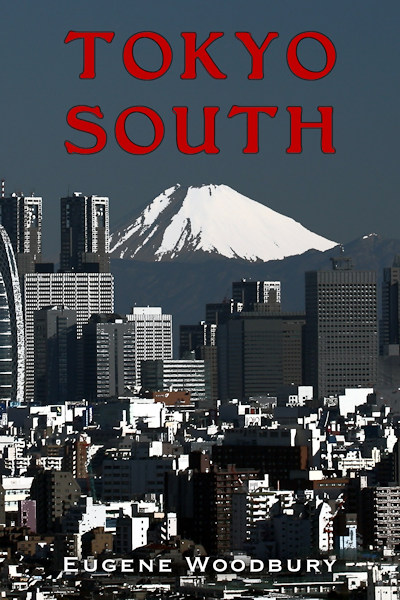
Tokyo South
The first chapter of Tokyo South, "Lost in the Works," was the innagural story of my writing career. I'd signed up for a computer programming class at BYU and discovered that I liked using the Pascal editor as a crude word processor (this was back during the Apple II era) more than programming.
Then "Number Games" won second place in the 1984 Vera Hinckley Mayhew Awards, my first solid bit of external validation. (I doubt the story would be so well received today; I like to call the first half of the 1980s at Brigham Young University under President Jeffrey Holland its glasnost era.)
Over the last two decades, a series of reorganizations and consolidations and force reductions finally resulted in the the Tokyo North and South missions being reunited in 2007. This Ted Lyon interview makes it clear that the shenanigans I describe in Tokyo South were by no means unique to Japan.
If anything, time and nostalgia and the detached sense of sang-froid that comes with age and experience led me to pull my punches a bit.
Tokyo South will be made available at a later date.
Related posts
The evolution
Tokyo South is alive
Tokyo South is dead
The weirdest two years
The problem with projections
Labels: books, BYU, ebooks, japan, japanese culture, kindle, peaks island press, publishing, religion, tokyo south
August 28, 2024
BookWalker
Because the publisher would still be out of pocket for the royalties on those 100,000 books.
As a result, as illustrated in Sleeper Hit, a cautious publisher starts small, tracks the weekly sales numbers, and only prints a second edition when demand significantly outstrips the supply (the Japanese title of the series translates as "Print the Second Edition").
The typical long-tail manga (that didn't generate a ton of online buzz during first-run syndication) starts out with small print run. Unless brought back to life by an anime series or a live-action adaptation (or as in Sleeper Hit, a grass roots marketing push), that'll be it.
As a result, most tankoubon (paperback manga published in book format) do not stay in print for long.

For Japanese emanga, BookWalker has become my online retailer of choice. You can access the English and Japanese sites with a single account and view your digital libraries in a browser or via the Android and iOS apps. (BookWalker no longer supports a desktop app.)
On the Japanese site, you can switch to the English site by clicking Global Store at the top right. On the English site, the button is labeled 日本ストア(Japan Store). One neat feature is that when you search for a manga in a series, it will return a link to the series as well.
Amazon is still worth checking out. Its prices are competitive, the Japanese Kindle store will keep growing, and it has a decent desktop app. Then again, BookWalker is no slacker when it comes to sales and specials too. All the more so given the current exchange rates.
Related links
BookWalker (Japanese)
BookWalker (English)
Kindle Store
Yes Asia
Labels: books, bookwalker, business, ebooks, manga, publishing
August 07, 2024
Tear down this e-wall!

In Japan, copyrighted works like music, movies, and books are exempt from price fixing laws that prohibit the imposition of resale price maintenance rules on resellers. That means a Japanese publisher can enforce the manufacturer's suggested retail price (MSRP) on intellectual property published and sold in Japan.
Even so, the reimportation of Japanese books has never been part of the debate. Piracy has since become a bigger problem. But, if anything, walled gardens exacerbate the piracy problem.
And yet those walled gardens persist.
When you publish a Kindle ebook on Amazon's KDP platform, you can make it available on all Amazon platforms. In a sane world, every digital title in the Amazon catalog would be listed in every Amazon store worldwide. But purchasing Japanese Kindle ebooks on Amazon outside of Japan requires jumping through a bunch of hoops.
Precisely the sort of thing the World Wide Web was supposed to eliminate by being, you know, World Wide. Some progress has finally been made on that front, with legal Japanese IP finding purchase outside the walls.
Amazon US breaks out Japanese as its own category in the Foreign Language section of the Kindle store. Given the great appeal of manga, the e-walls there are crumbling the fastest. The Japanese edition of Ascendance of a Bookworm can be purchased from Amazon US in both the ebook and paperback formats.

Those walled gardens still exist. Companies like Apple and Amazon are basically tossing titles over the walls rather than breaking them down and creating an all-inclusive catalog in the cloud.
This makes sense for paperbacks, as warehousing and shipping traditionally printed books is expensive. It shouldn't be an issue with ebooks.
Except it is. For the customer, even in the digital realm, Amazon Japan is treated as a completely separate entity from Amazon US. For example, Amazon Japan carries the Japanese and English editions of Yokohama Shopping Log. Amazon US only has only the English edition.
By contrast, you can access both the Kadokawa BookWalker English and Japanese catalogs from a single account. And with yen exchange rates hitting lows not seen in forty years, Japanese ebooks are a bargain abroad. You can read BookWalker ebooks in a browser or by using their apps, which work like the Kindle Reader apps.
BookWalker has the English and Japanese ebooks for Yokohama Shopping Log on its respective websites. Granted, BookWalker is the storefront for a single publisher. But the only obstacle here is scale.
Amazon Web Services is the biggest cloud computing platform in the universe. Scale isn't a problem. Amazon could merge their ebook catalogs or take the single-login approach. Either way, "Mr. Bezos, tear down this e-wall!" (Yeah, I know, he's not really in charge anymore, but I couldn't resist the reference.)
Related links
BookWalker (English)
BookWalker (Japanese)
Kindle Store
Yes Asia
Labels: books, bookwalker, business, ebooks, kadokawa, kindle, manga, publishing, streaming, technology
November 25, 2023
Three to watch on Viki

Even if you're not interested in the rest of the Viki catalog, I recommend subscribing for a month (or two) to watch Isekai Izakaya Nobu, Sleeper Hit, and 99.9 Criminal Lawyer.
The first is a cute live-action drama that is better than the anime (and I usually steer clear of isekai).
What makes the isekai part of Isekai Izakaya Nobu work is that it ultimately doesn't matter that much. The show posits that the back door of the restaurant exits onto an alleyway in Kyoto. The front door opens onto a sort of alternate universe Geneva during the Habsburg Dynasty.
Nobody wastes much effort asking why (or wonders how the electric lights work) and nobody really needs to.
This is ultimately a food-focused show and the setting is an excuse to introduce Japanese cuisine to people who have never heard of it before. There are melodramatic arcs that tie the episodes together but they never overwhelm the rest of the story. The meals are ultimately the main characters.
Viki has two seasons of the live action series. Crunchyroll has one season of the anime.
Sleeper Hit follows the triumphs and travails of the editorial staff at a second tier manga imprint. They are one small division in a big publishing house with healthy enough sales to keep it alive but not in the same stratosphere as Young Jump (and thus have to worry about their best talent getting poached).

The show starts out like a sitcom but soon turns into a serious drama about commerce and creativity. The story arcs make no bones about the punishing deadlines, the inextricable link between business and art, and the primacy of story, with the fickle reader exercising the final vote on success or failure.
We are taken through the life and death of a manga, from acquisition to serialization to cancelation, including a poignant scene in which the company president takes two of the new hires on a pilgrimage to the warehouse where the returns (all of the unsold books and magazines) are getting shredded.
The outstanding cast includes Yutaka Matsushige (Solitary Gourmet) as the managing editor, Joe Odagiri (Midnight Diner) as a senior editor given to bouts of philosophizing, and stars Haru Kuroki as an energetic newbie hired right out of college after the CEO challenges her to a wrestling match.
That last sentence will make more sense once you watch the first episode.
Sleeper Hit should be watched along with Bakuman. The anime covers the manga industry from the perspective of a pair of budding mangaka working hard to create a break-out hit.

Ittoku Kishibe (best known as the Machiavellian government minister on Aibou) plays the managing partner at a big law firm. He recruits the eccentric Hiroto Miyama (Jun Matsumoto of the boy band Arashi) for a newly formed criminal defense division.
Character actor and Kabuki veteran Teruyuki Kagawa is Miyama's ornery boss. The "99.9" refers to the conviction rate in Japan's criminal courts, so his skepticism is understandable. Even in modern Japan, the accused is pretty much presumed guilty until proven innocent.
Related links
Isekai Izakaya Nobu (Viki)
Isekai Izakaya Nobu (Crunchyroll)
99.9 Criminal Lawyer
Sleeper Hit!
Labels: anime, anime reviews, business, crunchyroll, fantasy, japanese, japanese tv, manga, publishing, streaming, tubi, viki
June 07, 2023
This page intentionally left blank
In publishing terms, recto is the front of a leaf (or page) and verso is the back. By tradition, page 1 starts on the recto, the right-hand page in left-to-right languages (such as English). Recto and verso are reversed in right-to-left (vertically typeset) Japanese books, so odd-numbered pages are on the left.
Because the typesetter started each section in Hills of Silver Ruins on the recto, these numbering gaps are scattered throughout the books. Here is the spread for part 20. As you can see, the recto is on the left. The page on the right (the verso of page 59) is blank (click image to magnify).

Typical print book layout also begins front and end material on the recto. But not necessarily chapter headings. A chapter usually gets a new page that is either the next page (recto or verso) or always recto (if saving paper isn't an issue).
In Hills of Silver Ruins, though, chapter headings do not get a new page, only white space. Another clever design decision was to use kanji numbers for the section headings but not the chapter headings. Japanese typography offers these options to book designers and greatly simplifies several other variables.
Characters in a given font and size occupy a box the same width and height, including punctuation. There is no spacing between characters (except in children's books). Imagine typing in a non-proportional font and having the line wrap at the right-hand margin regardless of where the cursor is in a word.
As a result, Japanese typesetters don't have to worry about justification, hyphenation, or widows and orphans (unless the result is quite ungainly, such as a single character on an otherwise blank page).
The one exception is punctuation. An end punctuation mark should not be separated from the preceeding text if it falls at the beginning of a line or the top of a column of text. To prevent this from happening, it is acceptable to kern a punctuation mark or push it into space reserved for the bottom or right margin.
In the example below, you can see the chapter number demarcated only with white space, and a comma and period pushed into the bottom margin. Even rudimentary Japanese word processing software has this capability (click image to magnify).

In vertical text, the comma, period, and close quotation mark (、。」) are located at the top (or left) of the aforementioned box while an open quotation mark (「) is at the bottom (or right). Thus the trailing space is built into the punctuation. Quotation marks rotate 90 degrees when printed vertically.
A paragraph indent is one box wide, the same width (or height) as hitting the spacebar once.
Labels: 12 kingdoms, black moon, japanese, publishing, translations
May 01, 2023
Twelve Kingdoms
The Twelve Kingdoms novels have been licensed by Seven Seas Entertainment. Bookstore links will appear when they are published.
For additional commentary about the Twelve Kingdoms and the translation process, see Kate's Interview with a Translator series.
1. Tsuki no Kage, Kage no Umi. My translation: Shadow of the Moon, a Sea of Shadows.
2. Kaze no Banri, Reimei no Sora. My translation: A Thousand Leagues of Wind, the Sky at Dawn.
Youko, Suzu, and Shoukei join forces to defeat corrupt government leaders in Wa Province.
3. Tasogare no Kishi, Akatsuki no Sora. My translation: The Shore in Twilight, the Sky at Daybreak.
Risai escapes to Kei and asks Youko for help rescuing Taiki. Taiki and Youko are contemporaries.
Fuyumi Ono wrote The Demon Child before she started the Twelve Kingdoms series. See link below. She covers some of this material in The Shore in Twilight, The Sky at Daybreak. In Kaze no Umi, Meikyu no Kishi ("A Sea of Wind, Shores of the Labyrinth"), Taiki choose Gyousou as Emperor of Tai. See links below.
1. Tasogare no Kishi, Akatsuki no Sora. My translation: The Shore in Twilight, the Sky at Daybreak.
Risai escapes to Kei and asks Youko for help rescuing Taiki. Taiki and Youko are contemporaries.
2. Shirogane no Oka, Kuro no Tsuki. My translation: Hills of Silver Ruins, a Pitch Black Moon (book I II III IV).
Risai and Taiki return to Tai. They recruit a small band of allies to search for Gyousou and take back the kingdom.
Higashi no Watatsumi, Nishi no Sokai. My translation: Poseidon of the East, Vast Blue Seas of the West.
Tonan no Tsubasa. My translation: The Wings of Dreams.
Kyouki chooses Shushou as Empress of Kyou. (Shoukei encounters Shushou in A Thousand Leagues of Wind.)
Kasho no Yume. My translation: Dreaming of Paradise.
- (冬栄) "Winter Splendor" (Touei): takes place in Tai and Ren during The Shore in Twilight, the Sky at Daybreak.
- (乗月) "Jougetsu": takes place in Hou after A Thousand Leagues of Wind, the Sky at Dawn.
- (書簡) "Pen-Pals" (Shokan): takes place in Kei and En after Shadow of the Moon, a Sea of Shadows.
- (華胥) "Dreaming of Paradise" (Kasho): takes place in Sai sometime before A Thousand Leagues of Wind, the Sky at Dawn.
- (帰山) "Kizan": takes place in Ryuu and Sou after A Thousand Leagues of Wind, the Sky at Dawn.
Hisho no Tori. My translation: Hisho's Birds.
- (丕緒の鳥) "Hisho's Birds" (Hisho no Tori): takes place before and shortly after the coronation of Youko as Empress of Kei.
- (落照の獄) "Prison of Dusk" Rakushou no Goku: references to Ryuu and Emperor Chuutatsu suggest the beginning of Youko's reign.
- (青条の蘭) "Blue Orchid" (Seijou no Ran): takes place in En before Rokuta chooses Shouryuu as the next Emperor.
- (風信) "Weather Vane" (Fuushin): takes place during the last days of Empress Yo of Kei, and then following her death.
I've created my own abridged glossary. An overview of the Twelve Kingdoms universe can be found at Wikipedia (English Japanese). The Twelve Kingdoms Wiki has scans of the illustrations and additional artwork.
My go-to resource while translating the novels has been Yoshie Omura's Twelve Kingdoms Room (Japanese). Also see the Twelve Kingdoms Database (Japanese).
Fuyumi Ono borrows much of the political terminology from medieval China. Harvard University's "Dictionary of Official Titles in Imperial China" (PDF) provides useful clues about the English equivalents.
However, we are talking about a fantasy series, so historical translations are not always exact. The organizational charts at Twelve Kingdoms Memo (Japanese) have proved quite helpful.
The NHK anime can be streamed at Tubi and Crunchyroll (regional restrictions may apply). The Blu-ray edition is available from Discotek Media.
Labels: 12 kingdoms, books, crunchyroll, fantasy, japanese, kate, publishing, translations, tubi
March 27, 2020
The rising ebook in Japan

 For a country with such a post-modern reputation, Japan loves paper, especially paper books and paper money. The ¥10,000 note, the equivalent of a $100 bill, is used and accepted everywhere.
Cash in circulation in Japan amounts to over 20 percent of GDP, significantly higher than the United States (8.3 percent), China (9.5 percent), or the Eurozone (10.7 percent).
Recent trends suggest that Japanese may be embracing electronic publishing faster than they are embracing electronic money. The ebook in Japan gained significant momentum in 2019.
According to the All Japan Magazine and Book Publisher's and Editor's Association, while print sales fell for the fifteenth straight year, sales of digital manga shot up 29.5 percent. Digital book publishing rose 8.7 percent. The entire digital market was up 23.9 percent. The overall publishing market even saw a small increase.
Physical video media also took a hit, with the Japan Video Software Association reporting that the market for physical media declined almost 11 percent from 2019 to 2019. Blu-Ray sales fell one percent while DVD sales were down 20 percent.
Like the ebook, Japan is also embracing the convenience and lower costs of streaming. Netflix, Hulu (wholly owned in Japan by Nippon TV), and Amazon Prime are making their presence known in a big way. Even NHK is jumping on the bandwagon, and will launch a domestic live streaming service in April.
Labels: business, ebooks, economics, hulu, japan, japanese culture, netflix, nhk, publishing, streaming, television
October 17, 2019
New Twelve Kingdoms novel (more covers)
 |
| 「白銀の墟玄の月」第三巻 ISBN 978-4101240640 |
 |
| 「白銀の墟玄の月」第四巻 ISBN 978-4101240657 |
The books are available online at Amazon/Japan, Honto, and Rakuten.
Related posts
New Twelve Kingdoms novel (title)
New Twelve Kingdoms novel (covers)
New Twelve Kingdoms novel (publication date)
New Twelve Kingdoms novel (Happy New Year!)
New Twelve Kingdoms novel (it's official!)
Squared (lined) paper
Labels: 12 kingdoms, advertising, black moon, books, business, fantasy, japan, japanese, publishing
September 05, 2019
"Anne" illustrated
 |
| "Red-Haired Anne" (Anne of Green Gables) |
For her original translation published in 1952, Hanako Muraoka chose the title Akage no Anne (「赤毛のアン」). Due to the book's immense popularity, translations since have stuck with it.
 |
| "Anne's Adolescence" (Anne of Avonlea) |
The kanji for "adolescence" is seishun (青春), literally "green spring." In this context, the word takes on an aura of classical romanticism tinged with sentimentality, the "blossom of youth."
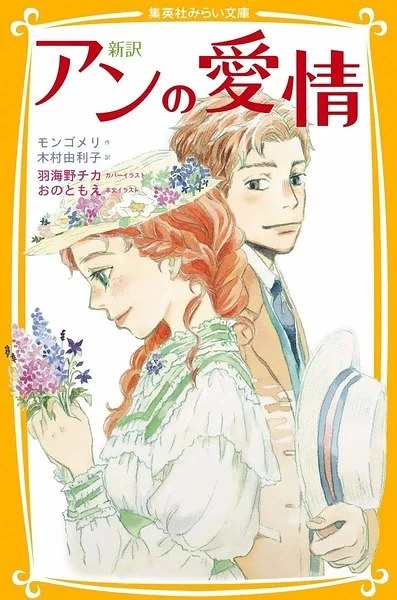 |
| "Anne in Love" (Anne of the Island) |
Though now a century old, Anne of the Island reads very much like a contemporary shojo manga, right down to the emphasis on competitive academic performance.
Related links
Honey and Clover
March Comes in Like a Lion
The orphan's saga
Hanako and Anne
Labels: anime, anime lists, anne, art, books, manga, publishing
September 02, 2019
New Twelve Kingdoms novel (covers)
The Twelve Kingdoms Twitter account is @12koku_shincho (in Japanese).
 |
| 「白銀の墟玄の月」第一巻 ISBN 978-4101240626 |
 |
| 「白銀の墟玄の月」第二巻 ISBN 978-4101240633 |
The books are available online at Amazon/Japan, Honto, and Rakuten.
Related posts
New Twelve Kingdoms novel (title)
New Twelve Kingdoms novel (more covers)
New Twelve Kingdoms novel (publication date)
New Twelve Kingdoms novel (Happy New Year!)
New Twelve Kingdoms novel (it's official!)
Squared (lined) paper
Labels: 12 kingdoms, advertising, black moon, books, business, fantasy, japanese, publishing
August 08, 2019
New Twelve Kingdoms novel (title)
The furigana oka lends the kanji for "ruins" (墟) the meaning of "hill," which is difficult to incorporate without getting wordy. Based on the hiragana for the title (above), it would read, "[A] Silver Hill[s], [a] Black Moon."

As for the literal meaning, all that remains of most medieval castles in Japan are overgrown hills. Oda Nobunaga's magnificent Azuchi Castle was destroyed by fire after his assassination in 1582, leaving behind only the stone foundation.
Without the actual context, other than the Kingdom of Tai being in the midst of a civil war, these are the images the title brings to mind. Considering the northern climate of Tai, "silver" could also describe ruins covered with snow.

The Traditional Colors of Japan website assigns「玄」a web color of #3E1E00, closer to "maroon." But it also describes「玄」as a synonym for black and suggests that「玄」is less a traditional color than a metaphysical concept associated with the dark arts or the darkness before the dawn.

Metaphorically, "silver" and "black" could refer to the silver-haired Gyousou and Taiki, a rare "black kirin." Using the possessive particle no (の), "silver" and "black" can function as both adjectives and nouns in Japanese.
Attempting the equivalent in English would sound clunky. So at this juncture, the English version will lean more heavily on the dictionary meanings.
At the end of July, Shinchosha released a Twelve Kingdoms promotional video (in Japanese). The narrator is Ken'ichi Suzumura, who played Rakushun in the NHK anime series.
Labels: 12 kingdoms, advertising, black moon, books, business, fantasy, japanese, language, publishing
April 25, 2019
New Twelve Kingdoms novel (publication date)
The latest installment in the Twelve Kingdoms series goes on sale this October!! Thank you all for being so patient! Having finalized the release date for the long awaited new novel, we wished to fill you in on the details.
The author's epic manuscript of over 2500 pages will be published in four volumes. Volumes I and II go on sale Saturday, October 12. Volumes III and IV go on sale Saturday, November 9. (Please note that these dates differ from Shinchosha's usual release schedule.)
We received the first volume from the author at the end of last year and the final volume in March. The publishing schedule has been set and we are getting everything ready to deliver them to you.
The best way to enjoy this great new saga is to start with the books already in print. Special displays are being installed in bookstores around the country leading up to the October release. Golden Week would be a great time to reread A Shadow of the Moon, A Sea of Shadows!
For those new to the Twelve Kingdoms, or read it so long ago they've lost track of the important details, don't worry! We've created a new website—"The Twelve Kingdoms in Five Minutes!"—to get you started.
Let's all look forward to the October 12, 2019 launch date together!

Shinchosha also launched a Twitter campaign (the post is misdated on the home page) asking readers to share what they love about the Twelve Kingdoms series. Twelve (randomly selected) submissions will receive a clear file folder signed by Fuyumi Ono and illustrator Akihiro Yamada.

In Japan, "Golden Week" refers to four national holidays starting on April 29 that take place within seven days. This year, Golden Week will be extended to ten days in order to accommodate the abdication of Emperor Akihito on April 30 and the enthronement of Crown Prince Naruhito on May 1.
Labels: 12 kingdoms, advertising, black moon, books, business, fantasy, japan, publishing
January 03, 2019
New Twelve Kingdoms novel (Happy New Year!)
We are coming to you for the last time in 2018. This year, with an enormous sense of relief, we were able to make the long hoped-for announcement that a new installment in the Twelve Kingdoms series is heading to publication. That announcement was met with a deluge of delighted voices through SNS. We thank you again for your warm messages.
The new novel is a sequel to Tasogare no Kishi, Akatsuki no Sora ("The Shore in Twilight, the Sky at Daybreak") and takes place in the Kingdom of Tai. How about reacquainting yourselves with the series during the upcoming holidays? For those of you new to the series, please take this opportunity to dive into the world of the Twelve Kingdoms and enjoy it to the fullest.
Shincho Paperbacks has now published new editions of all of the Twelve Kingdoms novels, including The Demon Child and Hisho's Birds. Available at a bookseller near you! You can find the eleven volumes on Amazon too.
Whilst coping with her long spell of ill health, Ono Sensei's unfolding Twelve Kingdoms drama turned into a massive epic! More than anything else, as we work towards the day when the book will go on sale, we pray for her continuing convalescence. Fresh information will be posted here in "Kirin News."
This is our last Year-End Greetings of the Heisei era. The New Year will also bring with it the first year of a new era, full of newborn promise. And so with that same sense of hope we shall continue to ask for and thank you for your continuing support.
Please have yourselves a Happy New Year!
I'll explain a bit more about the historic end of the Heisei next week.

Labels: 12 kingdoms, advertising, black moon, books, business, fantasy, history, japanese culture, nengou, publishing
December 27, 2018
Squared (lined) paper
The actual text reads 「400字で約2500枚」 or "around 2500 pages of 400 characters each."
Kana and kanji fonts are generally not proportional. Characters of the same font size take up the same amount of space. This means that typeset Japanese naturally right-justifies. Or rather, bottom-justifies.
The equivalent of "lined" or "college ruled" paper in Japan is called genkouyoushi (原稿用紙).
The standard paper size is 400字 Japanese-B4 (14.3 x 10.1 inches). Each sheet is 10 by 20 vertically-aligned squares in two halves (designed to be folded down the middle), or 20 by 20 characters (字) total.
A typesetter's primary concern is avoiding widowing or orphaning punctuation marks, which usually get their own box. Word processing software handles this algorithmically. Wikipedia provides the following style guide.

The rules for handling punctuation marks in vertical text are called kinsoku shori (禁則処理).
Even in this computerized age, genkouyoushi remains synonymous with writing. The characters in Bungo Stray Dogs are named after famous authors. So naturally genkouyoushi is used in the title cards.

Labels: 12 kingdoms, anime, black moon, fantasy, publishing, thinking about writing
December 13, 2018
New Twelve Kingdoms novel (it's official!)
Here is the press release. (I didn't add any of the exclamation points but agree with them.)
The highly anticipated new work is finally here!!!
Today, on the 12th of December ("Twelve Kingdoms Day"), we have delightful news to share. A brand new manuscript has arrived!
The long-awaited novel has turned into a massive 2500 page epic. The setting for the story is the Kingdom of Tai. We are grateful to Ono Sensei for penning such a masterpiece in this 30th year of her career. We thank all her readers for waiting so patiently.
Now commences the business of making a book, such as copyediting and the illustrations. Though a publication date hasn't yet been determined, it is certain to debut in 2019.
As promised, we are posting important updates on this website. It was still an unexpected surprise that this news arrived on "Twelve Kingdoms Day." Going forward, we will do our best to point you to accurate information in a prompt and orderly manner.
To that end, we humbly ask for your continuing support.

Labels: 12 kingdoms, advertising, black moon, books, business, fantasy, publishing, translations
November 08, 2018
Bakuman (the future)
The editors in Bakuman do pay a lot of attention to their spreadsheets. Akito writes on a laptop. But then everything gets printed out on paper. And faxed. Final proofs are hand-delivered.

In one of the more poignant scenes in the series, Moritaka is walking home from a school reunion where everybody was talking up their holiday plans. He glances at his calloused, ink-stained hands and realizes that, aside from gall bladder surgery, he's never taken a day off.
"No regrets," he tells Akito, and Akito agrees. When they got married, he and Kaya barely managed to squeeze in a honeymoon.
That could be changing. There is plenty of talk about the aging of Japan's population. Over the past quarter century, circulation at the major manga magazines dropped by two-thirds as the baby boom echo aged out of the target demographic and into middle age.
But at the same time, manga and anime have gone international and gone online, with Crunchyroll and Netflix leading the way. Justin Sevakis points out that "there has never been more money flowing from international fans to anime productions in the history of the art form."
Even light novels are getting in on the act in a big way, something I would not have predicted just a decade ago.
At Yen Press, a joint venture between Kadokawa and the New York-based Hachette Book Group, Kurt Hassler launched light novel imprint Yen On in 2014, introducing Reki Kawahara's Sword Art Online with the modest goal of publishing 12 books annually. That figure doubled the following year, and now Hassler says that Yen On will release 110 light novels through the rest of this year, representing growth of nearly 1000 percent in four years.
How popular culture is being created is also changing. As depicted in Shirobako, out of sheer necessity, technology has transformed the animation industry. 3DCG animation is only a small part of the revolution.
Even if an artist works initially on paper, everything gets scanned and imported into the animation software where the cleanup, coloring, and actual animation takes place. "Dailies" are generated and tweaked on the fly.
This process allows animation studios (in Japan and Hollywood) to subcontract with companies in South Korea, China, and Vietnam. Work product can be uploaded to and downloaded from the cloud in real time.
When it comes to creating backgrounds, directors like Makoto Shinkai have become masters of Photoshop (Garden of Words may be his most staggeringly gorgeous). This approach is disparaged by purists of the hand-drawn school. I don't care as long as it works.
The first time I saw the opening credit roll for Inari Kon Kon in HD, I was gobsmacked. Sure, it's a Photoshop, but it's breathtakingly beautiful.

When it comes to manga, the silly Eromanga Sensei offers a serious look at the future. Masamune naturally writes on a laptop. Sagiri (the artist) works entirely in the digital domain, using a Cintiq 13HD Wacom tablet (according to people who pay close attention to such things).
When she's finished with an illustration, she simply shoots an email off to her editor with a multi-layer PDF attached.
To be sure, a computer won't be drawing Moritaka's manga for him anytime soon. But the cost and time savings could prove considerable.
To start with, the ink is gone, along with the most physically onerous and time-consuming chores, such as whiting out mistakes (using, yes, Wite-Out) and often redrawing whole pages, manually layering in background textures, and sizing screentone overlays with an Exacto knife.
I grew up in at the end of the typewriter era, when "high-tech" was an IBM Selectric. But after using a primitive word processor on my brother's Apple IIe, there was no going back.
There are productivity gains to be made on both the production and publishing sides. The iconoclastic Shuho Sato adopted the increasingly popular "hybrid" model, his "traditional" publisher dealing with the paper product while he maintains a platform for distributing manga electronically.
We are quickly approaching the day when all commercial art is digital from start to finish. Using platforms like Amazon KDP, you can publish digitally and on paper (print-on-demand) for "free." And then with a push of a button, your book will appear in every Amazon store in the world.
"Free," however, doesn't factor in the costs in time and resources incurred by the writer, which can range from very little to a whole lot. Formatting a professional-looking ebook is a much more straightforward process than formatting a professional-looking print-ready manuscript.
And the eternal challenge still remains of reaching the reader. So perhaps the future of publishers will not be to physically publish but to publicize.
Related posts
Bakuman (the context)
Bakuman (the review)
Bakuman (the anime)
Manga economics
The teen manga artist
The manga development cycle
Labels: anime, business, kadokawa, manga, publishing, shinkai, tech history, technology, thinking about writing, tubi
November 01, 2018
Bakuman (the review)

We first meet Moritaka Mashiro and Akito Takagi in the ninth grade. Observing Moritaka's talents as an artist, Akito approaches him and proposes they team up to create manga.
Akito doesn't pluck this idea out of thin air. Nobuhiro Mashiro, Moritaka's uncle, was a mangaka with one published series and an anime adaptation to his credit. Then he literally worked himself to death trying to write another. "I'm not a mangaka," he often said with a wry grin. "I'm a gambler."

Helping Moritaka make up his mind is Miho Azuki, the girl he longs for from afar (or from across the classroom or from the adjacent desk).
With a helpful push from Akito, she reveals to Moritaka that she wants to become a voice actor. Moritaka promises to write a manga that will get made into an anime and Miho will star in it. Goofy, yes, but hardly out of sync with the mindset of a couple of ninth graders.
Taking place at arm's length, though, their romance is not terribly consequential in story terms. Rather like Gilbert in Anne of the Island, Miho remains mostly off-screen as Moritaka's muse.

But Kaya's down-to-earth nature keeps Akito and Moritaka and the studio on an even keel. Her relationship with Akito matures in a positive direction. It gives the series much of its heart and warmth. The series could have used more Kaya. And Miho needn't have been quite so absent.
The story does start with a few cheats. Moritaka's grandfather lends Moritaka the use of Nobuhiro's studio. Hisashi Sasaki, the managing editor at Shonen Jack, worked with Nobuhiro. So he knows Moritaka, though doesn't do him any favors, other than giving him a fair shot.
A fair shot at Shonen Jack, née Shonen Jump. From the start, Moritaka and Akito aim for the top.
Shonen Jump is the best-selling manga magazine in Japan. At its height during the mid-1980s, it sold a staggering 6.5 million copies a week. Though demographic changes have cut deeply into those numbers, Shonen Jump still boasts a weekly circulation of two million.
In the anime adaptation, the magazine is called Shonen Jack and the publisher is called Yueisha instead of Shueisha. The posters of One Piece and Naruto decorating the lobby walls make it clear what publication they're referring to.
Shonen Jump has a sister publication called Next, where up and coming manga artists can test out their talent. So does Shonen Jack.
One of Moritaka and Akito's submissions ends up on the desk of Akira Hattori. The junior editors at the magazine sort through the submissions to find mangaka with promise. The careers of the editors depend on how well they can develop a mangaka's career and sustain a successful series.

After asking for revisions, Hattori enters the manuscript in an upcoming contest at Next. These contests are another way of recruiting and judging new talent. Moritaka and Akito do well and are invited to submit a one-shot to the prestigious Tezuka Award at the main magazine.
They don't make the final cut but Hattori is sufficiently impressed to ask for more submissions.
In a highly iterative process that any old-school freelance writer is familiar with, they revise and resubmit, revise and resubmit until they get an acceptance. This process takes months, even years. So the the series often makes big jumps in the timeline from episode to episode.
Once they have established their bona fides as artist and writer, they are invited to submit a one-shot that could be serialized. Essentially a pilot episode.
Everything published in Shonen Jack gets rated. A steady stream of reader surveys are compiled twice weekly into spreadsheets. If a one-shot with serialization prospects delivers good ratings, the editor petitions his senior editor to present it at a serialization meeting.
But every new series means an existing one must be canceled. As the managing editor likes to say, "If you write a good manga, you will get published. But not necessarily by us."
While working on their projects and waiting for the thumbs up or thumbs down, mangaka often free-lance as assistants. The pressures of turning out two-dozen finished pages every week is such that, once serialized, a mangaka depends on assistants to do the inking and background work.

Eiji Niizuma is a boy genius, the same age as Moritaka and Akito. The managing editor personally recruited him to write for Shonen Jack. When we first meet Niizuma, he is a bundle of ticks and idiosyncrasies, a sort of artistic Sheldon Cooper after a dozen shots of espresso.
But he proves to be a great asset, both as a rival and a friend, with a keen eye for what works and what doesn't (though he's not very good at explaining why). During his short stint as Niizuma's assistant, Moritaka meets several of the other key players in the series (his competition).

In his mid-thirties, Takuro Nakai is the oldest in their circle. He is the most technically proficient artist but hasn't ever been serialized. As each year passes, the odds grow longer and he grows more desperate, a desperation that has produced several self-destructive behavioral quirks.
He eventually teams up with Ko Aoki, who comes to Shonen Jack from the shojo manga side. (The real Shueisha publishes over a dozen manga magazines in all genres.) They get the green light for a series. The question is whether Nakai can hold his personal life together in the meantime.
Although working in utterly unlike genres, Fukuda and Aoki exemplify an important point that Bakuman makes about popular art. In dramas about "artists," the market-driven demands of the audience and the imposition of editorial constraints are typically cast as the bad guys.
In Bakuman they are the unavoidable—and not necessarily unwelcome—reality.

Fukuda could easily write for a seinen magazine, aimed at older teens and college students.
Takao Saito, for example, has been writing Golgo 13 for fifty years. A gritty series about a professional hitman, Golgo 13 runs in Big Comic, a seinen manga magazine. A circulation of 300,000 is nothing to sneeze at. But it is one-sixth that of Young Jump.
Aoki could easily write for one of Yueisha's shojo (少女) magazines. But the most popular shojo manga also have circulations in the mid-six figures. Getting published in Shonen Jump means reaching the biggest audience possible. It also means hewing to the magazine's editorial guidelines.
So her fantasy series must have more vivid action sequences and her romance series must have more fan service. In one of the funnier arcs, Fukuda takes it upon himself to tutor Aoki about how to appeal to the prurient interests of twelve-year-old boys (without outraging their parents).
These compromises are a constant. Action-oriented "battle manga" are the most popular. A mid-list "gag manga" has the most reliable staying power. But Akito turns out to excel at a Rod Serling approach, writing stories with a surreal or paranormal edge that are layered with social commentary.
At first, Hattori suggests that being "the best of the rest" isn't a bad place to end up. Except Moritaka and Akito want to compete at the top with Eiji Niizuma (everything's a competition in a shonen series). In the process, they give every genre a shot, frequently fail, and start over.
But this is a melodrama and not a documentary. They do finally find the success they are looking for. And their editors are there every step of the way. I can't think of another drama series about the arts that gives the lowly editors so big a role and makes them the good guys to boot.
And gives them so many smart things to say about what makes a story successful.
The original Bakuman was published in 176 chapters over four years. The anime ran for 75 episodes in three seasons on NHK Educational television. The art and animation can't match that of a dozen-episode cour from Kyoto Animation. But this is a series where the ideas matter more.
With so much material to generate, Tsugumi Ohba and Takeshi Obata often fall back on a problem-of-the-week approach to creating drama. While predictable, this is actually a great advantage of the series.

And, yes, all those dysfunctional mangaka.
For example, Kazuya Hiramaru, who abruptly quits his job as a salaryman to write a surreal Dilbert-like gag manga about an otter in a business suit. Only to discover, to his horror, that he's abandoned one rat race to join another where the rats have to run even faster.
"At least when I was a salaryman I had weekends off!" he complains to his editor. But poor Hiramaru is cursed to be a talented and popular—if lazy and unmotivated—mangaka. So his Svengalian editor will stop at nothing to trick, coerce, and manipulate him into making his deadlines.
Hiramaru isn't exaggerating too much. As Shuho Sato documents in Manga Poverty, simply breaking even can take a mangaka years. Those assistants get paid out of the mangaka's page-rates. So turning a profit depends on how fast the mangaka can run his production line.
Sure, there will always be writers who produce best-sellers right out of the box and rake in millions. And I certainly enjoy following the adventures of the Richard Castles and Temperance Brennans, who somehow find the time to solve murder mysteries in between writing yet another best-seller.
But back in the real world, commercially successful art requires more work, discipline, single-minded determination, and, yes, creativity than most of us are capable of. Along with a large dose of luck. Which makes me all the more appreciative of those who can pull it off.
Related posts
Bakuman (the context)
Bakuman (the future)
Bakuman (the anime)
Manga economics
The teen manga artist
Manga circulation in Japan
The manga development cycle
Labels: anime lists, anime reviews, anne, art, business, japanese culture, publishing, tubi