

November 06, 2024
Matt Alt on minimalism

To begin with, ascetic practices attributed to Zen Buddhism are not the same as the disciplined use of space due to the fact that there isn't that much of it.
Ongoing population decline notwithstanding, Japan is still home to 126 million people who live in a country the size of California. Only 11 percent of the total land area is arable and less than a third of that is actually usable for housing.
That certainly sounds like a good argument for a less-is-more lifestyle. Except what space is available is nowadays bound to be crammed to the gills with stuff (as George Carlin delightfully put it).
After all, Kondo wrote originally for a Japanese audience, that had apparently forgotten they were supposed to be minimalists living in the land of minimalism.
Though to give Kondo the benefit of the doubt, I believe this is largely a postwar phenomenon brought about by both a booming economy and the additional confidence that all your stuff will still be here tomorrow.
As I discussed in a post about how Edo-period cities handled the constant plague of massive urban fires, perhaps Japanese minimalism simply evolved as a way to cope with that pretty grim reality.
Starting with the Great Fire of Meireki in 1657, fire was such ever-present fact of life that the average Edokko could expect his house to burn down at least once during his lifetime.
This expectation didn't end with the Meiji. As Edward Seidensticker writes in Low City, High City, "From early into middle Meiji, parts of Nihonbashi were three times destroyed by fire. There were Yoshiwara fires in 1871, 1873, 1891, 1911, and of course in 1923."

As late as 1995, the widespread damage from fires throughout Kobe following the Great Hanshin earthquake was a big wakeup call. Fire is no longer the threat it once was in Japan's urban centers, which has allowed clutter to proliferate.
When one of those old Edo period storehouses shows up in a modern mystery series, it will be crammed floor to ceiling with a haberdashery of clutter, that the detectives will have to comb through to find the critical clue.
As Kyoichi Tsuzuki points out, "Simplicity isn’t about poverty at all. It’s about wealth." It's about being able to buy all that stuff and then being able to afford to store it someplace else. Or replace it on a whim.
It's also a good way to have your minimalist cake and eat it too. Before the fussy relatives come over, cart all that materialistic excess to the storehouse and show off your splendidly simple life.
Or I guess you could hire Marie Kondo to eliminate the need in the first place.
Labels: economics, geography, history, japan, japanese culture, religion


October 05, 2024
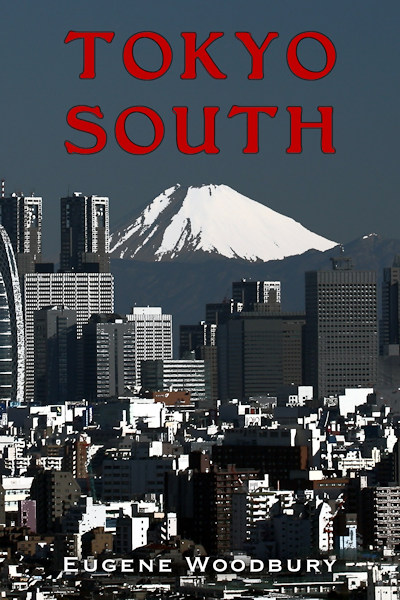
Tokyo South
The first chapter of Tokyo South, "Lost in the Works," was the innagural story of my writing career. I'd signed up for a computer programming class at BYU and discovered that I liked using the Pascal editor as a crude word processor (this was back during the Apple II era) more than programming.
Then "Number Games" won second place in the 1984 Vera Hinckley Mayhew Awards, my first solid bit of external validation. (I doubt the story would be so well received today; I like to call the first half of the 1980s at Brigham Young University under President Jeffrey Holland its glasnost era.)
Over the last two decades, a series of reorganizations and consolidations and force reductions finally resulted in the the Tokyo North and South missions being reunited in 2007. This Ted Lyon interview makes it clear that the shenanigans I describe in Tokyo South were by no means unique to Japan.
If anything, time and nostalgia and the detached sense of sang-froid that comes with age and experience led me to pull my punches a bit.
Tokyo South will be made available at a later date.
Related posts
The evolution
Tokyo South is alive
Tokyo South is dead
The weirdest two years
The problem with projections
Labels: books, BYU, ebooks, japan, japanese culture, kindle, peaks island press, publishing, religion, tokyo south
July 31, 2024
Classical poetry in anime

Tanka are also featured in the Utakai Hajime ("First poetry recital") held annually at the Imperial Palace on New Year's Day. Tanka are distinguishable by a 5-7-5-7-7 syllable pattern while haiku follow the more familiar 5-7-5 format.
Haiku are built upon a poetic framework that goes far deeper than just the syllable count. A well-formed haiku should demonstrate the appropriate use of kireji, words comparable to sounded-out punctuation marks that shape the pacing and prosody of the poem. And kigo, words that refer metaphorically to the specific season of the year.

What people outside Japan generally think of as haiku are often senryuu. The prosody of senryuu is the same as haiku but the use of kireji and kigo are not required. Moreover, senryuu takes human nature as its primary subject matter, with an emphasis on clever juxtapositions and comical turns of phrase that can resemble puns or aphorisms.
That makes senryuu popular in improvisational comedy shows like the long-running Shouten.

There Nanako meets classmate Eiji, a punk who got tired of being a punk and is reforming himself (another popular trope). He developed a love of senryuu along the way and hasn't shed his habit of reciting poems like a punk cruising for a bruising.
The Heike Story is a recent adaptation of the classic Heike Monogatari, about the decline and fall of the Taira clan. It is a historical drama and not about poetry per se. But the story is told from the perspective of Biwa. Traveling bards like Biwa are believed to have preserved the story until it was put down on paper.

Related anime
Chihayafuru
Komi Can't Communicate
Senryu Girl
The Heike Story
Words Bubble Up Like Soda Pop
Labels: anime, anime reviews, japan, japanese, japanese culture, literature, thinking about writing
July 10, 2024
The relative time of day
Midnight |
– |
3:00 AM |
Predawn |
To that bit of geography, consider as well that Japan does not go on Summer Time (サマータイム). As a result, even in the middle of the summer, the sun rises over Tokyo as early as 4:30 AM and sets no later than 7:00 PM. In the middle of the winter, the sun rises before 7:00 AM and sets no earlier than 4:30 PM.
But 7:00 PM is pretty early in the evening compared to Salt Lake City. Salt Lake City is in the middle of the Mountain Time Zone at 40 degrees north and goes on Summer Time (MDT). At the height of the summer, the sun sets at a whopping 9:00 PM. Yet another reason I'm not a big fan of Daylight Saving Time.
Back during the go-go 1980s, when drinking with the boys after hours was de rigueur for every company man in Tokyo (and to a certain extent still is), a popular anecdote claimed that the typical salaryman preferred doing so under cover of the night. That was why Japan resisted going on Summer Time.
Related posts
Crunchyroll 360
Daylight Saving (waste of) Time
Labels: geography, japan, japanese culture, politics, science, technology
March 20, 2024
The show business panda
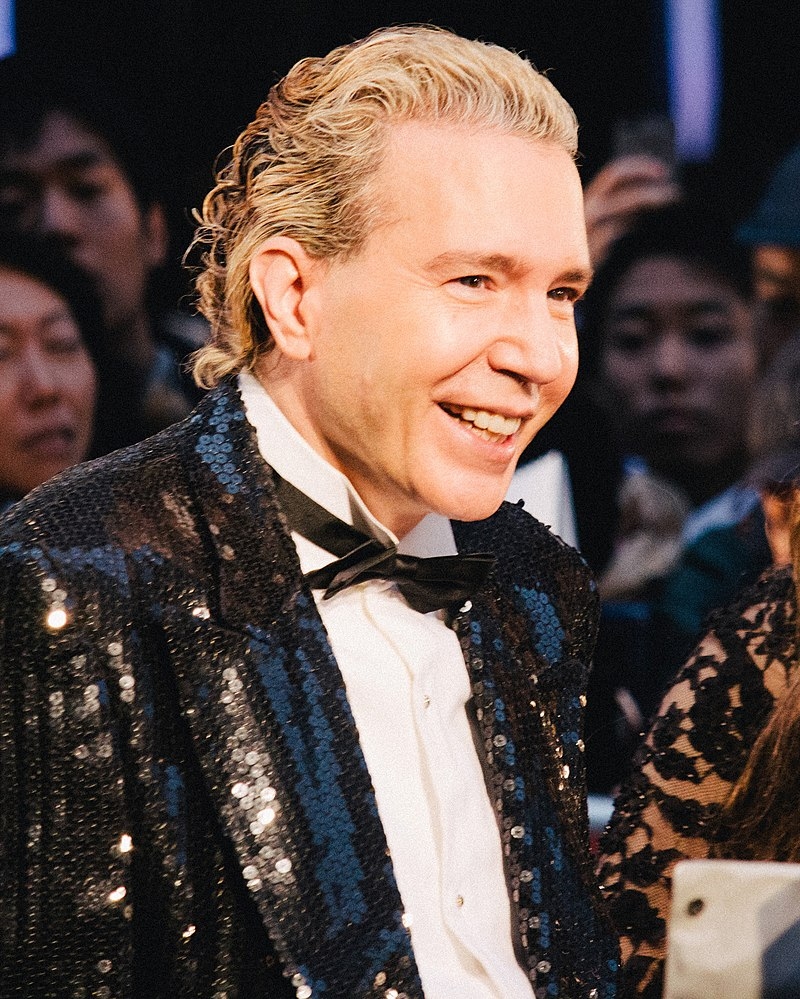
I'm doing things like the lowest bozo, circus kind of stuff. But it doesn't bother me at all. Foreigners on television [in Japan] are often compared to pandas because they're cuddly, you can have fun with them, throw them a marshmallow, and that's about it. You don't get involved any deeper than that. But since I'm making half a million dollars a year, I'm very happy to be a panda.This strikes me as a healthy attitude to have about being a celebrity in general. And perhaps the kind of variety talk shows that earn David Spector a generous living aren't quite as silly as they might seem. Erik Luebs argues that beyond the entertainment value, variety talk shows in Japan serve utilitarian ends.
Whether intentional or not, watching these celebrities chat with one another serves as an instructional guide for what is acceptable and unacceptable behavior in society. They give the viewer a clue into how to participate in any number of conversations, and how to react in any number of situations. These programs are just as much a form of entertainment as they are a framework for establishing social order.My only caveat here is that I read "social order" in the most benign sense: lessons on how to play the game of living an ordinary Japanese life.
Labels: japan, japanese culture, japanese tv, television
November 16, 2023
Suzume
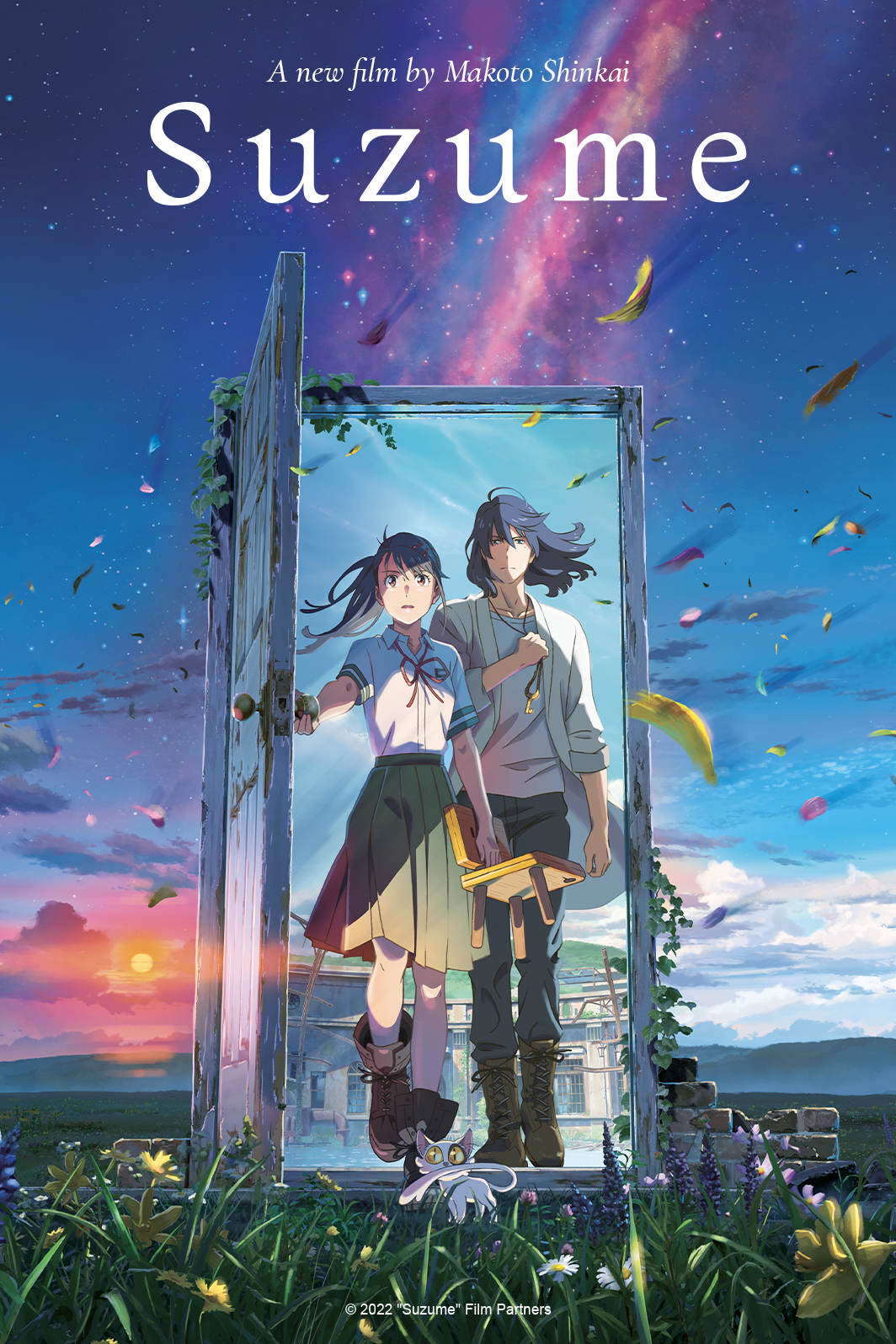
Suzume's journey begins in a quiet town in Kyushu (in southwestern Japan) when she encounters a young man who tells her, "I'm looking for a door." What Suzume finds is a single weathered door standing upright in the midst of ruins as though it was shielded from whatever catastrophe struck. Seemingly drawn by its power, Suzume reaches for the knob. Doors begin to open one after another all across Japan, unleashing destruction upon any who are near. Suzume must close these portals to prevent further disaster.
Suzume is Makoto Shinkai's thirteenth directorial work. Here's to hoping Crunchyroll licenses more of his catalog.
Labels: anime, crunchyroll, japan, movies, shinkai
October 28, 2023
Live cams from Japan
As with the network news feeds from Japan, once you've watched one or two channels, YouTube will suggest more of the same.
Sapporo (Hokkaido)
New Niigata Station (Niigata)
Asakusa Kannon Temple (Tokyo)
Kabukicho 1 (Tokyo)
Kabukicho 2 (Tokyo)
Kabukicho Crossing (Tokyo)
Rainbow Bridge (Tokyo Bay)
Shibuya Crossing (Tokyo)
Shinjuku Crosswalk (Tokyo)
Tokyo Tower (Tokyo)
Osaka Loop Line (Osaka)
Hiroshima Station (Hiroshima)
Sakurajima (Kagoshima)
Labels: geography, japan, japanese culture, streaming, television
September 23, 2023
Kazuya Kosaka
Westerns were a staple on American television at the time, and so the genre naturally became a staple on Japanese television. Rawhide was a big hit. During a February 1962 publicity tour, Clint Eastwood, Paul Brinegar, and Eric Fleming met the Japanese press at the Palace Hotel in Tokyo.

It was only a matter of time before Japanese musicians began performing Western music and rockabilly. Kazuya Kosaka & The Wagon Masters not only covered the hits but reinterpreted them as well.
Here's Kosaku's version of "Rawhide."
And his cover of "Jailhouse Rock."
Kazuya Kosaka (1935–1997) is better remembered today in Japan for his long career in movies and television.

There are also J1 Radio apps for Roku, Android, and iPhone.
Labels: japan, japanese culture, japanese tv, music, radio
September 02, 2023
dLibrary Japan (big upgrade in the works)

By next April, we should find out the results from that survey.
Changes are afoot at NHK Cosmomedia, which owns and operates (along with Japan International Broadcasting) dLibrary Japan, NHK World, and TV Japan (also known as NHK World Premium).
I've speculated about the possibilities before. Cable cutting is surely eating into TV Japan's subscriber base. The (free) NHK World streaming service already carries a considerable amount of localized NHK edutainment material, including the all-important sumo tournaments.
dLibrary Japan recently started streaming series after their first run on TV Japan and shows after they debuted in Japan. With sumo bouts covered by NHK World, the only programming on TV Japan I really miss are the Taiga and Asadora dramas, and live news from Japan (in Japanese).
NHK World streams news on the hour from its own bureaus, half of the day from New York, and all in English. But, frankly, a lot of the time, I get the feeling that the NHK World anchors think they're on CNN. News from North America often gets more airtime than anything to do with Japan.
dLibrary Japan could become the VOD library for TV Japan, including real-time news and commentary.
It's never had a backlist and only held onto content for a year or two. While services like Retrocrush specialize in classic anime, long-running series like Abarenbo Shogun remain unknown outside Japan. (You can watch Shadow Warriors and a couple of tokusatsu series on Tubi.)
NHK World is available via streaming, OTA, and VOD, so NHK Cosmomedia doesn't need to reinvent the wheel. Ideally, they'd integrate the services in a single app with paid and unpaid tiers. But easier said than done, which is why dLibrary Japan is going on hiatus for several months.

In any case, for now, dLibrary Japan stopped enrolling new customers on 9/1/2023 and won't post new content after 9/30/2023. The service will go offline on 10/31/2023.
Don't panic! The official press release (which has been updated several times since the original announcement) promises they will be back!
We are thrilled to announce the upcoming introduction of an upgraded streaming distribution service. This renewed service will bring you an even richer selection of Japanese content and improved performance, including the addition of NHK news viewing. To make way for these enhancements, the current dLibrary Japan service will be suspended.
Well, I do like that bit about the news. All we know at this juncture is that the new service will launch "within fiscal year 2023." In Japan, that means before the end of March 2024. They won't need five months to update the apps and servers, so other stuff must be going on behind the scenes too.
I am very curious find out what sort of "upgraded streaming distribution service" NHK Cosmomedia has in store.
Labels: business, dlibjapan, japan, japanese tv, nhk, nhk cosmomedia, nhk world, streaming, technology, television, tv japan
August 26, 2023
Carnivorous vegetarians
Well, except when silly westerners try to ratchet up their own virtue signaling by apologizing for beating them.
And unlike the Germans, the ultra-nationalists and their rhetoric aren't banned. Some even get elected to high office. Then there's that whole Yasukuni Shrine business, which prime ministers pretend to be "sensitive" about.
Until the cameras are turned off, that is.
All the paeans to pacifism are pragmatic as well. In a neighborhood full of angry bulls, it's a good idea not run around waving a red flag. But at home, disturb the social order and the kid gloves come off. Japan has the death penalty and uses it.
And they don't pay much real attention to foreigners who complain about such things. Frankly, I think the Japanese government sticks to that whole whale hunting thing (it's for "research," don't you know) because foreigners complain about it.
It's a passive-aggressive way of asserting Japan's sovereignty and national prerogatives.
Japan's eating habits are doing a lot worse to the unagi, but when's the last time you heard anybody campaigning to "Save the eels!"
 |
| As Homer Simpson would put it: "Mmmm . . . eels." |
Which brings us to the subject of another bunch of virtue-signaling westerners that amuse the Japanese when they're not bemusing them: vegetarians. Long story short: the best way to be a vegetarian in Japan is to not ask about the ingredients.
Eryk points out in his This Japanese Life blog that the
long life expectancy of Japanese people isn't from a vegetarian diet, because none of them are vegetarians. Okinawans are usually singled out—longest life expectancy in the world—but Okinawans actually eat taco rice and chicken.
The same goes for cancer rates. Japan's cancer rates aren't low because they avoid meat. Japan's diet is heavy on meat and soy—tofu, in particular—and soy can lower the risk of certain cancers. But tofu in Japan is usually served alongside meat, not in place of it.
Far from utopian, Japan is one of the least vegetarian-friendly places on Earth.
A vegetarian lifestyle is tough enough. But a vegan diet is almost impossible to strictly adhere to in Japan. Even in vegetable dishes, the dashi (broth) that is a ubiquitous component of Japanese cuisine almost certainly contains pork or fish.
 |
| The ingredients that go into dashi. |
Laments Anne Lauenroth at GaijinPot, dashi is commonly made from bonito (related to tuna), and it is everywhere,
from sauces, salad dressings and miso soup to udon and soba noodles being boiled in it. Better restaurants pride themselves on making their own dashi, and they will be inclined to cook even their vegetables in this special broth instead of lovely, ordinary water.
But as far as Japanese cooks are concerned, dashi doesn't count as "meat," regardless of what it's made from. If you can't see the meat, there isn't any meat. Warns a site called the Vegetarian Resource Group,
It may be difficult to explain to Japanese people what you cannot have, because the concept of vegetarianism is not widely understood. For example, if you say you are vegetarian, they may offer you beef or chicken soup without meat itself.
Agrees Peter Payne,
One special challenge is being a vegetarian in Japan, since the country generally doesn't understand the lifestyle. One restaurant even advertised "vegetarian" bacon-wrapped asparagus, as if the presence of a vegetable was enough to make it vegetarian.
He advises sticking to shoujin ryouri, the food traditionally eaten by Buddhist priests. Which could be tough for the typical tourist to arrange alone. So the Inside Japan Tours website "will advise all your accommodation of your dietary needs in advance."
Why? Because it is
decidedly more difficult to be a full vegetarian or vegan in Japan due to the ubiquity of fish in the diet. In fact, it is so rare that many restaurants do not offer any vegetarian dishes at all.
Protecting tourists from vegetarian dishes that aren't really is a great example of what Tyler Cowen calls "Markets in Everything."
Granted, I find actual "travel" utterly unappealing as a hobby, let alone a necessity. (Fun to watch on television, though.) But this strikes me as an odd tourism mentality. It's a kind of reverse cultural appropriation: "Don't do as the Roman do."
Then why go to Rome in the first place?
When it comes joining the culinary globetrotting set, I think Phil Rosenthal has the right idea in I'll Have What Phil's Having and Somebody Feed Phil. He travels the world and eats whatever he is served with great élan and with barely a care about where it came from.
After all, all those other people are eating it and they didn't fall down dead. Yet.
Related posts
Food fiction
Eat, drink, and be merry
Hungry for entertainment
Kitchen Car
Labels: environmentalism, food, japan, japanese culture, politics, social studies, television
August 12, 2023
Hyouka

Manga and anime embraced the trope, often adding a sidekick (a gregarious Watson to his taciturn Sherlock) and spirited girl with a cause or quest of her own. The relationship between the "wandering swordsman" Himura Kenshin and Kaoru Kamiya in Rurouni Kenshin is a case in point.
Such pairings became a staple of the romantic dramedy, perhaps no better exemplified than in Clannad. When we first meet him, Tomoya (Yuichi Nakamura) is a senior in high school. Cynical and aloof (not without his reasons), he proudly wears the label of "class delinquent."
The first day of school (one of those halcyon days in early April), he runs into Nagisa and his whole life changes. Not because he falls for her (that takes two dozen episodes) but because she presents him with a problem to solve. Solving the problem is what brings them together.
Hyouka follows a similar formula with equally outstanding results. That includes again casting Yuichi Nakamura in the lead and again pairing him with Daisuke Sakaguchi, who played his sidekick in Clannad.
Unlike Tomoya, Hotaro Oreki has no "troubled past." His goal is to get through high school with the least possible social involvement, expending as little energy as possible. That goal is frustrated when his older sister insists that he join the soon-to-be defunct "Classic Literature Club."
He shows up for the first club meeting to find one other person there, Eru (Elle) Chitanda, scion of one of the wealthiest families in town. The story, though, avoids the "poor little rich girl" meme and instead begins with series of one-off Encylopedia Brown type mysteries.
As it turns out, Hotaro is really good at solving puzzles. This realization prompts Eru to present him with an unresolved family scandal. Along with Satoshi (his childhood friend) and Mayaka (the student librarian), they tackle the curious fate of Eru's uncle.
Her uncle helmed the Classic Literature Club forty years before, until he was expelled from school under questionable circumstances. Hotaro ends up expending a whole lot of energy figuring out why.
Hyouka is the title of the literary anthology the club publishes every year. It becomes the most revealing clue of all. "A dumb joke," Hotaro mutters when he figures it out, and exactly the kind of dumb joke a wronged teenager with a literary bent would come up with.
The author of the series, Honobu Yonezawa, includes an additional twist in the opening and closing credits with his punning alternate titles to the stories, such as "The Niece of Time." I got that one. I had to google "Why Didn't They Ask Eba [Evans]?" to get the Agatha Christie reference.
The ED for the second cour is a delightful tribute to the "cozy" genre that could constitute an episode all on its own.
The ED for the first cour, on the other hand, is simply surreal.
Some episodes are straightforward head-scratchers, even so basic a matter as why a teacher messed up his lesson plan (which begins with a debate of why some people have shorter tempers than others, which leads to discussion of the seven deadly sins, which leads to Eru's version of "greed is good").
And then the film club sets out to make a murder mystery video for their class project. In the middle of the shoot, the girl writing the script quits. So the film club turns to Classic Literature Club to figure out how she intended to finish it, which means solving the mystery she started.
No sooner has he done that but Hotaro finds himself wrestling with issues of artistic integrity and authorial intent. These themes also arise in a surprisingly complex arc in the second cour that begins with a harmless prank and concludes with a meditation about creativity and talent.
These slice-of-life whodunits often involve no crime at all. The real mystery is human nature and why Eru can so easily knock the otherwise cool Hotaro for a loop. Sensing that "the game is afoot," she is bound to exclaim, "Ki ni narimasu!" (I'm curious!) and will not relent. Alas, he cannot resist.
Here Kaname Naito explains the grammar of the expression.
Hyouka gives us Kyoto Animation at its finest, and more stellar work from the talented and productive Yasuhiro Takemoto. His previous directorial projects include Amagi Brilliant Park, Full Metal Panic? Fumoffu, Miss Kobayashi's Dragon Maid, and The Melancholy Of Haruhi Suzumiya.
Honobu Yonezawa wrote five novels and half a dozen short stores in the "Classic Literature Club" series, which have been adapted to 11 manga volumes, 22 anime episodes (plus an OVA), and a 2017 live-action film.
Hyouka is streaming on Crunchyroll.
Labels: anime, anime reviews, book reviews, japan, kyoani, mystery
June 14, 2023
The cruel compassion of the kirin
 |
| Japan's most famous kirin watch over Nihonbashi. |
A kirin has two mandates, choosing the emperor and ensuring the general welfare of the kingdom. The first is a one and done. In order to carry out the second, the kirin serves as chief advisor to the emperor, governor of the capital province, and commander of one half of the Imperial Army.
That last portfolio might seem odd, given the kirin's aversion to blood and violence. This aversion, coupled with the second mandate, the general welfare of the kingdom, is why kirin are known as "creatures of compassion."
Except a kirin is less a pacifist and more a military general directing the action from behind the lines. Adopting a "moral equivalent of war" approach, whereby the ends often justify the means, they can become so focused on their objectives that the fates of ordinary humans escape their attention.
Yari observes that for Taiki, "the fate of Tai always took precedence." This explains why Taiki returned to Kouki. Tai needed saving now. Everything else fell by the wayside, including the search for Gyousou.
When Taiki, Yari, and Kouryou break into the palace prison to rescue Seirai, Taiki can't yet persuade himself to kill the guard. But he has no problem with Yari and Kouryou dispatching a whole platoon basically for having the bad luck of being in the wrong place at the wrong time.
Keiki commits half a dozen felonies when he first meets Youko. Kourin can barely bring herself to stab Youko in the hand, yet when ordered by the Imperial Kou, repeatedly dispatches her shirei to kill Youko.
Taiki's willingness to go to any lengths to get the job done is just getting started. Drawing on deep reserves of self-discipline, he forces himself to bow to Asen, even though doing so feels like "a spike driven through his forehead" and makes him literally bleed out of his eyes.
In the climactic scene, Taiki kills a guard and wounds several others. Hence Rousan calling Taiki a "monster" unlike any kirin before him. But as the example of Rokuta makes clear, a kirin has enormous latitude to expand its job description.
The existence of the kirin itself so defied the normal constraints of the world that it was reasonable to conclude that only Heaven could have made them that way. And so it followed that the Divine Will was whatever the kirin said it was.
But even kirin must yield to the supernatural laws that govern a kirin's nature. Like Kourin, Taiki pays a price for warring against that nature. Fortunately for him, unlike the Imperial Kou, who takes Kourin with him to the grave, Gyousou steps forward to tell Taiki that enough is enough.
It will still take Taiki months or even years to recover. When he does, unlike his younger self, this battle-hardened kirin will provide a strong check and balance on Gyousou's actions going forward. And I'm sure that Gyousou can be counted on to return the favor.
Labels: 12 kingdoms, black moon, fantasy, geography, japan, japanese culture, politics
September 10, 2022
The Great War of Archimedes

The most memorable scene in this segment has an anti-aircraft battery on the Yamato shooting down an American fighter, only to watch in stunned amazement as a PBY Catalina swoops in and scoops the fallen pilot out of the water.
It's like, "That is so not fair!"
The dark irony of the scene is surely intended, as the Yamato was dispatched to Okinawa on a suicide mission. Without air cover, it was destroyed along with its destroyer escorts soon after leaving the coastal waters of Kyushu.
The story then flashes back a decade to an Imperial Navy conference proposing the construction of the Yamato and turns into a movie about—accounting (do not trust movie posters to tell you what a movie is actually about).
The conference pits the Kantai Kessen faction led by Admiral Shigetaro Shimada against the carrier faction led by Admiral Isoroku Yamamoto. Convinced that Shimada has grossly underbid the project, Yamamoto recruits mathematics prodigy Tadashi Kai to come up with a more accurate cost estimate.
The middle third of the movie thus consists of Kai (promoted on the spot to lieutenant commander) and his aide, Ensign Shojiro Tanaka, desperately searching for some way to obtain the necessary data, while being obstructed at every turn by Shimada's henchmen and denied access even to the blueprints.
Along the way, Kai essentially figures out how to solve a Fermi problem, a method devised by the physicist Enrico Fermi for making accurate estimates about really big things using really small amounts of data. In this case, the really big thing is the largest battleship deployed by any navy in history.
Thus the title of the movie refers to Archimedes' principle, which describes the design of a vessel in terms of its displacement.
Actors Masaki Suda (Kai) and Tasuku Emoto (Tanaka) have reasonably good chemistry in what becomes a two-man play. It is based on the manga by Norifusa Mita. (That's the thing about manga. There is nothing unusual about a manga that is primarily a paeon to accounting and calculus in particular.)
Along the way, we also get lessons about how to cook the books and get your ridiculously low-ball contract approved by the government and still turn a profit.
But despite director Takashi Yamazaki's best efforts (he helmed the wonderful Always: Sunset on Third Street and the well-received war film Eternal Zero), there's not much in the way of dramatic tension. After all, if the Yamato didn't get built, it couldn't get sunk in the first scene.
Three Yamato-class battleships were ultimately constructed, the Yamato, Musashi, and the converted carrier Shinano. None of them survived the war, with the Shinano lasting a mere ten days after being commissioned.
Kai and Tanaka present their results to the conference in the nick of time (again, the dramatic tension is unconvincingly manufactured), proving that Shimada's proposed budget is utterly at odds with reality.
Of course, it proves a Pyrrhic victory. Shimada immediately switches gears and claims the official bid was purposely underestimated (by an order of magnitude) in order to mislead Japan's enemies. But then Kai points out a fatal flaw in the Yamato's design and again appears to have won the day.
This leads to the penultimate scene, the most interesting in the movie, in which Shimada (Isao Hashizume), recognizing Kai's genius, entices him to the dark side by offering an opportunity for existential atonement.
Shimada explains that he actually agrees with the carrier faction and fully expects the Yamato to become a sitting duck in any upcoming conflict. In the wake of an inevitable defeat, the sacrificial lamb bearing the historical name of Japan will show the way for Japan to leave its military past behind.
Frankly, it's a rhetorical reach, and even Hayao Miyazaki criticized Yamazaki for likewise imbuing the characters in Eternal Zero with sentimental but contemporary sensibilities. Though to play the devil's advocate, I think there is a constructive role for historical fiction as social commentary.
This fanciful historical revisionism does accurately capture what the Yamato became in the popular imagination of postwar Japan. Rather like the Titanic, its mention in any period piece now foreshadows both a heroic end and the inevitable doom that surely awaits such enormous displays of human folly.
The Yamato itself lives on most notably in Leiji Matsumoto's enormously influential Space Battleship Yamato franchise, in which the battleship is resurrected to save the human race from alien marauders. The first anime series debuted in 1974. Takashi Yamazaki directed the 2010 live-action movie.
The opening theme song for the 1974 series by Isao Sasaki has since become an instantly recognizable classic.
The Great War of Archimedes is currently streaming on Tubi.
Related links
Kantai Kessen
The Showa drama
The Great War of Archimedes
Star Blazers (2013 anime series)
Space Battleship Yamato (2010 live action movie)
Labels: history, japan, japanese culture, japanese movie reviews, movie reviews, movies about japan, streaming, tubi, ww2
August 17, 2022
Camera strolls around Japan
Incidentally, this footage was shot during the Taisho era, the same time period as Demon Slayer.
The second is from the late 1940s. In a couple of frames toward the end, you can pick out speed limit signs written in English for the Occupation forces.
This documentary about everyday life in Tokyo was made by a German film crew in 1966.
To bring things up to the present, walking around Japan with an HD camera has become a popular YouTube hobby, though NHK has been doing it for years with its Somewhere Street series.
You can take your own custom tour around Japan practically wherever you want. Bring up Google Maps, zoom in on Japan, pick a city, and switch to Street View.
Related links
Rambalac
Tokyo NSK
Off to Japan
Labels: anime, geography, google maps, history, japan
November 24, 2021
Embracing Defeat

The first years of the Occupation saw a spate of surprisingly liberal reforms (that drove conservative anti-war politicians like Shigeru Yoshida up a wall). Leftists, labor organizers, and even communists were released from jail and the press was unleashed.
Dower documents how enthusiastically the Japanese public embraced these freedoms. Analyzing the flood of mass media publications that followed, he portrays how ordinary people were affected by the most dramatic social upheaval in Japanese history.
This bottom-up revolution inevitably ran headlong into the top-down political machinations originating from SCAP (Supreme Commander for the Allied Powers). General Douglas MacArthur was very much Japan's last shogun.
Over the course of seven years, the fusion of these forces shaped the face of modern Japan. A result, Dower argues, that did not arise from "a borrowed ideology or imposed vision, but a lived experience and a seized opportunity."
Related links
August 15
The last shogun
Victory in Defeat
The Showa drama
The rebirth of Japan's mass media
Labels: books, ebooks, embracing defeat, history, japan, japanese culture, ww2
August 31, 2021
Last storehouse standing
Less than a mile from Ichiro's house, a concrete storehouse stood alone in the middle of a field. During the war, air raids had destroyed all of the wood-frame houses on the block.
The genesis of these fireproof residential storehouses goes back three centuries.
The Great Meireki Fire (named after the imperial era or gengo) in 1657 destroyed over sixty percent of Edo (now Tokyo) proper and killed upwards of 100,000 people. Halfway around the world and less than a decade later, the Great Fire of London wreaked an equal amount of physical damage.
 |
| (Click image to enlarge.) |
These two cities responded in quite different ways to these similar disasters. In the latter case, a concerted effort was made to prevent further conflagrations.
The revamped zoning laws and building codes of London specified wider streets and deeper setbacks, and opened access to the wharves along the Thames. Perhaps most importantly, brick and stone were required in the construction of new buildings, resulting in thicker walls and heavier framing.
Famed architect Christopher Wren distinguished himself during this period, rebuilding fifty-two churches along with many secular buildings in London.
These building requirements raised the cost of housing and slowed the overall growth of London, but were effective at preventing further similar disasters until the air raids of the Blitz.
During the rebuilding of Edo, city planners moved the larger estates and many shrines and temples to the outskirts of the city, opening access to the rivers and widening the main thoroughfares. However, in almost every other respect, they took a completely opposite approach to fire prevention.
In short, the point wasn't to prevent fires but to slow fires down and give people time to escape. Fire was treated as a natural disaster, like earthquakes, tsunamis, and typhoons. Survival mattered, not, as George Carlin famously phrased it, saving your "stuff." A very Zen philosophy.
The result of this policy was that, on average, an Edokko could expect his house to burn down at least once during his lifetime. In 1806, the haiku poet Issa Kobayashi wrote of a fire in the Shitaya district where he was living at the time (courtesy David Lanoue, edited for syllable count):
Everything has burned
down to and including the
blameless mosquitoes

When the fire alarms rang, firefighters first collapsed the flimsy row houses in the path of the flames. The "floor" formed by the roof tiles created a firebreak. The row houses were inexpensive to rebuild, and neighborhood mutual insurance organizations covered the costs.
A wealthy family might keep an entire house on layaway at a lumberyard, like the one depicted (at the bottom right) in Hokusai's "Lumberyard on the Takekawa in Honjo." As an inside joke, Hokusai put his publisher's name on the placard.
 |
| (Click image to enlarge.) |
These firefighting techniques successfully limited widespread loss of life without holding back the economic and population growth of Edo, that by the 18th century was the biggest city in the world. Nevertheless, the frequency of the fires themselves was not significantly curtailed until the twentieth century.
As Edward Seidensticker recounts in Low City, High City,
In a space of fifteen years, from early into middle Meiji, certain parts of Nihombashi were three times destroyed by fire. Much of what remained of the Tokugawa castle burned in 1873, and so the emperor spent more than a third of his reign in the Tokugawa mansion where the Akasaka Palace now stands. There were Yoshiwara fires in 1871, 1873, 1891, and 1911, and of course in 1923.
The devastation of the Great Meireki Fire was not equaled until the 1923 Great Kanto earthquake and the 1945 firebombing of Tokyo at the end of World War II. In both of these cases, fires broke out everywhere all at once, rendering traditional firefighting techniques ineffectual.
 To be sure, Buddhist beliefs in the effervescence of life notwithstanding, the denizens of Edo weren't entirely nonchalant about the loss of their "stuff."
Residents of the row houses dug root cellars beneath their apartments, where they could stash their valuables during a fire. Landowners built a stone storehouse in a corner of the property away from the main house. These Edo period storehouses can still be found scattered throughout Japan.
In the NHK serial drama Warotenka, the Fujioka family returns to Osaka at the end of the war to find that only the wrought iron front gate and the storehouse survived the air raids. So they move into the storehouse until they can scrape together enough materials to rebuild the main house.
Labels: history, japan, japanese culture, politics, social studies, space alien, translations, ww2
March 27, 2020
The rising ebook in Japan

 For a country with such a post-modern reputation, Japan loves paper, especially paper books and paper money. The ¥10,000 note, the equivalent of a $100 bill, is used and accepted everywhere.
Cash in circulation in Japan amounts to over 20 percent of GDP, significantly higher than the United States (8.3 percent), China (9.5 percent), or the Eurozone (10.7 percent).
Recent trends suggest that Japanese may be embracing electronic publishing faster than they are embracing electronic money. The ebook in Japan gained significant momentum in 2019.
According to the All Japan Magazine and Book Publisher's and Editor's Association, while print sales fell for the fifteenth straight year, sales of digital manga shot up 29.5 percent. Digital book publishing rose 8.7 percent. The entire digital market was up 23.9 percent. The overall publishing market even saw a small increase.
Physical video media also took a hit, with the Japan Video Software Association reporting that the market for physical media declined almost 11 percent from 2019 to 2019. Blu-Ray sales fell one percent while DVD sales were down 20 percent.
Like the ebook, Japan is also embracing the convenience and lower costs of streaming. Netflix, Hulu (wholly owned in Japan by Nippon TV), and Amazon Prime are making their presence known in a big way. Even NHK is jumping on the bandwagon, and will launch a domestic live streaming service in April.
Labels: business, ebooks, economics, hulu, japan, japanese culture, netflix, nhk, publishing, streaming, television
December 05, 2019
A green light (for pedestrians)
These tunes are particular to the train line and the station. A more universal melodic alarm is played at crosswalks to indicate when pedestrians have the right of way. Japanese are not ones to cross against the light.
Toryanse (通りゃんせ) is a traditional Japanese nursery rhyme (comparable to London Bridge is Falling Down). If you spend any amount of time in Japan, you will hear it. A lot. That pentatonic scale will soak into your brain.
Here is a vocal rendition of the traditional song.
If that's not melancholy enough, here is the actual MIDI melody that is played at crosswalks. Think of it as a kind of mental cattle prod to herd you out of harm's way before the light changes. Very Pavlovian, me thinks.
This crosswalk in Mitaka in Tokyo alternates Toryanse with the cheerier Comin' Thro' the Rye (which in Japan is well known as "The Sky over My Home Town").
Labels: japan, japanese culture, music, social studies, transportation
November 28, 2019
Traveling by ear in Japan

There is a whole genre of reality show on Japanese television that simply involves the host (and a couple of friends) hopping on a train and going somewhere. Japan Railway Journey is a good example. Episodes can be streamed (in English) at NHK World.
You can famously set your watch by a train's arrival time in Japan. But the engineering goes beyond the mechanical and reaches right into your head. CityLab describes the psychology behind what you hear over the loudspeakers.
Also known as departure or train melodies, hassha tunes are brief, calming and distinct; their aim is to notify commuters of a train's imminent departure without inducing anxiety. To that end, most melodies are composed to an optimal length of seven seconds, owing to research showing that shorter-duration melodies work best at reducing passenger stress and rushing incidents, as well as taking into account the time needed for a train to arrive and depart.
Thanks to the Internet, you don't have to go to Japan to hear them. The Sound of Station website has collected arrival/departure announcements from around the country, in some (not all) cases accompanied by the aforementioned hassha tunes.
You don't need to understand Japanese to navigate the site. Just click away. But to narrow it down a bit, here are the Japan Railway stations. Japan National Railway was split up and privatized in 1987 like Ma Bell but the distinction remains.
And here are the private railway stations (more hassha tunes in use here).
Labels: japan, japanese culture, music, nhk world, transportation
October 24, 2019
Emperor Naruhito becomes Emperor (again)
The question of a female emperor aside (more a 19th century issue), the Imperial Household Agency sinks the roots of these ceremonies as deep as they will go. Forget about the Middle Ages. The accession regalia is based on the best known historical recreations of Heian era (794–1185) court dress.
Empress Masako and her female attendants wore juunihitoe, a twelve-layer robe (the literal meaning of the word) quite different from a kimono. The emperor wore a ryuei-no-kanmuri headpiece and a sokutai.


Unlike kimono, yukata, haori and hakama, which are still worn today (you can probably see all four while watching a sumo tournament), you'll only encounter juunihitoe and sokutai on these rare formal occasions and in historical dramas.
Shinto serves the same approximate function in these ceremonies as the Church of England does in the coronation of British monarchs. The Imperial Household Agency maintains a pro forma separation of church and state by organizing the "private" religion rites independent of the "public" enthronement.
It's all the same taxpayer money and civil servants, of course, but like the rites and rituals themselves, there is a great deal to be said for going through the motions.
The substance of the enthronement mostly came down to Emperor Naruhito accepting the job offer. Here is the official translation by the Imperial Household Agency.
I have hereby succeeded to the Throne pursuant to the Constitution of Japan and the Special Measures Law on the Imperial House Law. When I think about the important responsibility I have assumed, I am filled with a sense of solemnity.
Looking back, His Majesty the Emperor Emeritus, since acceding to the Throne, performed each of his duties in earnest for more than thirty years, while praying for world peace and the happiness of the people, and at all times sharing in the joys and sorrows of the people. He showed profound compassion through his own bearing. I would like to express my heartfelt respect and appreciation of the comportment shown by His Majesty the Emperor Emeritus as the symbol of the State and of the unity of the people of Japan.
In acceding to the Throne, I swear that I will reflect deeply on the course followed by His Majesty the Emperor Emeritus and bear in mind the path trodden by past emperors, and will devote myself to self-improvement. I also swear that I will act according to the Constitution and fulfill my responsibility as the symbol of the State and of the unity of the people of Japan, while always turning my thoughts to the people and standing with them. I sincerely pray for the happiness of the people and the further development of the nation as well as the peace of the world.
Emperor Naruhito is following his father's example of keeping these things short and to the point. Inaugural and State of the Union stemwinders should have a timer that cuts the mic after twenty minutes. No such speech need be any longer than Abraham Lincoln's nonpareil Second Inaugural Address.
Related posts
Happy Reiwa 1!
The last year of Heisei
The name of the new era
Labels: akihito, fashion, history, japan, japanese culture, naruhito, politics, religion