

June 19, 2024
My Happy Marriage

Also known as the Taisho Democracy, a flowering of democratic ideals leading to a short-lived parliamentary system, it is the setting for My Happy Marriage, Otome Youkai Zakuro, Demon Slayer, Golden Kamuy, Taisho Otome Fairy Tale, Taisho Baseball Girls, and many others.
My Happy Marriage and Otome Youkai Zakuro also share a similar premise. Though the modern age is upon them, they still live in a demon-haunted world and those demons have to be dealt with.
In My Happy Marriage, Kiyoka Kudou is the stoic leader of the Special Anti-Grotesquerie Unit, while in Otome Youkai Zakuro, Kei Agemaki is the stoic second lieutenant in the Ministry of Spirits.
Kudou's team pacifies rampaging youkai while Agemaki (aided by two fellow officers and three youkai allies) is tasked with dispatching the worst of the lot while reaching negotiated settlements with the rest.
Though as the title suggests, My Happy Marriage primarily concerns itself with the relationship between Kudou and Miyo Saimori and the complications that ensue. As a result, he ends up spending more of his time fighting other human magic wielders than actual youkai.
Miyo Saimori is the Japanese Cinderella in this story and Kudou is her prince charming, except he is not at all charming when they first meet. He's more like Fitzwilliam Darcy on a bad day and his reputation precedes him.
Even during the Taisho era, the aristocracy used marriage to conduct business and politics. Kudou, for one, is tired of the gold diggers and opportunists showing up on his doorstep and assumes the worst of Miyo as well. Once he realizes that all she wants is to be nowhere near her stepmother and stepsister, he begins to warm to her presence.
I was wary at first about My Happy Marriage for fear of being drenched in Miyo's misery. But the worst of it is over by the end of episode one, with the evil step-people making a return visit in episode five.
Convinced that Miyo had no supernatural powers, Miyo's father was eager at first to get rid of her and was surprised when Kudou accepted. A little genealogical research later, it becomes apparent that Miyo is a descendant of the powerful Usuba bloodline on her mother's side. Even if she has no powers now, they are likely to manifest later.
So now they want her back. But in the meantime, Kudou has grown quite fond of her. He is not about to give up this diamond in the rough without a fight. You really don't want to get Kudou mad and have him go all Hulk Smash! on you.
A big difference with Otome Youkai Zakuro is that we don't actually see Kudou doing his job until the second half. In the first half of the series, he's got his hands full dealing with his in-laws. In the second half, Miyo's connection to the Usuba clan has caught the attention of the powers that be, who fear she will upset the status quo.
My Happy Marriage concludes with the Taisho emperor (Yoshihito in our world) going off the rails (which he did in our world too) and Takaihito (Hirohito) stepping in as regent. Miyo is safe and the situation has stabilized for the time being. But hardly permanently. So a second season is in the works.
My Happy Marriage is streaming on Netflix.
Labels: anime, anime reviews, fantasy, history, japanese culture, netflix, politics


March 30, 2024
Angel Beats

In the first scene, Yuzuru Otonashi wakes up in the afterlife and promptly gets killed again. He doesn't die because he's already dead. Which is a good thing, because he's fallen in with a gang of like-minded teenagers who have decided they do not want to "go gentle into that good night," and have armed themselves accordingly.
That means fighting Angel, who's gotten very good at killing them in turn (getting killed here is like a painful time-out in the penalty box). Angel's ungentle job it is to see that they do go gentle into that good night. And that means being good students instead of a bunch of delinquents.
You see, Angel is the student council president. Purgatory is a Japanese high school. And Angel has appointed herself Charon, the ferryman.
Refreshingly, these rebels really are a bunch of delinquents, and despite all the scheming by Yuri, their bad girl leader, they're not good at being bad. Otonashi admits he would have joined whatever group approached him first. All they know is the current status quo, so that is what they defend—to their repeated deaths.
Though following Jun Maeda's reliable formula, this is executed with a good deal of dark humor that at times is quite funny.
Helped along by the fact that Angel isn't a mindless antagonist, and this hapless gang—who admit they don't really know what they're rebelling against (to quote Marlon Brando: "Whaddya got?")—aren't necessarily the protagonists. Because the only true enemy is the self.
Yeah, I know, that's about as trite as truisms get, but stick with it. It pays off.
There's an element of The Matrix here. The red pill students know they're dead but alive in an unreal world, while the blue pill students remain completely oblivious. Except here Maeda fills in the gaps that The Matrix misses, by giving all parties compelling, even moral, reasons for their opposing choices.

Though in substance and message, Angel Beats! reminds me more of Haibane Renmei, Yoshitoshi ABe's subtle and sublime meditation on grace and redemption. ABe's protagonist is Rakka, who is reborn into an afterlife that resembles a semi-rural village in mid-20th century Eastern Europe.
In the pastoral world of Haibane Renmei, there is no god to rail against, no highway to heaven, no sign posts pointing the way. Their only job is to live out their afterlives in the community while "working out their salvation with fear and trembling" (Philippians 2:12).
While Haibane Renmei is quiet and meditative, Angel Beats! is loud and obvious. It's the garage band version, with the volume turned up to eleven. Literally, as one of the gang's tools of subversion is a student rock band that stages illegal concerts to distract Angel's minions during their ammo resupply raids.

Angel Beats! also has a distinctly Buddhist slant. ABe created a purposely Catholic version of purgatory for Haibane Renmei. In Angel Beats! Christian salvation isn't in the cards. Whether you move onto the next world is purely a product of self-realization or satori, and only you can hold yourself back.
On this score, Joseph Smith would agree.
For our words will condemn us, yea, all our works will condemn us; we shall not be found spotless; and our thoughts will also condemn us; and in this awful state we shall not dare to look up to our God; and we would fain be glad if we could command the rocks and the mountains to fall upon us to hide us from his presence (Alma 12:14).
Everybody in this purgatory is terrified of resurrecting the memories of who they were before they died, and instead are obsessed with what could have been versus what actually was. As Socrates said, "The unexamined life is not worth living." So the dead stay dead until they face that examination directly.
Still, it wouldn't hurt if someone could figure out these eschatalogical truths first and then point the way to everybody else. Eventually joining forces, that is what Angel and Otonashi end up striving to do, until the only job left to them is to save themselves.
Related posts
The catechism of Angel Beats!
Make 'em laugh, make 'em cry
Set Apart
Angel Beats! (Crunchyroll)
Labels: anime, anime reviews, buddhism, fantasy, haibane, jun maeda, lds, religion, shinto, your name
November 25, 2023
Three to watch on Viki

Even if you're not interested in the rest of the Viki catalog, I recommend subscribing for a month (or two) to watch Isekai Izakaya Nobu, Sleeper Hit, and 99.9 Criminal Lawyer.
The first is a cute live-action drama that is better than the anime (and I usually steer clear of isekai).
What makes the isekai part of Isekai Izakaya Nobu work is that it ultimately doesn't matter that much. The show posits that the back door of the restaurant exits onto an alleyway in Kyoto. The front door opens onto a sort of alternate universe Geneva during the Habsburg Dynasty.
Nobody wastes much effort asking why (or wonders how the electric lights work) and nobody really needs to.
This is ultimately a food-focused show and the setting is an excuse to introduce Japanese cuisine to people who have never heard of it before. There are melodramatic arcs that tie the episodes together but they never overwhelm the rest of the story. The meals are ultimately the main characters.
Viki has two seasons of the live action series. Crunchyroll has one season of the anime.
Sleeper Hit follows the triumphs and travails of the editorial staff at a second tier manga imprint. They are one small division in a big publishing house with healthy enough sales to keep it alive but not in the same stratosphere as Young Jump (and thus have to worry about their best talent getting poached).

The show starts out like a sitcom but soon turns into a serious drama about commerce and creativity. The story arcs make no bones about the punishing deadlines, the inextricable link between business and art, and the primacy of story, with the fickle reader exercising the final vote on success or failure.
We are taken through the life and death of a manga, from acquisition to serialization to cancelation, including a poignant scene in which the company president takes two of the new hires on a pilgrimage to the warehouse where the returns (all of the unsold books and magazines) are getting shredded.
The outstanding cast includes Yutaka Matsushige (Solitary Gourmet) as the managing editor, Joe Odagiri (Midnight Diner) as a senior editor given to bouts of philosophizing, and stars Haru Kuroki as an energetic newbie hired right out of college after the CEO challenges her to a wrestling match.
That last sentence will make more sense once you watch the first episode.
Sleeper Hit should be watched along with Bakuman. The anime covers the manga industry from the perspective of a pair of budding mangaka working hard to create a break-out hit.

Ittoku Kishibe (best known as the Machiavellian government minister on Aibou) plays the managing partner at a big law firm. He recruits the eccentric Hiroto Miyama (Jun Matsumoto of the boy band Arashi) for a newly formed criminal defense division.
Character actor and Kabuki veteran Teruyuki Kagawa is Miyama's ornery boss. The "99.9" refers to the conviction rate in Japan's criminal courts, so his skepticism is understandable. Even in modern Japan, the accused is pretty much presumed guilty until proven innocent.
Related links
Isekai Izakaya Nobu (Viki)
Isekai Izakaya Nobu (Crunchyroll)
99.9 Criminal Lawyer
Sleeper Hit!
Labels: anime, anime reviews, business, crunchyroll, fantasy, japanese, japanese tv, manga, publishing, streaming, tubi, viki
June 24, 2023
Hills of Silver Ruins (downloads)
Labels: 12 kingdoms, black moon, ebooks, fantasy, japanese, translations
June 14, 2023
The cruel compassion of the kirin
 |
| Japan's most famous kirin watch over Nihonbashi. |
A kirin has two mandates, choosing the emperor and ensuring the general welfare of the kingdom. The first is a one and done. In order to carry out the second, the kirin serves as chief advisor to the emperor, governor of the capital province, and commander of one half of the Imperial Army.
That last portfolio might seem odd, given the kirin's aversion to blood and violence. This aversion, coupled with the second mandate, the general welfare of the kingdom, is why kirin are known as "creatures of compassion."
Except a kirin is less a pacifist and more a military general directing the action from behind the lines. Adopting a "moral equivalent of war" approach, whereby the ends often justify the means, they can become so focused on their objectives that the fates of ordinary humans escape their attention.
Yari observes that for Taiki, "the fate of Tai always took precedence." This explains why Taiki returned to Kouki. Tai needed saving now. Everything else fell by the wayside, including the search for Gyousou.
When Taiki, Yari, and Kouryou break into the palace prison to rescue Seirai, Taiki can't yet persuade himself to kill the guard. But he has no problem with Yari and Kouryou dispatching a whole platoon basically for having the bad luck of being in the wrong place at the wrong time.
Keiki commits half a dozen felonies when he first meets Youko. Kourin can barely bring herself to stab Youko in the hand, yet when ordered by the Imperial Kou, repeatedly dispatches her shirei to kill Youko.
Taiki's willingness to go to any lengths to get the job done is just getting started. Drawing on deep reserves of self-discipline, he forces himself to bow to Asen, even though doing so feels like "a spike driven through his forehead" and makes him literally bleed out of his eyes.
In the climactic scene, Taiki kills a guard and wounds several others. Hence Rousan calling Taiki a "monster" unlike any kirin before him. But as the example of Rokuta makes clear, a kirin has enormous latitude to expand its job description.
The existence of the kirin itself so defied the normal constraints of the world that it was reasonable to conclude that only Heaven could have made them that way. And so it followed that the Divine Will was whatever the kirin said it was.
But even kirin must yield to the supernatural laws that govern a kirin's nature. Like Kourin, Taiki pays a price for warring against that nature. Fortunately for him, unlike the Imperial Kou, who takes Kourin with him to the grave, Gyousou steps forward to tell Taiki that enough is enough.
It will still take Taiki months or even years to recover. When he does, unlike his younger self, this battle-hardened kirin will provide a strong check and balance on Gyousou's actions going forward. And I'm sure that Gyousou can be counted on to return the favor.
Labels: 12 kingdoms, black moon, fantasy, geography, japan, japanese culture, politics
June 10, 2023
Hills of Silver Ruins (downloads)
Labels: 12 kingdoms, black moon, ebooks, fantasy, japanese, translations
June 03, 2023
Twelve Kingdoms (downloads)
When downloading a file, Google Drive will default to preview mode. To skip this step, click the download icon at the top right on the Google Drive page.
| Poseidon of the East | index epub mobi doc 10/23 | |
| The Wings of Dreams | index epub mobi doc | |
| Shadow of the Moon | index epub mobi doc 04/23 | |
| A Thousand Leagues of Wind | index epub mobi doc | |
| The Shore in Twilight | index epub mobi doc | |
| Hills of Silver Ruins | I–IV | index epub mobi doc 06/23 |
| I | index epub mobi doc 05/23 | |
| II | index epub mobi doc 06/23 | |
| III | index epub mobi doc 06/23 | |
| IV | index epub mobi doc 06/23 | |
| Dreaming of Paradise | index epub mobi doc 07/23 | |
| Hisho's Birds | index epub mobi doc 07/23 |
Chapters are numbered sequentially for file management purposes. The [part + chapter] style used in the books is displayed at the beginning of each chapter.
Translations of Masho no Ko ("The Demon Child") and Kaze no Umi, Meikyu no Kishi ("A Sea of Wind, Shores of the Labyrinth") are available at the Worlds in Translation website.
Labels: 12 kingdoms, ebooks, fantasy, japanese, translations
May 29, 2023
Hills of Silver Ruins IV
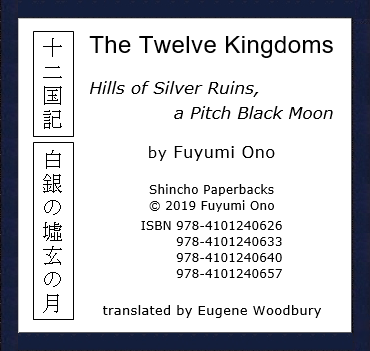
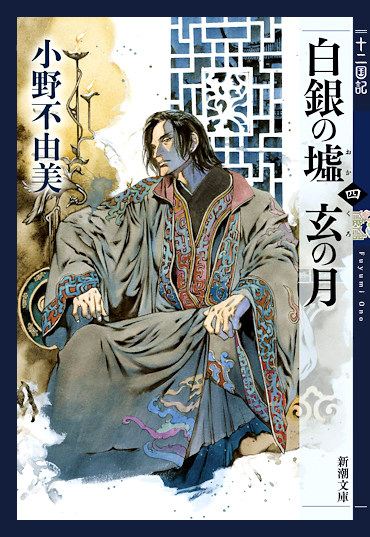
Maps
Notes
Glossary
Downloads
More about the title
More about the covers
Labels: 12 kingdoms, black moon, ebooks, fantasy, japanese, translations
May 28, 2023
Hills of Silver Ruins IV (notes)
|
Chapter 01 Chapter 02 Chapter 03 • Chapter 04 Chapter 05 Chapter 06 Chapter 07 Chapter 08 Chapter 09 Chapter 10 Chapter 11 Chapter 12 Chapter 13 Chapter 14 • Chapter 15 Chapter 16 Chapter 17 Chapter 18 Chapter 19 Chapter 20 • |
Chapter 21 Chapter 22 Chapter 23 Chapter 24 Chapter 25 Chapter 26 Chapter 27 Chapter 28 Chapter 29 Chapter 30 Chapter 31 Chapter 32 Chapter 33 Chapter 34 • Chapter 35 Chapter 36 Chapter 37 Chapter 38 Chapter 39 Chapter 40 Chapter 41 • |
Maps
Notes
Glossary
Downloads
More about the title
More about the covers
Labels: 12 kingdoms, black moon, ebooks, fantasy, japanese, translations
May 27, 2023
Hills of Silver Ruins (4/41)
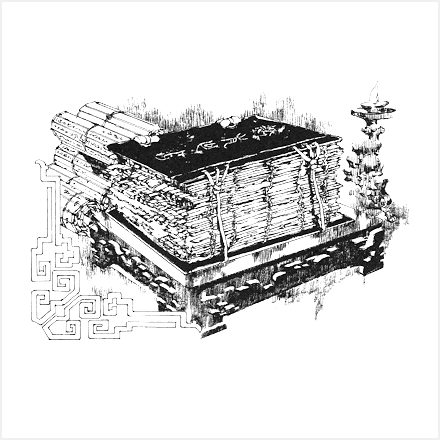
Until the adoption of Meiji as the name for Mutsuhito's entire reign, the nengou was traditionally changed several times during the reign of a single emperor—at two fixed points in the cycle of sixty years, or when a series of natural disasters were attributed to an inauspicious nengou, or when some prodigy of nature required recognition in the calendar.
The kanji for the era name of Gyousou's new and improved dynasty are bright (明) and banner (幟).
Labels: 12 kingdoms, black moon, fantasy, japanese, translations
May 20, 2023
Hills of Silver Ruins (4/40)
You'll remember me when the west wind moves
Upon the fields of barley
You'll forget the sun in his jealous sky
As we walk in fields of gold
So she took her love
For to gaze a while
Upon the fields of barley
In his arms she fell as her hair came down
Among the fields of gold
Will you stay with me?
Will you be my love?
Upon the fields of barley
We'll forget the sun in his jealous sky
As we lie in fields of gold
See the west wind move like a lover so
Upon the fields of barley
Feel her body rise when you kiss her mouth
Among the fields of gold
I never made promises lightly
And there have been some that I've broken
But I swear in the days still left
We'll walk in fields of gold
We'll walk in fields of gold
Many years have passed since those summer days
Among the fields of barley
See the children run as the sun goes down
Among the fields of gold
You'll remember me when the west wind moves
Upon the fields of barley
You can tell the sun in his jealous sky
When we walked in fields of gold
When we walked in fields of gold
When we walked in fields of gold
Labels: 12 kingdoms, black moon, fantasy, japanese, translations
May 13, 2023
Hills of Silver Ruins (4/39)
Labels: 12 kingdoms, black moon, fantasy, japanese, translations
May 06, 2023
Hills of Silver Ruins (4/38)
Kaei was the last person to see Risai before she departed for Kei in chapter 6 of The Shore in Twilight.
Labels: 12 kingdoms, black moon, fantasy, japanese, translations
May 01, 2023
Twelve Kingdoms
The Twelve Kingdoms novels have been licensed by Seven Seas Entertainment. Bookstore links will appear when they are published.
For additional commentary about the Twelve Kingdoms and the translation process, see Kate's Interview with a Translator series.
1. Tsuki no Kage, Kage no Umi. My translation: Shadow of the Moon, a Sea of Shadows.
2. Kaze no Banri, Reimei no Sora. My translation: A Thousand Leagues of Wind, the Sky at Dawn.
Youko, Suzu, and Shoukei join forces to defeat corrupt government leaders in Wa Province.
3. Tasogare no Kishi, Akatsuki no Sora. My translation: The Shore in Twilight, the Sky at Daybreak.
Risai escapes to Kei and asks Youko for help rescuing Taiki. Taiki and Youko are contemporaries.
Fuyumi Ono wrote The Demon Child before she started the Twelve Kingdoms series. See link below. She covers some of this material in The Shore in Twilight, The Sky at Daybreak. In Kaze no Umi, Meikyu no Kishi ("A Sea of Wind, Shores of the Labyrinth"), Taiki choose Gyousou as Emperor of Tai. See links below.
1. Tasogare no Kishi, Akatsuki no Sora. My translation: The Shore in Twilight, the Sky at Daybreak.
Risai escapes to Kei and asks Youko for help rescuing Taiki. Taiki and Youko are contemporaries.
2. Shirogane no Oka, Kuro no Tsuki. My translation: Hills of Silver Ruins, a Pitch Black Moon (book I II III IV).
Risai and Taiki return to Tai. They recruit a small band of allies to search for Gyousou and take back the kingdom.
Higashi no Watatsumi, Nishi no Sokai. My translation: Poseidon of the East, Vast Blue Seas of the West.
Tonan no Tsubasa. My translation: The Wings of Dreams.
Kyouki chooses Shushou as Empress of Kyou. (Shoukei encounters Shushou in A Thousand Leagues of Wind.)
Kasho no Yume. My translation: Dreaming of Paradise.
- (冬栄) "Winter Splendor" (Touei): takes place in Tai and Ren during The Shore in Twilight, the Sky at Daybreak.
- (乗月) "Jougetsu": takes place in Hou after A Thousand Leagues of Wind, the Sky at Dawn.
- (書簡) "Pen-Pals" (Shokan): takes place in Kei and En after Shadow of the Moon, a Sea of Shadows.
- (華胥) "Dreaming of Paradise" (Kasho): takes place in Sai sometime before A Thousand Leagues of Wind, the Sky at Dawn.
- (帰山) "Kizan": takes place in Ryuu and Sou after A Thousand Leagues of Wind, the Sky at Dawn.
Hisho no Tori. My translation: Hisho's Birds.
- (丕緒の鳥) "Hisho's Birds" (Hisho no Tori): takes place before and shortly after the coronation of Youko as Empress of Kei.
- (落照の獄) "Prison of Dusk" Rakushou no Goku: references to Ryuu and Emperor Chuutatsu suggest the beginning of Youko's reign.
- (青条の蘭) "Blue Orchid" (Seijou no Ran): takes place in En before Rokuta chooses Shouryuu as the next Emperor.
- (風信) "Weather Vane" (Fuushin): takes place during the last days of Empress Yo of Kei, and then following her death.
I've created my own abridged glossary. An overview of the Twelve Kingdoms universe can be found at Wikipedia (English Japanese). The Twelve Kingdoms Wiki has scans of the illustrations and additional artwork.
My go-to resource while translating the novels has been Yoshie Omura's Twelve Kingdoms Room (Japanese). Also see the Twelve Kingdoms Database (Japanese).
Fuyumi Ono borrows much of the political terminology from medieval China. Harvard University's "Dictionary of Official Titles in Imperial China" (PDF) provides useful clues about the English equivalents.
However, we are talking about a fantasy series, so historical translations are not always exact. The organizational charts at Twelve Kingdoms Memo (Japanese) have proved quite helpful.
The NHK anime can be streamed at Tubi and Crunchyroll (regional restrictions may apply). The Blu-ray edition is available from Discotek Media.
Labels: 12 kingdoms, books, crunchyroll, fantasy, japanese, kate, publishing, translations, tubi
April 29, 2023
Hills of Silver Ruins (4/37)
Labels: 12 kingdoms, black moon, fantasy, japanese, translations
April 22, 2023
Hills of Silver Ruins (4/36)
The technical name for the color referred to here is orpiment (雌黄), a "deep-colored, orange-yellow arsenic sulfide mineral."

Labels: 12 kingdoms, black moon, fantasy, japanese, translations
April 15, 2023
Hills of Silver Ruins (4/35)
Theirs not to make reply,
Theirs not to reason why,
Theirs but to do and die:
Into the valley of Death
Rode the six hundred.
Kirin are susceptible to two potentially lethal diseases. The shitsudou (失道) is caused by imperial wrongdoing, especially involving violations of the Divine Decrees. The esui (穢瘁) results from the kirin's own actions, often from being exposed to blood in the environment or his diet.
Labels: 12 kingdoms, black moon, fantasy, japanese, translations
April 08, 2023
Hills of Silver Ruins (4/34)
During the Han Dynasty, the Huben (虎賁) was an elite imperial guard unit. The name means "Rapid as Tigers."

Labels: 12 kingdoms, black moon, fantasy, japanese, translations
April 01, 2023
Hills of Silver Ruins (4/33)
The Sumeru Throne (須弥座) is an architectural feature of Chinese pagodas. The elevated base or first story is designed so that the pagoda appears to be rising out of a lotus flower, with petals circling its circumference. The Sumeru Throne itself is a symbolic representation of Mount Meru, the center of all of the physical, metaphysical, and spiritual universes.
Labels: 12 kingdoms, black moon, fantasy, japanese, translations
March 25, 2023
Hills of Silver Ruins (4/32)
Although the furigana in this instance read simply as "clock," the kanji (漏刻) refer specifically to a water clock or clepsydra. Sophisticated water clocks were invented in China as early as 600 BC.
Labels: 12 kingdoms, black moon, fantasy, japanese, translations